TLDR;
This lecture provides a detailed guide on designing a sports-specific conditioning program. It emphasizes understanding sports demands, assessing athlete capabilities, setting specific goals, and periodizing training. The importance of recovery, monitoring progress, and avoiding common errors are highlighted to optimize performance and reduce injury risk.
- Understanding sports demands and athlete capabilities are crucial for designing effective conditioning programs.
- Setting specific, measurable, achievable, relevant, and time-bound goals is essential for structured training.
- Periodization, recovery, and monitoring progress are key components for optimizing performance and preventing overtraining.
Introduction [0:15]
The lecture addresses the design of a sports-specific conditioning program, focusing on helping an athlete with no prior experience to start strength training. Wing Commander Chandra Shakhaguru, a sports medicine specialist, outlines the learning objectives, which include understanding the principles and factors involved in designing such a program, the steps involved, and a case scenario to illustrate practical application.
Need for Sports-Specific Conditioning [1:29]
The need for sports-specific conditioning arises from the demands of the sport, including biomechanical, physiological, neuromuscular, and bioenergetic aspects. A well-designed program enhances performance, reduces injury risk, and optimizes energy system utilization. Key principles include progressive overload, specificity, periodization, and recovery, all essential for effective training and adaptation.
Process of Designing a Conditioning Program [2:45]
The process involves several steps, starting with sports analysis to understand the demands of the sport. This is followed by assessing the athlete's current motor qualities, setting well-defined goals, periodizing the program into the athlete's routine, and monitoring progress and adaptation.
Step 1: Analyzing Sports Demand [3:37]
Analyzing sports demand involves understanding movement patterns, primary energy systems, injury risks, and work-to-rest ratios. Movement pattern analysis emphasizes the quality and form of movement over the load, assessing movements in all three planes (sagittal, frontal, and transverse). Conditioning drills should simulate these movement patterns to align with the principle of specificity.
Energy System and Injury Risk Profiling [6:01]
Identifying the predominant energy system (short-term, intermediate-term, or long-term) is crucial for planning conditioning programs. Injury risk profiling helps identify common injuries and at-risk joints or muscle groups, allowing for targeted exercises in the conditioning program. Preventive strategies like FIFA 11+ in football can be integrated into warm-up routines.
Athlete Profiling [8:40]
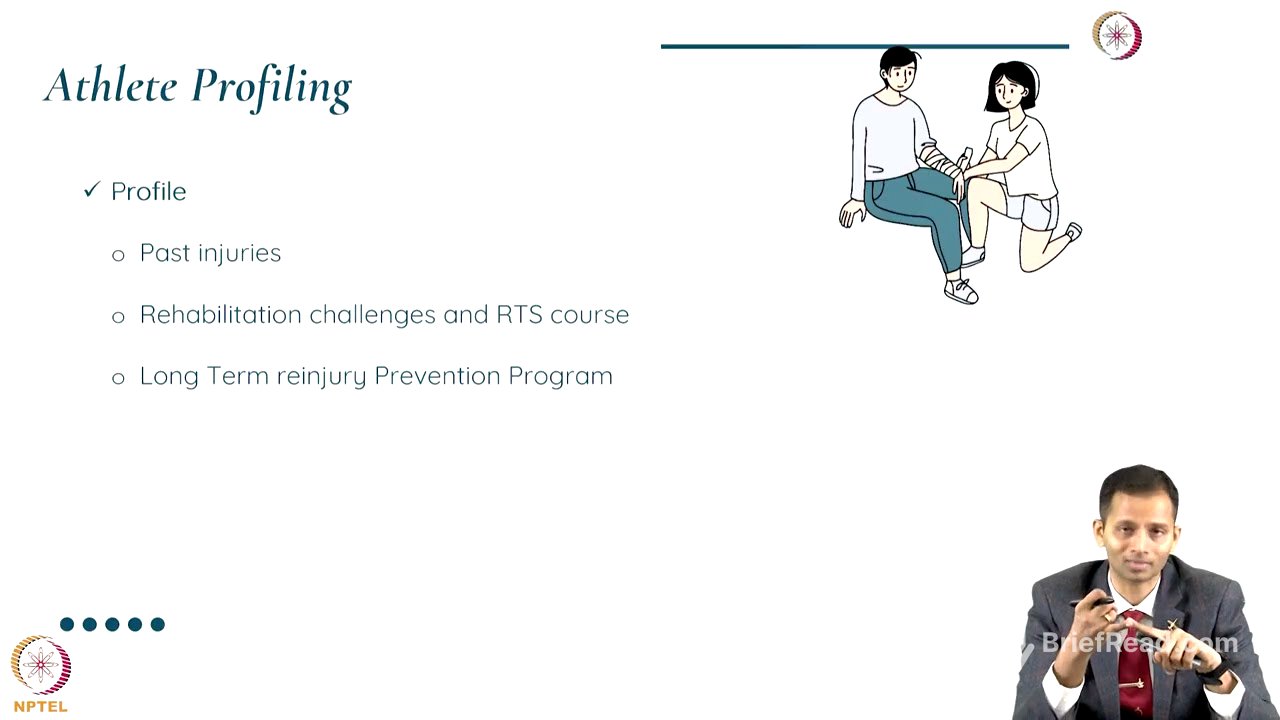
Athlete profiling involves understanding the athlete's past experience, training age, current phase, and injury status. Addressing past injuries and ensuring proper rehabilitation and return-to-sport protocols are essential to prevent re-injury. This information helps in incorporating specific exercises into the conditioning program.
Step 2: Assessing the Athlete [10:06]
Assessing the athlete involves evaluating their deficits, impairments, and fitness levels through pre-participation screening. This includes movement screening (e.g., Functional Movement Screen), strength and power assessments (e.g., standing broad jump), aerobic and anaerobic testing (e.g., yo-yo test, Wingate test), and mobility and stability assessments. This provides a baseline for customizing the conditioning program.
Setting Goals [12:14]
Setting specific, measurable, achievable, relevant, and time-bound (SMART) goals is crucial for an effective training program. Clear goals provide structure and direction for the athlete's training.
Periodizing the Program [12:45]
Periodizing the conditioning program involves integrating it into the training cycle (macrocycle, mesocycle, and microcycle). The periodization plan can be linear, non-linear, block, or flexible, depending on the athlete's level, sports calendar, and training age. Aligning training with the energy system needs, whether through interval, continuous, or high-intensity training, is essential.
Mobility and Movement Preparation [14:11]
Addressing mobility and movement preparation is essential in periodization. Movement patterns and deficits identified during assessment can be included in dynamic warm-ups, such as FIFA 11+. Core activation sessions can also be incorporated to address movement needs and improve movement quality, reducing injury susceptibility and enhancing performance.
Designing the Components of Conditioning [15:13]
Designing the components involves developing basic motor qualities, including aerobic training, speed and agility drills, flexibility and mobility drills, resistance training, and balance and coordination drills. The emphasis on each component varies depending on the training phase (preparation, pre-competitive, competitive, and postseason). Aerobic and weight training are emphasized during the preparation phase, while technique training gains importance during the pre-competitive and postseason phases.
Recovery Strategies [18:53]
Recovery is critical for adaptation and should never be neglected. Sleep hygiene is paramount, as it facilitates hormonal changes and repair processes. Active recovery days, proper nutrition and hydration (especially post-exercise refueling), massage, cold water immersion, and compression techniques are valuable recovery modalities.
Monitoring Progress [20:55]
Monitoring progress is essential for measurable improvement. Tools include rating of perceived exertion, GPS-based tracking, heart rate monitoring, and power output measures (jump heights, sprint times). Data captured during training helps in making informed decisions and framing smart goals.
Common Errors in Designing Programs [21:59]
Common errors include using a one-size-fits-all program, lacking long-term planning, neglecting monitoring, and ignoring recovery. Individualized, customized programs with long-term planning, load monitoring, and attention to recovery are essential for effective sports conditioning.
Case Scenario: Designing a Program for Nik [23:26]
The case scenario involves designing an 8-week sports-specific conditioning program for Nik, a college student and recreational football player with no prior strength training experience. The initial steps include need analysis (athlete profile, sports needs), assessing the individual, and planning a program that progresses from aerobic conditioning and mobility/flexibility (FIFA 11+ beginner level) to speed and agility drills. Monitoring progress and addressing identified deficits are crucial.
Summary [25:28]
Designing a sports-specific conditioning program involves need analysis, assessment, and periodization. Emphasis is given to all components of conditioning, from aerobic conditioning to strength training and balance/coordination. Customization based on regular feedback and assessment leads to better outcomes.