TLDR;
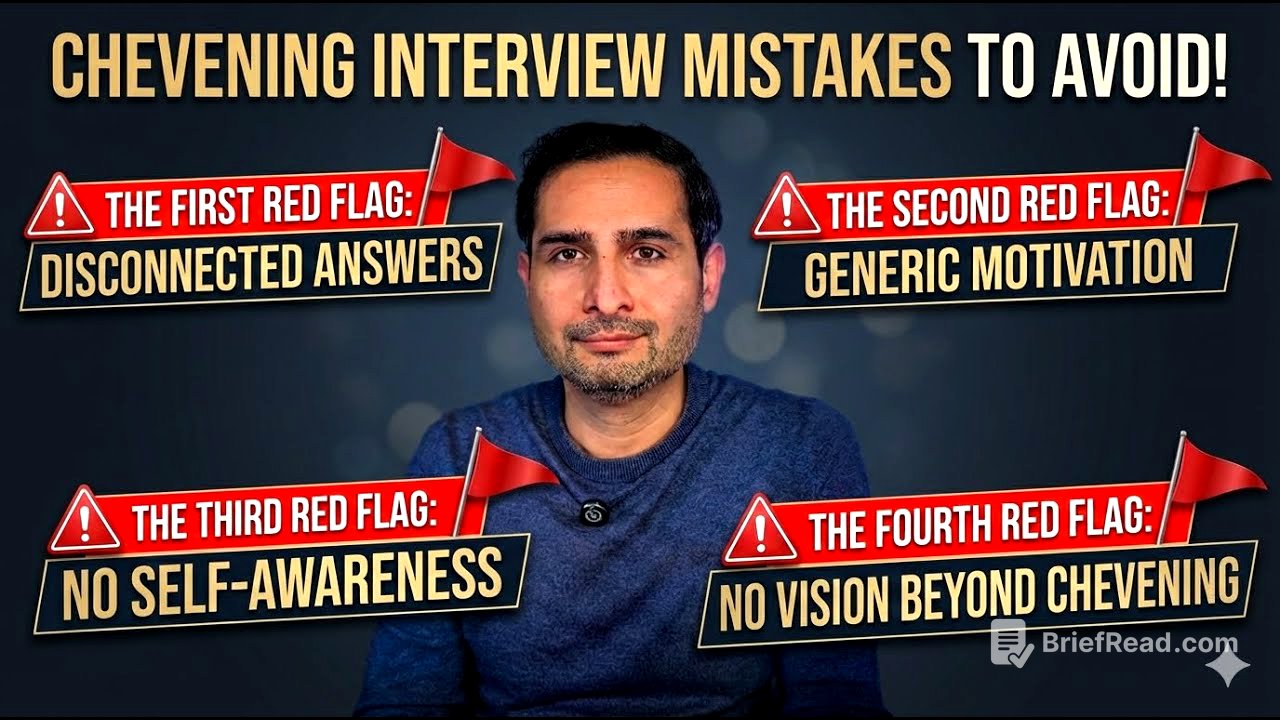
This video outlines four critical mistakes that Chevening Scholarship applicants often make during their interviews, leading to rejection. It emphasizes that the interview is not merely a test of qualifications or achievements, but rather an assessment of how well candidates understand themselves, the problems facing their communities, and their plans to address these issues. The key points are:
- Lack of a clear, connected personal journey.
- Generic motivations for applying to Chevening and studying in the UK.
- Lack of self-awareness regarding weaknesses and failures.
- Absence of a clear vision for post-scholarship plans and community impact.
If You're Waiting for the Chevening Interview [0:00]
The video introduces the topic of common mistakes made by candidates during Chevening Scholarship interviews. The speaker asserts that after conducting numerous mock interviews, they can often predict within the first few minutes whether a candidate is likely to be rejected. These mistakes are not related to academic qualifications or professional experience, but rather to more subtle issues that most candidates are unaware of. The speaker emphasizes the importance of understanding these pitfalls and correcting them to improve chances of success.
Who This Video Is For (The Chevening Interview) [0:53]
The speaker shares their extensive experience with Chevening Scholarship interviews, both as an interviewer and as a successful applicant. They highlight that the interview is not a test of knowledge or qualifications, but an evaluation of the candidate's self-awareness, understanding of their community's problems, and realistic plans for addressing those problems. The speaker points out that many strong candidates fail because they lack clarity in these areas.
🚩The first Red Flag [1:52]
The first red flag is when candidates provide a disconnected list of their experiences and achievements without a clear narrative. When asked to talk about themselves or their reasons for applying to Chevening, they often sound like they are reading a resume. The panel is looking for a cohesive journey that demonstrates how each experience builds upon the last, what the candidate learned, and where they are headed. Disconnected answers suggest a lack of deep reflection on their own story and the problems they aim to solve. The speaker shares an example of a candidate with impressive credentials who struggled to articulate a specific problem they wanted to address in their community.
🚩The Second Red Flag [4:28]
The second red flag is providing generic motivations for wanting to study in the UK or pursue a Chevening Scholarship. Candidates often cite the quality of education or the prestige of the scholarship, which are not unique to them. The speaker emphasizes that responses should be specific, personal, and connected to real experiences. A strong response demonstrates how studying in the UK will help the candidate address a specific problem they have witnessed in their community. The panel is looking for honesty and authenticity rather than polished, generic answers.
3 Free bonuses [7:22]
The speaker announces a giveaway of two prizes: a 30-minute one-on-one mock interview session and a voucher for their interview preparation course. To enter, viewers must subscribe to the channel, like the video, and leave a comment explaining why they want to improve their interview skills. Winners will be selected within seven days of the video's posting date.
🚩The Third Red Flag [8:22]
The third red flag is a lack of self-awareness, particularly when discussing weaknesses or failures. Candidates often avoid the question or offer a strength disguised as a weakness, which the panel recognizes as dishonest. The panel expects candidates to be reflective, acknowledge their blind spots, and demonstrate that they have learned from their mistakes. The speaker shares an example of a candidate who discussed a failed community initiative and the lessons they learned about the importance of listening to the community's needs. They also provide an example of how to discuss a leadership failure, emphasizing the importance of identifying specific failures and explaining what was learned from them.
🚩The Fourth Red Flag [12:12]
The fourth red flag is the absence of a clear vision for what the candidate will do after completing the Chevening Scholarship. Candidates often provide vague responses about applying what they learned or working in their field. The panel wants to see that the candidate has a well-thought-out plan for addressing a specific problem, filling a gap, or serving a particular community. The speaker emphasizes that Chevening is investing in the candidate's potential to create positive change in their country. They share an example of a candidate who initially gave a generic response about working in environmental policy but, after further discussion, articulated a specific vision for designing carbon pricing mechanisms for small island states.
All Points - Wrap up [14:42]
The speaker summarizes the four red flags that can lead to failure in Chevening Scholarship interviews: a disconnected personal journey, generic motivations, lack of self-awareness, and absence of a clear vision. They reiterate that the panel is looking for clear, honest candidates who understand their story, can articulate their motivations, reflect on their growth, and have a vision for creating positive change. The speaker encourages candidates to focus on being clear rather than impressive and provides a free action plan to help them build clarity, connect their narrative, and articulate their vision.