TLDR;
This text provides guidance on cultivating gardenias (Gardenia jasminoides) on city balconies, focusing on their ideal conditions and care. Key points include:
- Gardenias are compact, fragrant shrubs suitable for balconies, thriving in partial shade.
- Essential care tips involve ensuring proper light, wind protection, and suitable potting conditions for optimal growth and flowering.
Gardenias: The Ideal Balcony Plant
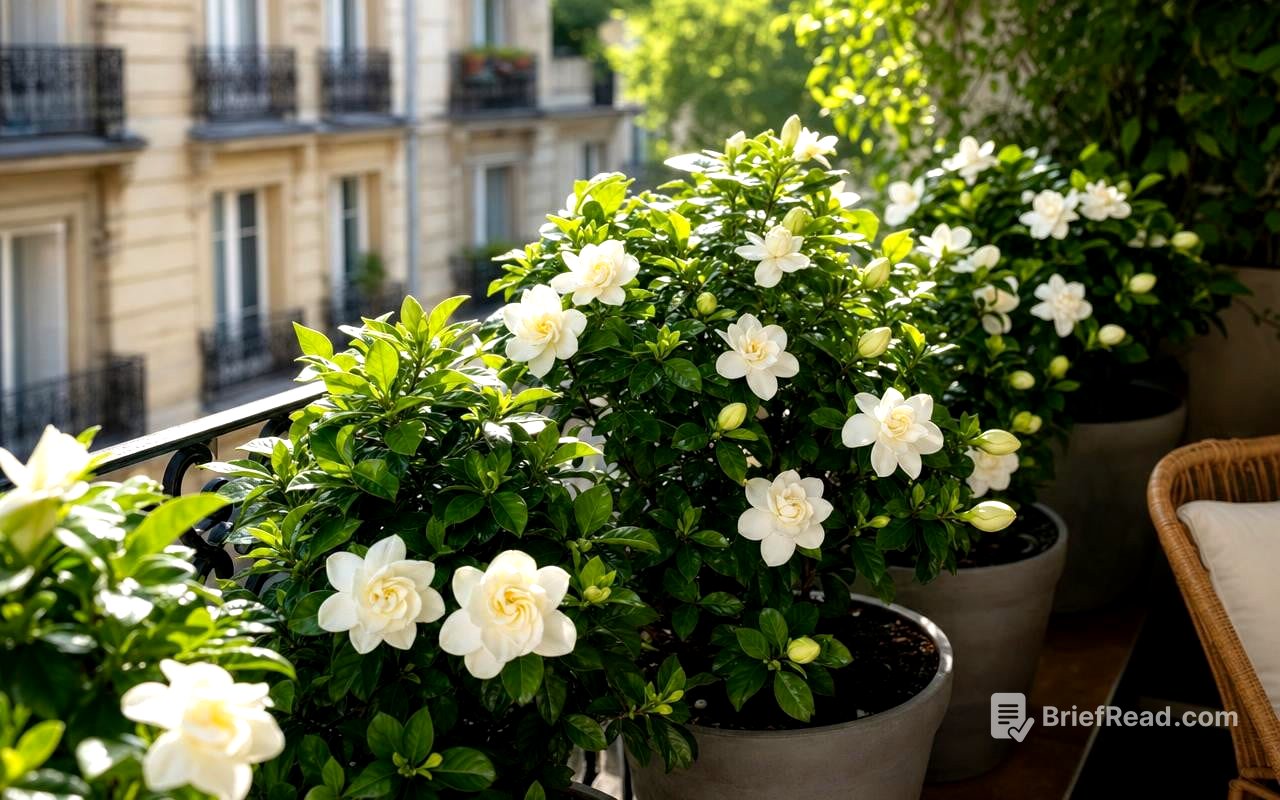
The gardenia, also known as jasmine from the Cape, is highlighted as an ideal balcony plant due to its compact size and fragrant white flowers. This evergreen shrub typically grows between 60 cm and 1 meter and flowers from May to September, making it a decorative addition during the summer. It thrives in mild climates but can endure temperatures around -7°C, with some varieties tolerating even lower temperatures. In France, it is commonly grown in pots to allow for its indoor relocation during colder months, making it suitable for small urban spaces.
Sunlight and Wind Requirements for Gardenias
For optimal growth, gardenias prefer bright but filtered light. They flourish in locations that receive gentle morning sunlight while being shielded from intense midday rays, which can scorch the leaves and diminish flowering. The text suggests positioning pots behind barriers like railings or curtains. Wind exposure is also significant; strong drafts can dry leaves and buds quickly, so placing the gardenia in a sheltered spot, such as near a wall or alongside other plants for protection, is recommended. Observing sunlight patterns and wind conditions prior to planting can help identify the best location on a balcony.
Potting and Watering for Thriving Gardenias
Successful gardenia cultivation in pots requires a combination of three key elements: a well-drained pot, quality drainage, and slightly acidic soil. The soil needs to be rich in organic matter and ideally a mix of heather soil and high-quality potting soil. Keeping the root ball moist is crucial, as gardenias do not thrive in dry conditions or waterlogged soil. Specialists advise using low-calcium water, like rainwater, for irrigation. The soil should remain slightly damp during spring and summer, with less frequent watering in winter. Additionally, placing a dish of wet clay pebbles under the pot can help maintain humidity levels in heated homes. Proper moisture management is essential for continuous blooming and the health of the plant.







![[자막뉴스] "일하러 나가기 두렵다"...벌써부터 불안한 조짐 / YTN](https://wm-img.halpindev.com/p-briefread_c-10_b-10/urlb/aHR0cDovL2ltZy55b3V0dWJlLmNvbS92aS9aSW8tU2tweVVJNC9ocWRlZmF1bHQuanBn.jpg)