TLDR;
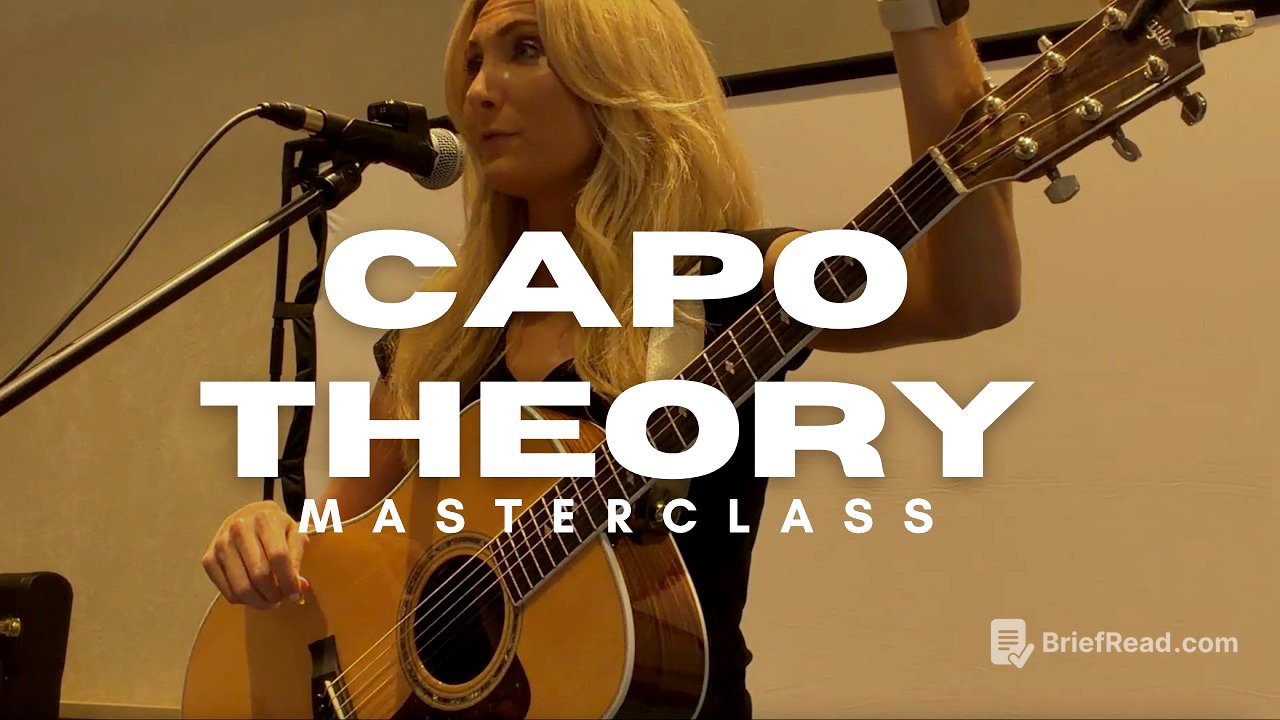
This video discusses the use of a capo on the guitar, particularly in the context of worship music. It explains the concepts of musical key and key shape, defining how capos affect both. Key takeaways include the understanding of five open keys (C, A, G, E, D), and how guitarists can utilize the capo effectively to play in various keys without using barre chords. The video emphasizes the importance of mastering the CAGED system for an easier navigation of the fretboard.
- Understanding the difference between musical key and key shape.
- Emphasis on five open keys and their relationship to capo placements.
Understanding the Capo [0:00]
The video begins with an introduction to the capo, which is commonly used in worship music with acoustic and electric guitars. The presenter stresses that while a capo can help to avoid barre chords, its most effective use involves understanding key shape and musical key. Key terms such as "musical key"—described as the environment in which a song exists—and "key shape," which denotes finger positioning, are explained in detail.
Defining Musical Key and Key Shape [1:10]
The notion of a musical key is defined as a specific ecosystem governed by the major scale of that key. For example, if a song is in C major, all notes must come from the C major scale. The concept of diatonic music means that no rules are broken when all notes align with the major scale. Additionally, the key shape represents the configuration of fingers on the guitar, which can create a visual relationship with the music being played.
The CAGED System and Open Keys [4:10]
There are only five open keys on the guitar where the one chord can be played using only open strings: C, A, G, E, and D. The presenter explains the CAGED system, which allows musicians to navigate the fretboard easily by recognizing the five basic chord shapes. This system is fundamental to playing any major chord on the guitar. The lesson encourages students to understand this framework to master the fretboard efficiently.
Using the Capo Effectively [7:10]
The video highlights how to apply the capo when playing in different keys. The presenter emphasizes that regardless of the key, there will be five capo positions that correspond to the open keys. This understanding allows players to transition smoothly between different chords without being restricted to barre chords. The lesson motivates viewers to learn how to think critically about using their capo instead of relying on pre-made charts.
Chords in Worship Music [13:10]
In worship music, common chord progressions frequently consist of the I-IV-V-vi patterns. The presenter introduces the Nashville number system to explain chord relationships based on the roots of chords fitting within their respective major scales. The key shapes for the open chords are outlined to illustrate practical applications for worship music.
Enhancing Your Guitar Playing [16:50]
Caitlin shares techniques for creating more fluid and harmonious transitions between chords in worship settings. The methodology focuses on using open strings for better intonation and blending the sound, akin to a choir. Additional voicing options are introduced to enhance musical expression while avoiding common barre chords to emphasize a more harmonious sound design.
Exploring Each Key Shape [21:50]
The presenter methodically goes through each open key (C, A, G, E, D), showing how to effectively voice the chords while avoiding barre chords. Techniques are demonstrated to ensure that the sound remains harmonious while achieving efficient finger movements on the fretboard. This segment emphasizes visualizing the chords and understanding their relationships.
Navigating Complex Keys [29:50]
For challenging keys such as G-flat, the video explains how to use the CAGED system to find suitable voicings and capo placements without adding unnecessary complexity. The presenter reassures students that by understanding the CAGED system, they can overcome any anxiety about playing in less familiar keys.
Conclusion and Empowerment [31:20]
The lesson wraps up by promoting confidence in playing the guitar in various keys with the help of the capo. The presenter encourages viewers to enjoy the process and not feel overwhelmed, reiterating that mastering these concepts will lead to a deeper connection with music and more enjoyable worship experiences.