TLDR;
The video introduces an engineering workshop and its practical-training curriculum across mechanical, electrical, electronics, and computer engineering. Students use tools and equipment in dedicated workshops, complete hands-on exercises and projects, and learn skills such as machining, welding, plumbing, house wiring, PCB design, computer hardware maintenance, and networking. The curriculum is organized by semester and is intended to build practical skills for further study, projects, and industry work.
- Engineering workshops provide practical experience alongside classroom learning.
- Students train in specialized sections, with activities selected according to their engineering discipline and semester.
- Hands-on tasks cover manufacturing processes, electrical and electronics work, computer hardware, operating systems, and networks.
- Workshop practice helps students develop the skills needed for projects and technical careers.
Engineering Workshop: Purpose and Facilities [0:36]
Engineering workshop training gives students practical experience with tools, machines, equipment, and manufacturing processes. The workshop supports students in learning how products are made and how engineering equipment is used, connecting theoretical knowledge with practical work. Its facilities include separate areas for machine work, welding, carpentry, motorcycle repair, electrical work, and computer hardware and networking.
In the machine shop, students learn to operate equipment such as drilling, milling, and lathe machines. The video also describes working with metal specimens and using workshop instruments and tools. These facilities are intended to help students become familiar with manufacturing methods and develop confidence in practical engineering tasks.
Mechanical, Welding, Carpentry, and Electrical Practice [2:44]
The mechanical and manufacturing workshops introduce students to processes involving metals and other materials. Students practise operations such as cutting, forming, drilling, filing, and turning, and learn to use different tools and machines. The welding workshop provides experience with welding equipment and processes, while the carpentry shop teaches students to use instruments and tools to make useful products.
Other facilities support motorcycle repair and electrical practice. Electrical training includes house wiring, connections, and the use of protection devices such as miniature circuit breakers (MCBs), which help protect electrical circuits and reduce the risk of electric shock. These activities give students practical experience with installations, components, and basic repair work.
Workshop Resources, Student Projects, and Training [4:52]
The engineering workshop supports teaching, research, and student training, with sessions for students across different years of study. Equipment and materials are also made available for student projects, particularly for final-year work. The workshop helps maintain machines and other facilities used across the campus, and it can support industrial training for graduates.
The training is organized into mechanical, electrical, and computer sections. Students practise skills relevant to their discipline and semester, while project work allows them to apply those skills to real tasks. This combination of demonstrations, practice, and project work is intended to prepare students for more advanced engineering activities.
Semester Structure and Practical Activities [6:09]
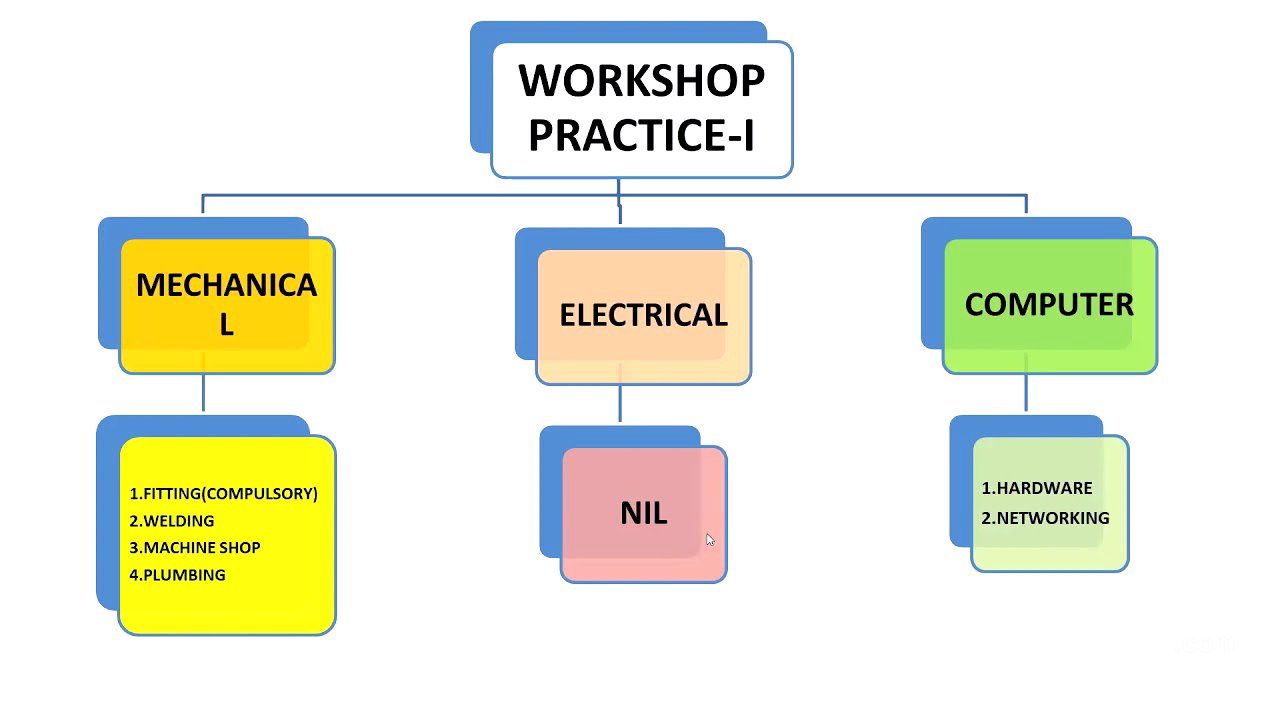
Workshop practice is divided into sections and semester-based activities. The mechanical section includes fitting, carpentry, welding, machine-shop work, and plumbing. Electrical students practise electrical activities, while computer students work with hardware and networking. The specific tasks differ between semesters and are selected to match each group’s coursework.
The video emphasizes that practical sessions are important for both mechanical and electrical students, as well as those studying computer engineering. Students take part in demonstrations and hands-on exercises rather than relying only on online or classroom instruction. Practical assessment and workshop work form part of the subject’s overall learning and evaluation.
Electrical Wiring, Circuit Protection, and PCB Design [8:21]
Electrical practice includes learning how to make single-phase house-wiring connections and connect different components. Students also study protective devices, including miniature circuit breakers (MCBs), and learn how these devices protect against electrical faults and shocks. The workshop aims to make students comfortable with wiring and basic electrical installations.
Electronics training includes printed circuit board (PCB) design. Students learn to lay out and route a circuit on a board and work toward producing a finished PCB. The video presents this as a useful practical skill for electronics engineering students and for projects that require electronic circuits.
Learning Outcomes and Engineering Skills [11:42]
The workshop is intended to develop students’ ability to handle tools and perform physical tasks, while introducing them to work across engineering disciplines. Mechanical students practise operations such as fitting, machining, welding, and plumbing. Electrical and electronics students work with wiring and components, while computer students build skills in hardware and networking.
Students are expected to gain the practical ability to use equipment, complete basic workshop jobs, and apply engineering methods. The video also connects these skills to employment and further technical work. Hands-on experience gives students a foundation for projects and helps them understand the work performed in different engineering fields.
Fitting, Plumbing, and Computer Hardware Practice [13:24]
Mechanical workshop exercises include using plumbing tools, carrying out pipe-fitting work, and practising machining operations such as turning on a lathe. Students also learn basic metalworking procedures and the use of workshop tools. Fitting and related jobs are presented as important parts of mechanical practical training.
Computer engineering students study hardware and networking. Their activities include identifying and dismantling computer components such as the power supply, motherboard, battery, monitor, keyboard, mouse, printer, scanner, and pen drive. They also learn about operating systems, how to install them, application software, and basic troubleshooting and maintenance.
Networks, Welding, Plumbing, and Machine-Shop Tasks [18:00]
Computer networking practice introduces students to network types and basic network concepts, alongside troubleshooting. In the mechanical workshops, students perform practical jobs involving welding and plumbing. Plumbing exercises include pipework and fittings, while welding practice introduces the tools and processes used to join metal pieces.
Machine-shop training covers turning and other manufacturing operations. Students learn that different operations are used to produce different parts and products, and that choosing the right process is important to manufacturing. Workshop exercises help students connect machine operation with the production of finished work.
Mechanical Manufacturing Processes and Machine Operation [19:44]
The machine shop gives students experience with turning and other operations used to shape materials. The video refers to metal cutting, filing, drilling, and related processes, as well as the equipment needed to carry them out. Students are introduced to how manufacturing tasks are completed using machines and hand tools.
The training also covers the importance of operating machines appropriately and understanding the purpose of each process. Students practise making jobs and components while learning how different workshop operations contribute to a finished product. This experience provides a foundation for later projects and industrial work.
Department-Specific Practical Work and Final-Year Projects [23:50]
Computer engineering students continue to practise identifying components and working with network equipment. Electrical students learn to connect different components and carry out single-phase wiring, while mechanical students continue with workshop tasks such as fitting and machining. These activities are selected to match the practical requirements of each department.
Final-year students can use workshop facilities to complete projects and manufacture products. The video gives examples of project work involving electronic products and mechanical operations. Across the departments, workshop practice helps students develop basic skills that can be applied to projects and technical work in industry.
Advanced Mechanical Workshop Practice [27:36]
Mechanical students practise fitting and machining operations, including cutting, turning, and grinding. They use machines and tools to shape materials and make workshop products. Carpentry and other practical tasks also form part of the broader workshop experience, depending on the subject and semester.
The video stresses that these exercises are compulsory or important for relevant mechanical courses. Students are expected to learn how to operate equipment and carry out different processes safely and effectively. The resulting skills support further project work and give students a practical understanding of manufacturing.
Engines and Further Mechanical Training [30:02]
The final section refers to workshop subjects for mechanical engineering students and introduces engine-related study. Students examine diesel and petrol engines as part of their practical training. This work extends the workshop curriculum beyond basic machine operations to include common engine systems.
Together with the earlier fitting, welding, plumbing, and machine-shop activities, engine training gives mechanical students exposure to a wider range of equipment and processes. The video concludes by reinforcing the role of practical workshop experience in developing engineering skills.