TLDR;
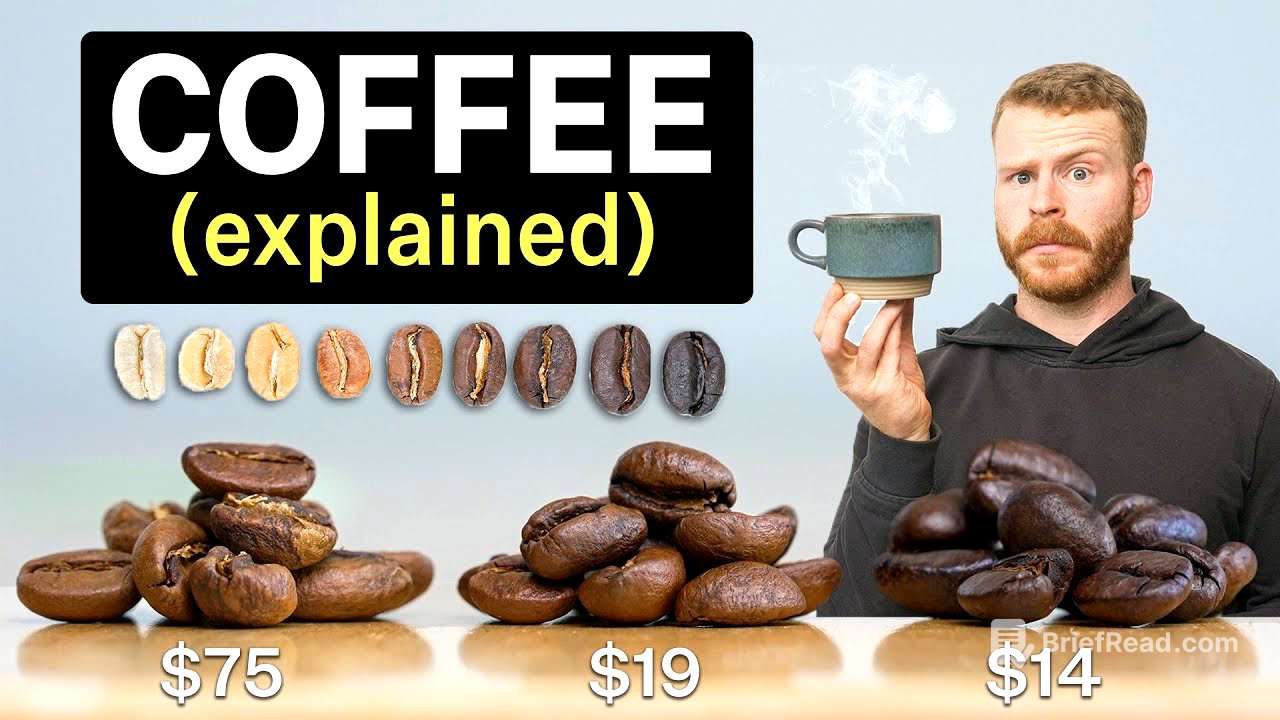
This video provides an in-depth exploration of coffee beans, covering flavor fundamentals, price variations, and how to find coffee beans you'll love. It emphasizes that understanding the nuances of coffee beans is crucial for brewing a great cup of coffee.
- Flavor fundamentals of coffee are linked to the chemical composition of green coffee, influenced by growing, harvesting, and processing methods.
- The price of coffee is significantly affected by the cost of green coffee, which varies based on processing, harvesting, and growing practices.
- Buying coffee based solely on roast level (light, medium, dark) is outdated; instead, focus on aroma and flavor notes.
Intro [0:00]
The video introduces a comprehensive guide to understanding coffee beans, addressing the confusion around price differences and flavor variations. The goal is to provide viewers with the knowledge to explore and purchase coffee beans they will genuinely enjoy. The video promises to explain the flavor fundamentals of coffee, how the price of coffee changes, and how to use this information to buy coffee beans you'll love. A key takeaway is to stop buying coffee based solely on roast level (light, medium, dark) due to the lack of standardization and the significant impact of green coffee varieties on the final taste.
Thank you to AeroPress! [3:18]
The presenter introduces AeroPress as the sponsor and highlights its benefits for coffee enthusiasts. AeroPress simplifies testing different coffees side by side with minimal cleanup. It utilizes a 3-in-1 brew technology, immersing beans and water like a French press but using air pressure to push the brew through the grounds, resulting in a smooth, velvety cup of coffee. The AeroPress is versatile, suitable for both beginners and connoisseurs, and can be used to experiment with various recipes, including cold brew simulations.
Coffee Roasting Takeaways [4:45]
This section outlines key takeaways regarding coffee roasting. Every bag of roasted coffee beans has a unique chemical composition of solubles that create its flavor profile. The roasting process itself is a constant cost in coffee production; the significant variable cost is the green coffee used. It is advised to stop buying coffee based on roast level (light, medium, dark) because this is an outdated and unregulated method.
How does the price of coffee change? [8:12]
The video addresses the factors influencing the price of roasted coffee, breaking down costs among commodity, mass-market, and specialty coffee roasters. Roasters buy green coffee through fair trade, relationship trade, or direct trade, aiming to ensure sustainable prices and higher quality. The cost of green coffee directly affects the final price, with three price bands: commodity, mass market, and specialty. The cost of green coffee is the biggest variable, with specialty roasters typically paying more due to higher quality and lower volume purchases.
How does roasting create the flavor of coffee? [13:34]
Roasting involves applying heat to green coffee, initiating reactions that transform the bean and create its flavor complexity. These reactions include dehydration, the Maillard reaction, Strecker degradation, caramelization, and pyrolysis. The roasting process starts with green coffee, which roasters buy through fair trade, relationship trade, or direct trade. The two main variables in roasting are temperature and time.
Green Coffee Taste Test [20:22]
The presenter conducts a taste test of coffee beans roasted at different stages to illustrate how the roasting process affects flavor. The five main reactions during roasting are dehydration, the Maillard reaction, Strecker degradation, caramelization, and pyrolysis, all happening throughout the process and often overlapping. The roaster controls the temperature and time, generally in three phases: the dry phase, the Maillard phase, and the development phase.
How do you find coffee beans you'll love? [25:47]
To find coffee beans you'll love, you don't need to describe coffee in words to know which one you like better in a side-by-side test. Go try two coffees side by side and ask for two of the most different tasting coffees they have. The presenter shares personal mistakes made when getting into coffee, including focusing too much on brewing perfection and not paying attention to the beans, as well as not knowing how to find similar coffees once a favorite was discovered.
How is coffee processed? [27:57]
Coffee processing involves transforming harvested coffee cherries into dried green coffee beans, with the coffee cherry consisting of layers like the outer skin, pulp, mucilage, parchment, silver skin, and the green coffee bean. The processing method affects the green coffee's chemical composition, influencing the final cup of coffee. Common processes include natural and washed, with variations like honey, anaerobic, and co-fermented.
How is coffee harvested [32:45]
Coffee harvesting significantly impacts the price of green coffee and is typically done by handpicking, strip picking, or machine harvesting. Handpicking is the most expensive but ensures only ripe cherries are selected. Ripe coffee cherries have increased sugar content and a more developed set of aromatic compounds. Single-origin coffees come from a single estate, group of estates, or cooperative, indicating consistent high quality, while blends mix coffees after roasting to highlight the best flavor qualities.
How is coffee grown? [37:03]
Important terms related to coffee growing include origin, variety, and altitude. Mass-market roasters often state "100% Arabica," while specialty roasters specify varieties like Gesha, Java, and Typica. Altitude is expressed as meters above sea level (masl). Arabica coffee grows well at higher altitudes, while Robusta grows at lower altitudes, affecting cost and flavor. Arabica varieties are more difficult and costly to produce but offer superior flavor, while Robusta is easier to cultivate and cheaper, often used in commercial products.
Conclusion: Flavor, Price, Exploration [44:45]
The video concludes by recapping the three promises made at the beginning: understanding flavor fundamentals, understanding price changes, and being able to explore and buy coffee beans you love. Each area of the coffee hierarchy—growing, harvesting, processing, and roasting—contributes to the terms seen on coffee bags. The presenter advises focusing on finding enjoyable coffee beans before perfecting brewing methods, trying different coffees side by side, and understanding the variables of roasting, processing, harvesting, and growing to explore coffee effectively.
Carve outs [47:20]
The presenter expresses gratitude for viewers watching the videos and allowing deep dives into basic food products. Thanks are extended to Aeropress for sponsoring the video, which enabled the creation of a comprehensive coffee guide. Sources used in the video are listed in the comments, with a call for coffee industry professionals to provide additional reading materials. Appreciation is given to Michi in Austin for filming assistance and answering questions. The launch of a second channel, "Cookwell with Ethan Chlebowski," featuring laid-back cooking videos, is announced as a companion to the main channel.