TLDR;
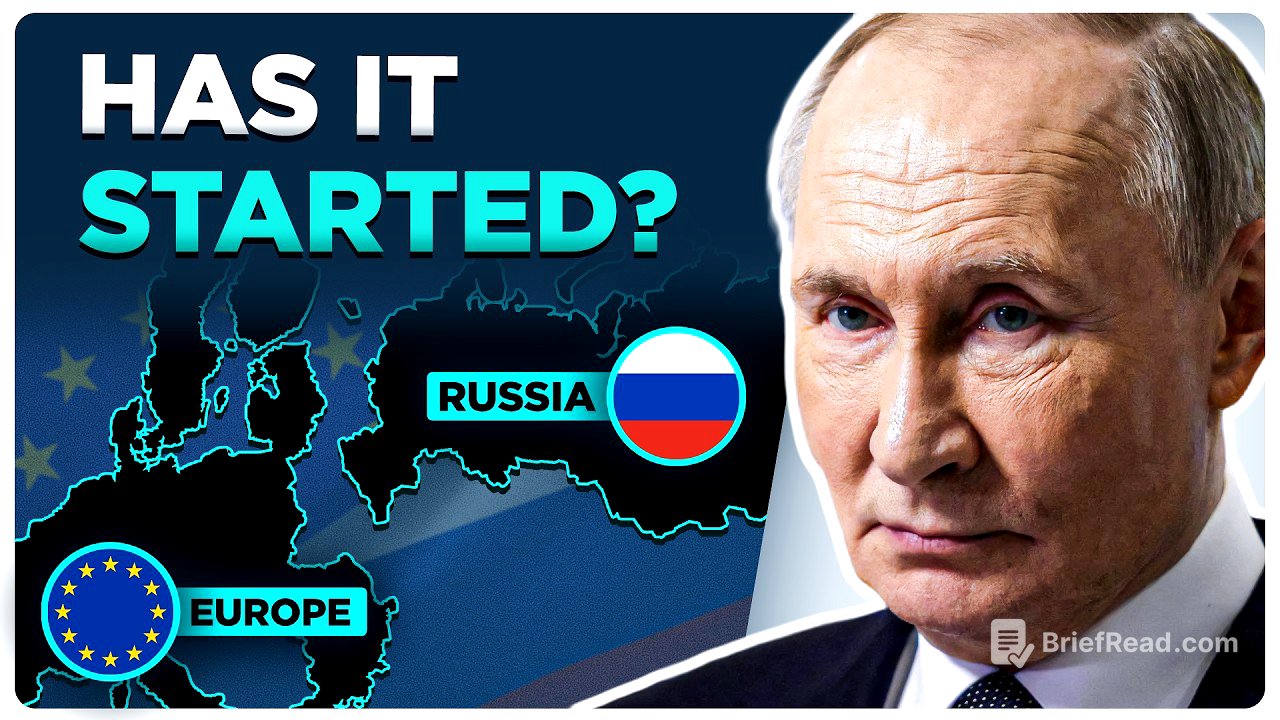
The video explores whether Europe is currently at war with Russia, considering the conflict in Ukraine and the broader context of Europe-Russia relations. It examines traditional definitions of war versus modern interpretations that include proxy conflicts and hybrid warfare. The analysis covers the history of Europe-Russia relations, the impact of the Ukraine war, and arguments for and against the idea that a war is already underway, concluding that the situation exists in a dangerous "grey zone."
- Traditional warfare involves direct military confrontation, while modern warfare includes proxy and hybrid tactics.
- Relations between Europe and Russia have deteriorated significantly, especially after Russia's annexation of Crimea in 2014 and the full-scale invasion of Ukraine in 2022.
- Europe's extensive support for Ukraine and Russia's hostile activities against European states blur the lines between peace and war.
Introduction and Titles [0:00]
The video begins by posing the question of whether Europe is already at war with Russia, noting the increasing sense among Europeans that the continent is drifting towards conflict. Rising defense budgets, intelligence warnings, and hostile rhetoric suggest a dangerous path to full-scale confrontation. Some observers argue that the war has already begun, albeit in a form that differs from traditional wars. The presenter, James Ker-Lindsay, introduces the topic, promising an informed look at international relations, conflict, and security.
War and the Growing Europe-Russia Confrontation [0:53]
The discussion centers on the conventional understanding of war as a direct and overt military confrontation between countries, typically involving the open use of armed force. However, this definition is being challenged by modern warfare, which includes proxy conflicts and hybrid methods like cyberattacks, disinformation, and political interference. These tactics can destabilize societies and cause significant destruction, bringing into question what truly constitutes war. The full-scale invasion of Ukraine by Russia in 2022 has intensified these discussions, raising the question of whether Europe and Russia are heading towards or already engaged in war.
Understanding Proxy and Hybrid Wars [2:07]
The video defines proxy wars as conflicts where outside actors support one or both sides by arming, funding, and advising local participants, allowing major powers to pursue strategic objectives while limiting direct risks. Hybrid warfare involves a mix of military and non-military tools to achieve political goals below the threshold of conventional war, including cyberattacks, election manipulation, disinformation, weaponizing migration, damaging energy supplies, and covert sabotage. These tactics aim to create confusion and make decisive responses difficult. Proxy and hybrid strategies often overlap, with the goal of exerting cumulative pressure to weaken or defeat an enemy through attrition, disruption, and destabilization, rather than overt armed engagement.
Europe-Russia Relations After the Cold War [4:24]
Following the Cold War, there was optimism about Russia and Europe becoming close partners, with deepening economic ties and energy interdependence fostering political relations. Some believed Russia might integrate with the European Union and NATO. However, tensions persisted, particularly regarding NATO enlargement and Western interventions in the Balkans. A critical shift occurred in the early 2000s as Vladimir Putin consolidated power and Russia reasserted itself internationally. The 2008 war in Georgia signaled Moscow's willingness to use force against further Western integration of neighboring states. The annexation of Crimea in 2014 and the conflict in eastern Ukraine led to sanctions and eroded trust, culminating in the near collapse of relations by the time of Russia's full-scale invasion of Ukraine in 2022. The invasion dramatically escalated the existing confrontation.
The Ukraine War and Russia-Europe Confrontation [6:19]
Since Russia's full-scale invasion of Ukraine, the situation has rapidly deteriorated. Europe's response has been unprecedented, with the European Union imposing extensive economic sanctions on Russia, targeting financial institutions, energy exports, technology transfers, and individuals. European governments have supplied Ukraine with advanced weaponry, trained soldiers, and shared intelligence, alongside providing billions in economic and war effort support. From Moscow's perspective, this level of involvement constitutes European participation in the conflict, with Russian officials describing Western states as co-belligerents. Simultaneously, Russia has been accused of conducting cyberattacks, disinformation campaigns, and sabotage operations against European infrastructure and societies, indicating sustained hostility beyond the battlefields of eastern Ukraine.
The Case for an Ongoing Russia-Europe War [8:22]
Arguments supporting the idea that Europe and Russia are already at war emphasize the significant proxy dimension, with Europe arming and financing Ukraine's war against Russia to a degree that suggests participation in the conflict. The intensity and persistence of Russian hybrid activities, including cyber operations, espionage, sabotage, and disinformation campaigns, are viewed as part of a sustained campaign of organized political violence. The increasingly hostile rhetoric from both sides, with Russia portraying Europe as an adversary and European leaders identifying Russia as a direct threat, further supports the argument that a state of war exists, even without direct military confrontation.
The Case Against an Ongoing Russia-Europe War [9:59]
Counterarguments against the idea of an ongoing war highlight the absence of direct, sustained military confrontation between Russian and European armed forces, with fighting confined to Ukraine. The use of sanctions, arms transfers, and cyber operations does not automatically equate to war, as countries have historically engaged in intense rivalry and proxy support without considering themselves at war, as exemplified by the Cold War. European governments have deliberately calibrated their support to Ukraine to avoid triggering a direct confrontation, indicating a recognized line they do not want to cross.
Are Europe and Russia Already at War? [11:16]
The determination of whether Europe is at war with Russia hinges on the definition of war. A narrow, traditional definition focused on open military confrontation would suggest that Europe is not at war but is supporting a partner that is. However, a broader definition encompassing proxy conflict and sustained hybrid aggression presents a more ambiguous picture, as Europe is deeply involved in the war against Russia through its support for Ukraine, and Russia is conducting hostile operations against European states. Critical elements of war are present, and the longer the war in Ukraine continues, the greater the risk that indirect confrontation could escalate into direct conflict. Currently, Europe and Russia exist in a dangerous grey zone, far from being at peace but not engaged in full-scale militarized war.