TLDR;
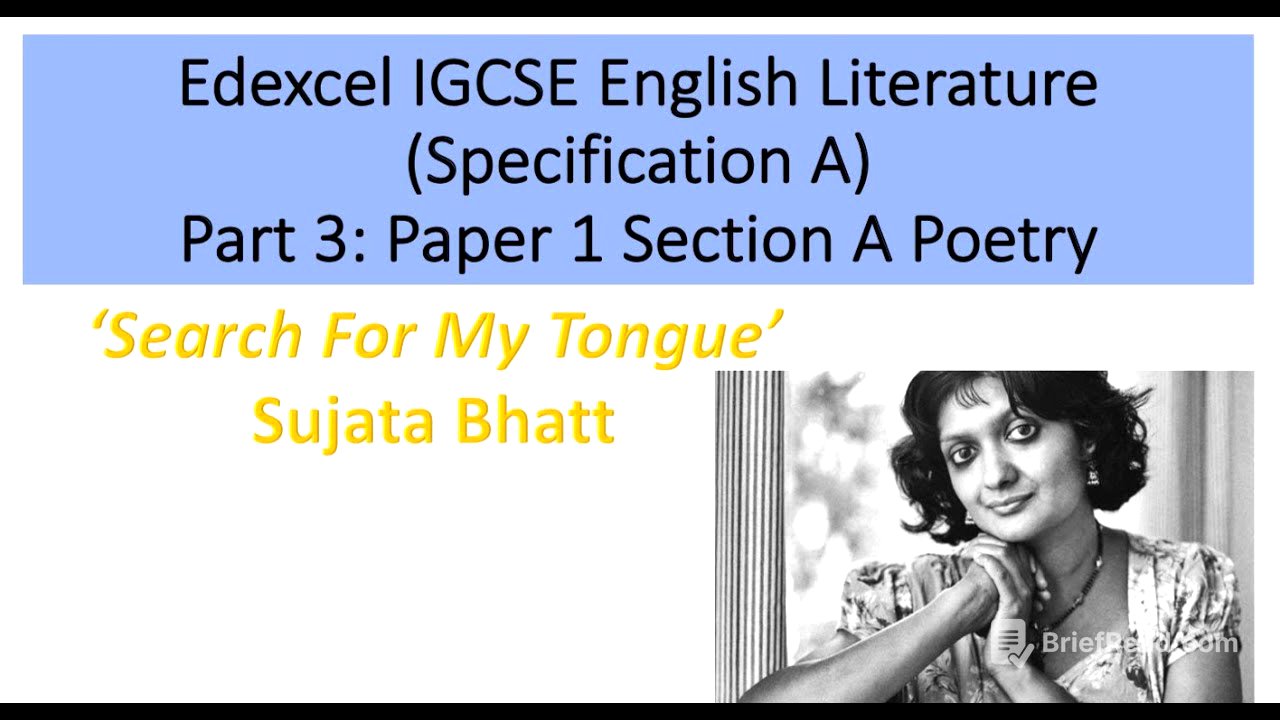
The video provides an analysis of Sujata Bhatt's poem "Search for My Tongue," focusing on themes of identity, language, and cultural heritage. It explores the poet's use of metaphors, imagery, and structure to convey the experience of living with two languages and the fear of losing one's mother tongue. The analysis highlights the poem's turning point where the speaker rediscovers her mother tongue, leading to a triumphant assertion of her cultural identity.
- The poem explores the challenges and discomfort of speaking two languages.
- The use of death and floral imagery contrasts the fear of loss with the joy of rediscovery.
- The structure of the poem, including the use of Gujarati, reinforces the themes of identity and language.
Title and Introduction [0:01]
The poem "Search for My Tongue" suggests a quest for identity or the recovery of a lost sense of self. The term "tongue" relates to language, which is closely linked to one's identity. The poet is in search of something, which means she feels like she has lost something or lacks something.
Stanza 1 Analysis [0:42]
The first stanza uses direct address ("you") to engage the reader and invite them to imagine the experience of having two languages. The poet uses the idiom "lost my tongue" as an extended metaphor, exploring the feeling of literally losing her first language. The poem contrasts the "mother tongue" with the "foreign tongue," highlighting the close link between the first language and identity, while the foreign language feels alien. Imagery of death ("rot and die") describes the fear of losing the first language, with harsh consonant sounds mirroring the struggle between the two languages.
Stanza 2 Analysis [5:41]
A turning point occurs with the phrase "but overnight while I dream," leading into a stanza written in Gujarati, with a phonetic translation provided. This inclusion encourages the reader to grasp the poet's experience. The stanza contrasts with the first, presenting imagery of life and growth ("grows," "blossoms") instead of death. The poet describes her first language as beautiful, highlighting the positive experience of realizing her language and identity are still present. The mother tongue overpowers the foreign language, embedded deeply as cultural heritage.
Structure, Form, and Themes [9:16]
The poem consists of three stanzas, with the middle stanza in Gujarati, visualizing the return of the mother language. This section marks a volta, or turning point, contrasting the defeated tone at the beginning with the triumphant tone at the end. The lack of rhyme and meter mirrors the uncertainty the poet experiences in a foreign country, fearing the loss of her first language and cultural heritage. Key themes include identity, language, immigration, and cultural heritage.