TLDR;
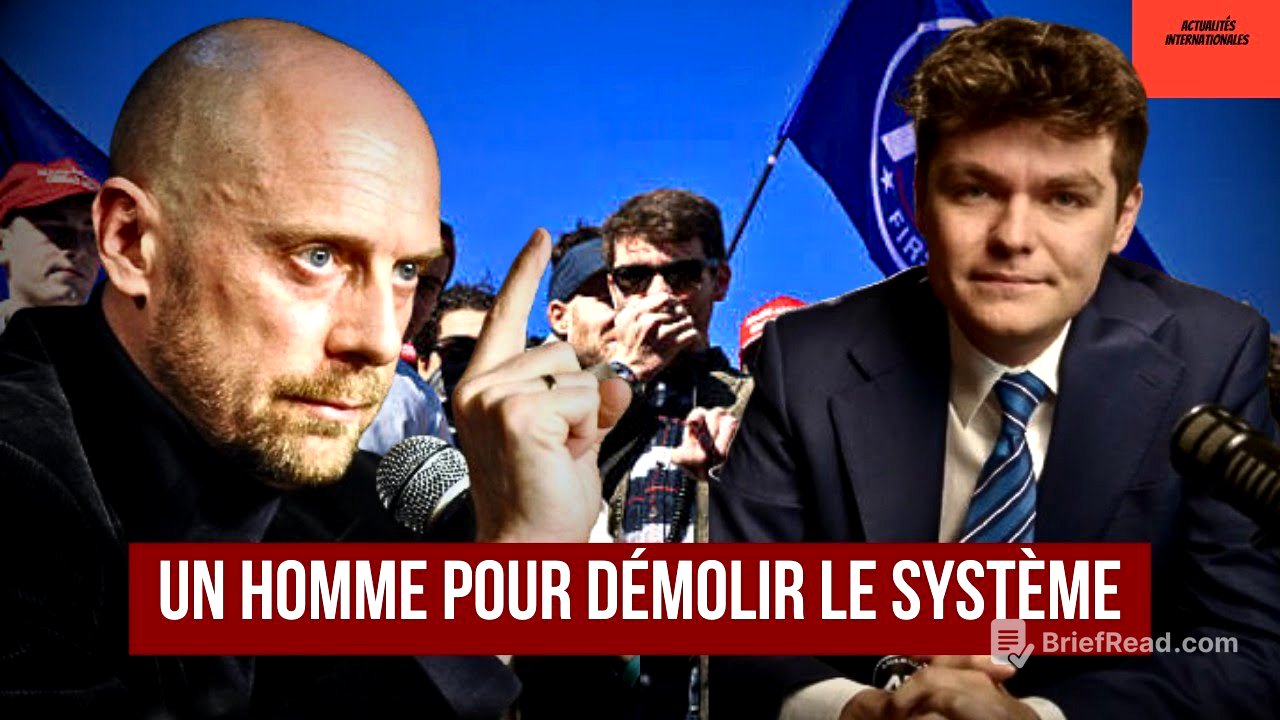
Alain Soral discusses the rise of Nick Fuentes as a symbol of defiance against established norms in the United States. He analyzes Fuentes' impact, comparing him to figures like Charlie Kirk and drawing parallels to historical events and power dynamics. Soral emphasizes the importance of resisting dominant narratives, even in the face of potential consequences, and warns against despair, advocating for continued engagement in the struggle for truth and justice.
- Nick Fuentes represents a challenge to established power structures.
- There's a constant battle between truth and manipulation.
- Despair should be avoided, and resistance is always meaningful.
Introduction [0:00]
Alain Soral introduces the topic of Nick Fuentes, a young American influencer, as a symbol of a new generation of challengers to the established order in the United States. Soral sees Fuentes as representing a break from the norm, someone who speaks freely and challenges official narratives. He suggests that this kind of outspokenness comes at a cost, potentially leading to sanctions, censorship, or worse. Soral uses Fuentes' example to discuss broader themes of power dynamics, political influence, ideological dominance, and the manipulation of consent. He aims to analyze Fuentes' rise and what it reveals about a system that may be faltering.
Nick Fuentes and the Power of Fearless Truth [2:03]
Soral describes Nick Fuentes as an impressive figure who is making a significant impact in the United States, particularly among young people. He notes that Fuentes speaks with a rare purity, using common sense, logic, and personal experience without fear. Soral believes that fear is a major obstacle to clear thinking today, and Fuentes' fearlessness allows him to articulate truths that resonate with many. He acknowledges that Fuentes started with radical views, similar to his own, stemming from the frustration of being betrayed and misrepresented. Soral expresses concern for Fuentes' safety, referencing the fate of Charlie Kirk, who he says died because he started questioning Israel's influence.
The Fate of Charlie Kirk and Public Assassination Ceremonies [3:25]
Soral discusses Charlie Kirk's transformation from a conservative figurehead to someone who questioned Israeli influence in America. Kirk's change in perspective, particularly after witnessing events in Gaza, led him to criticize the unconditional support for Israel, which Soral believes ultimately led to his death. Soral speculates that Kirk may have been assassinated by the Mossad, framing it as a public assassination ceremony reminiscent of the Kennedy assassination, designed to send a message to others in positions of power. This message warns against deviating from the established line, suggesting severe consequences for those who do. Soral recommends reading Laurent Guyénot's work on the Kennedy assassination to understand the concept of public sacrificial ceremonies intended to instill fear.
Historical Parallels: Russia, Putin, and Unexpected Turns [6:11]
Soral draws a parallel between the rise of Nick Fuentes and the emergence of Vladimir Putin in Russia. He recounts how, in the chaos of post-Soviet Russia, oligarchs initially supported Putin, believing he would protect their interests. However, Putin turned against them, asserting his own authority and demanding they work for the benefit of Russia. Soral highlights this as an example of how unexpected figures can rise to challenge established power structures. Similarly, he sees Fuentes as an unlikely figure who, despite operating from humble circumstances, is offering hope and challenging dominant narratives. Soral emphasizes that the fight is never truly over and that unexpected shifts can occur.
The Importance of Fighting Without Expectation of Victory [8:19]
Soral rejects the notion that the current situation is hopeless, arguing that the struggle is never finished. He distinguishes between fighting for a specific outcome and fighting for the sake of resisting falsehoods and injustice. He asserts that when one fights without being fixated on victory, one becomes more resilient and can sustain the fight for the long term. Soral laments the co-option of former dissidents but notes that new, unexpected figures like Fuentes can emerge. He insists that despair has no place in politics and that a spirit of combat and hope is essential.
The Dangers of Despair and the Inevitability of Conflict [10:09]
Soral argues that despair is not a valid political position, emphasizing the need for constant combat and hope. He believes that those in power are facing increasing contradictions, making it harder for them to control the narrative. While acknowledging their efforts to censor dissenting voices, particularly on social media, he predicts a future of increased censorship and potential dictatorship in France, disguised as protection of democracy. Soral criticizes the uncritical support for Israel, contrasting it with the more nuanced views of earlier figures like Joseph Kessel. He calls for understanding the perspectives of others, including legitimate anti-Zionists, and warns against the dangers of dismissing and alienating the majority population.
Warning to the Elites: The Consequences of Contempt [13:05]
Soral warns the Zionist elites that their contempt for the majority population is dangerous, as their lies become increasingly difficult to sustain. He notes a shift from seduction and deception to outright dismissiveness, which he sees as a prelude to conflict. Soral fears that this could lead to a clash between native French and French citizens of immigrant origin, but hopes they will recognize their manipulation. He anticipates that those who have previously collaborated with the elites will turn against them when the power dynamics shift. Soral expresses his concern that the current actions of the elites are creating a reservoir of resentment that could lead to uncontrollable violence, even to the point where his own efforts to promote reason and nuance may be overwhelmed.
Personal Acceptance and the Path to Truth [15:51]
Soral concludes by stating that he has accepted the likelihood of imprisonment for his views, seeing it as part of his journey toward truth. He notes that many historical figures who challenged the status quo faced imprisonment. Soral implies that those who have not faced such consequences may not be genuine in their opposition.