TLDR;
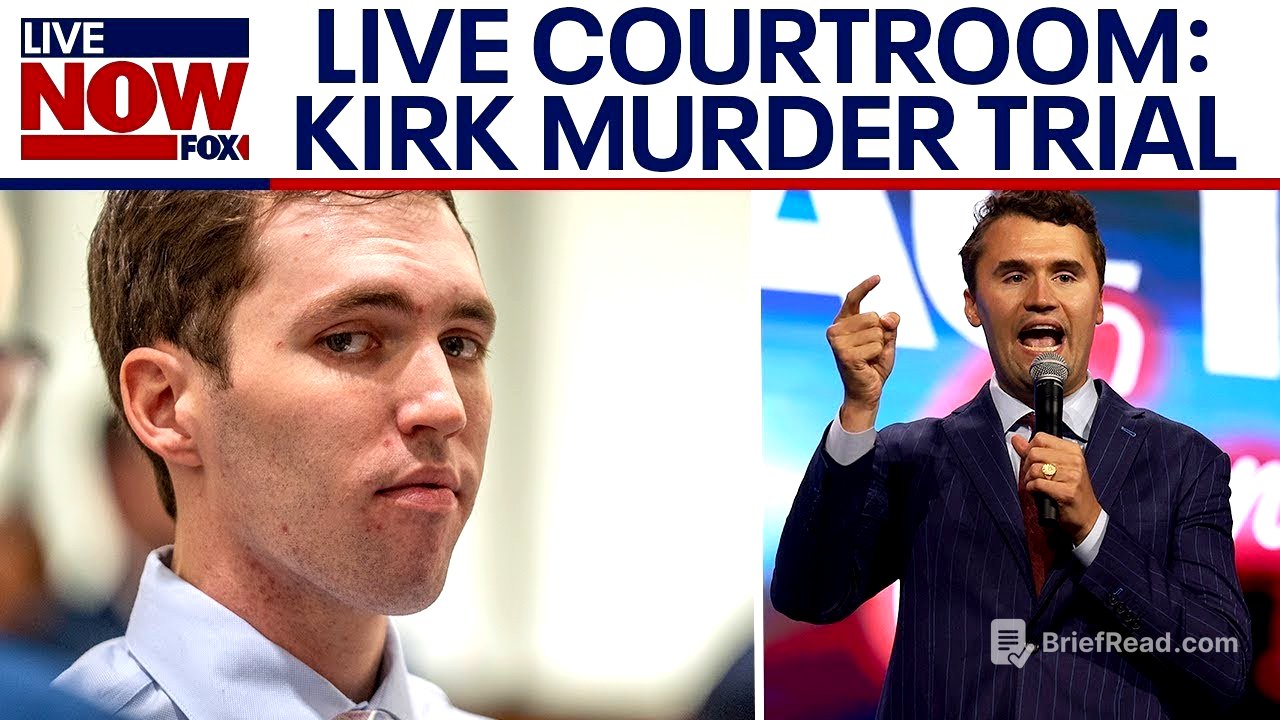
This video features a legal discussion regarding bias in jurors, the impact of pretrial publicity, and the criteria for allowing electronic media coverage of court proceedings. Key points include:
- Implicit bias is difficult to counteract because it requires awareness, motivation, and knowledge of the bias's direction.
- Pretrial publicity can prejudice both the defense and the prosecution, leading to biased outcomes.
- Eliminating implicit bias is not possible, but jury questionnaires can help identify potentially biased jurors.
- The predominant purpose of electronic media coverage should be journalism and dissemination of news, not sensationalism or advertising.
- Individualized findings are required for each proceeding to prohibit or restrict electronic media coverage, rather than a blanket order.
- Electronic coverage has a greater impact than print media due to its visual nature, potentially leading to source misattribution errors by jurors.
Implicit Bias and Jury Instructions [0:00]
The discussion begins with the challenges of addressing implicit bias in jurors. It's noted that overcoming implicit bias requires awareness, motivation to correct it, and knowledge of the bias's direction, which are often lacking. Jurors may unconsciously fail to follow judicial instructions regarding pretrial publicity, genuinely believing they are being impartial.
Impact of Pretrial Publicity [1:16]
Pretrial publicity can bias jurors in favor of either the defense or the prosecution, leading to prejudgment. Various research methodologies, including survey research, jury simulation research, meta-analysis, and the shadow jury paradigm, converge on the finding that pretrial publicity influences jurors' decisions. The goal is to ensure a fair trial for both the defendant and the government, free from the impact of prejudicial pretrial publicity.
Identifying and Addressing Bias [5:29]
It's clarified that jury questionnaires and open-ended questions can help identify potentially biased jurors but cannot eliminate implicit bias. Assessing the extent and nature of exposure to pretrial publicity is crucial. Anti-victim pretrial publicity, particularly in murder cases, can create a perception that the victim was somehow responsible for their own death. Publicity that suggests a defendant was involved in a conspiracy does not necessarily exonerate them but may still point to their guilt.
Expert Conclusions on Pretrial Publicity [9:14]
An expert concludes that the case is situated within a highly prejudicial pretrial environment, posing a substantial risk to juror impartiality. Pre-decisional distortion can cause individuals to dismiss information that doesn't align with their initial story. Exposure to conspiracy theories can affect jurors' story model.
Criteria for Electronic Media Coverage [11:38]
The court is bound by rule 4-401.01 in deciding whether to allow or restrict electronic media coverage. The predominant purpose of electronic media coverage must be journalism and dissemination of news to the public, not sensationalism or advertising. The court should consider whether the coverage serves an educational purpose and reports the news without advancing a particular side of the case.
Individualized Findings and Blanket Orders [18:30]
The court interprets subsection 2D of the rule as requiring individualized findings for each proceeding rather than permitting a blanket order prohibiting coverage. Reasons to prohibit or restrict electronic media coverage must relate to the specific circumstances of the proceeding, not merely reflect generalized views or preferences.
Comparing Electronic and Print Media Coverage [23:10]
Electronic coverage has a greater impact than print media due to its visual nature, potentially leading to source misattribution errors by jurors. The visual of the courtroom can create a backdrop that jurors confuse with trial proceedings. Audio coverage is qualitatively different, as it's less likely to be used as a backdrop for prejudicial commentary.
Closing Arguments and Key Considerations [27:46]
The defense argues that the Estes case, which addresses prejudicial pretrial publicity in high-profile cases, has not been overruled. Utah Supreme Court cases have cited Chandler and Estes in the context of juror misconduct and proposed modifications to prohibitions on court coverage.