TLDR;
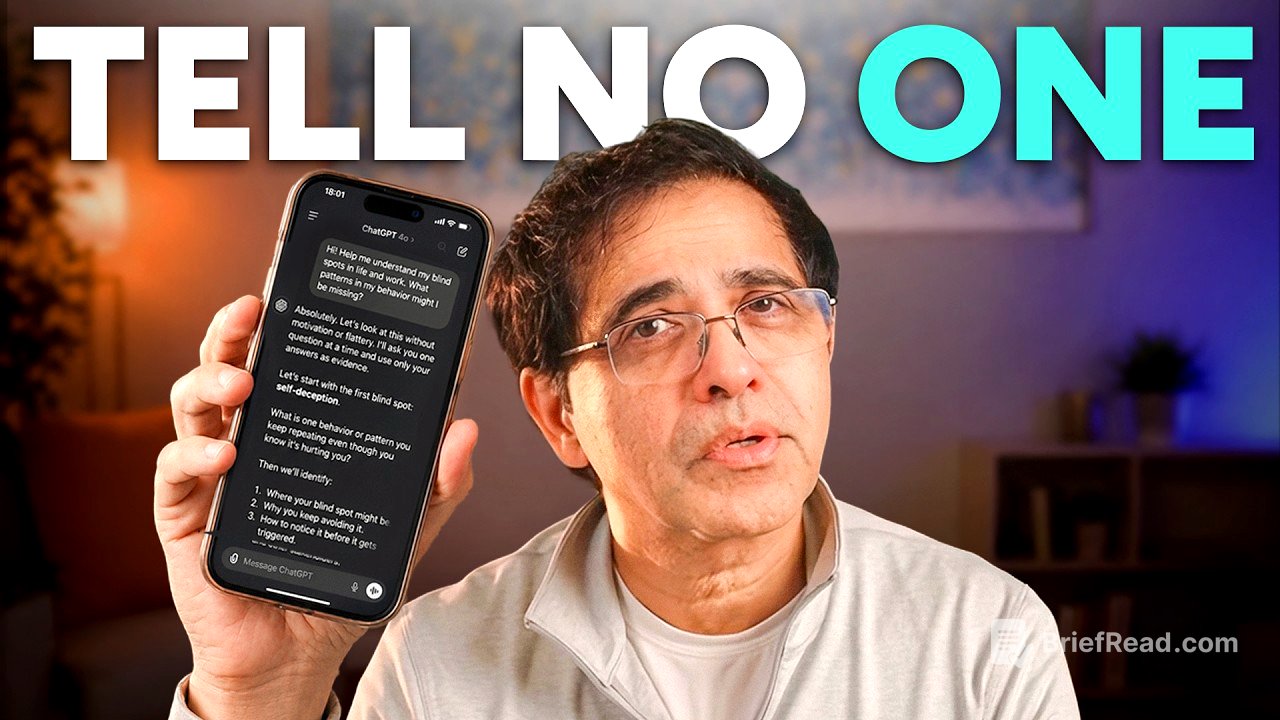
This video by Sandeep Swadia presents how AI can be leveraged to identify and address five blind spots that hinder personal growth. Each chapter delves into a specific blind spot, explaining why it occurs and how AI can assist in overcoming it through concrete actions and prompts.
- AI can act as an investigator, counterparty, mapmaker, simulator, and debrief partner.
- Each blind spot is accompanied by practical prompts to engage with AI and gain insights.
Blind Spot 1: Deception [0:00]
The first blind spot examined is deception, where individuals continue harmful behavior despite knowing its consequences. Just as a black box records vital data for airplane investigations, one's life is likened to a black box rich with information. AI can function similarly, acting as an investigator to evaluate behavior patterns. A provided prompt ensures AI helps explore blind spots by asking targeted questions to uncover reasons behind self-sabotaging actions. While AI offers insights, it should be treated as a hypothesis rather than a diagnosis, acknowledging that self-deception is often difficult to recognize.
Blind Spot 2: Relationships [5:50]
The second blind spot focuses on relationships and the narratives we create about others. A study showed that couples who wrote about their conflicts from a neutral perspective reassessed their arguments and improved their communication. AI can assist in this area by providing a counterparty perspective. The suggested prompt encourages users to articulate their conflicts and allows AI to argue the other person's side. This practice aims to foster better understanding and prevent conflicts from escalating further by identifying unacknowledged feelings and weaknesses in one’s arguments.
Blind Spot 3: Identity [9:40]
The third blind spot relates to one's identity and the misconception of a static self. Many individuals fall prey to the "end of history illusion," believing they won't change much in the future despite rapid past transformations. AI serves as a mapmaker to aid in navigating personal reinventions. Users are prompted to identify their current situations and desired future states, allowing AI to create an actionable plan. This process requires understanding which strengths will persist and which may hinder future growth while advising that emotional costs of change can be complex.
Blind Spot 4: Forks [14:15]
The fourth blind spot highlights decision-making at critical crossroads in life. Using the concept of a premortem, AI can simulate potential outcomes of decisions before they are made. The prompt allows users to detail options and constraints while AI helps envision worst-case scenarios for each path. This method provides clarity on potential risks and consequences, allowing individuals to make informed choices. The discussion emphasizes distinguishing between one-way and two-way decisions to better navigate life’s complexities.
Blind Spot 5: Trials [17:55]
The final blind spot deals with trauma and pain following failures or trials. Rather than the events themselves, it’s the ongoing stories about the self that perpetuate suffering. Research indicates that expressing feelings about painful experiences through writing can lead to enhanced emotional health. In this chapter, AI acts as a debrief partner, using prompts to guide the sharing of one’s story and reflections. This process helps in assessing the factual aspects of experiences and clarifying the meaning individuals derive from them. While AI can aid in processing emotions, it’s important to recognize when to seek professional support for deeper issues.