TLDR;
The video focuses on the significance of slave narratives, particularly those from the 18th century, examining the complexities of identity and resistance related to slavery. It highlights the life of Olaudah Equiano, a freed slave whose autobiography raised awareness about the horrors of slavery and contributed to the abolition movement. Key points include:
- The emerging form of cultural resistance through slave narratives.
- Equiano’s dual identity as both African and English, capturing the nuances of being a free Black man in 18th century British colonial society.
- The differing perspectives on domestic African slavery versus American slavery.
Slave Narratives and Cultural Resistance [0:00]
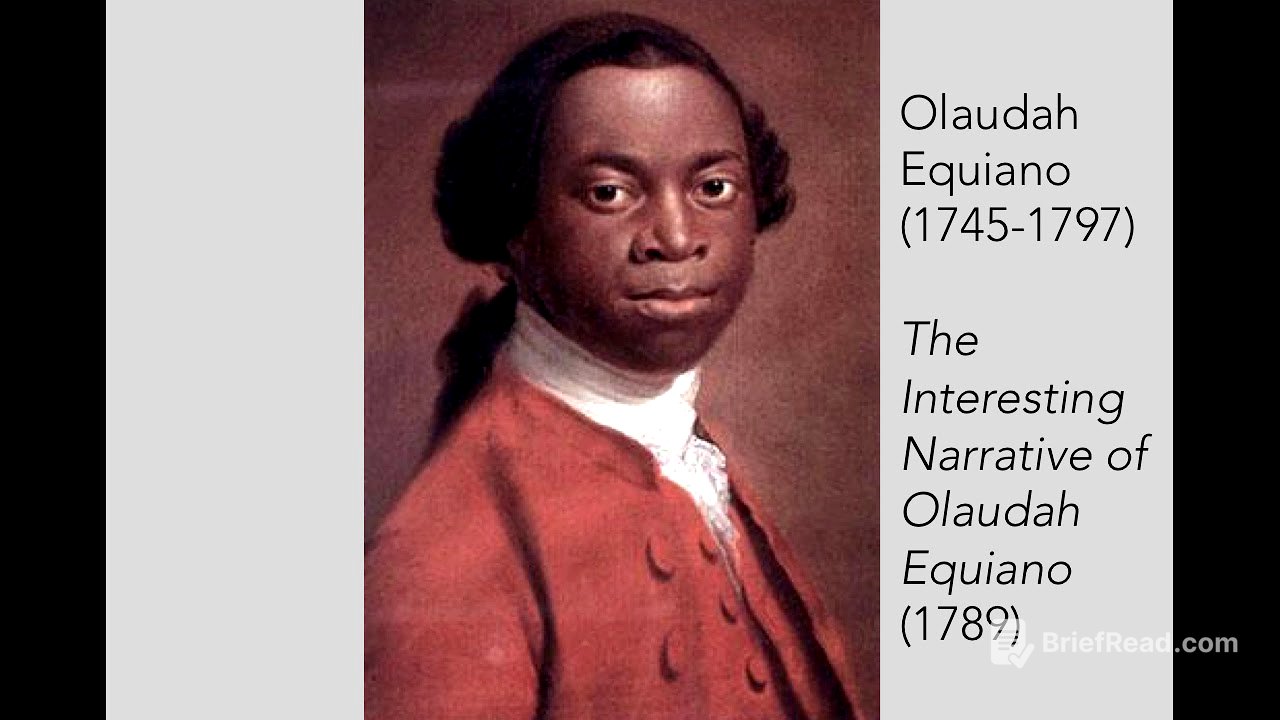
The lecture begins with the introduction of slave narratives as a new form of cultural resistance that emerged during the 18th century. These autobiographies vividly detail the brutality of slavery and the Middle Passage while arguing for abolition. Specifically mentioned is the narrative by Olaudah Equiano, published in 1789, which also showcases various literary dimensions, including adventure, travel, and political commentary.
The Life of Olaudah Equiano [2:05]
Equiano, an Ebo of noble birth from present-day Nigeria, was kidnapped at the age of eleven and sold into slavery. His narrative details an unusual life, including experiences of domestic slavery in Africa before arriving in the British colonial world. His life story illustrates the complex intersection of race, culture, and class status in an era marked by slavery.
Themes in Equiano's Narrative [3:30]
Equiano's autobiography reveals the complexities of being a free Black man in the 18th century. Although he advocated for abolition, his views were nuanced; he acknowledged African domestic slavery in a more favorable light compared to American slavery. His experiences illustrate how societal constructs can complicate the notions of freedom and identity.
Equiano's Dual Identity [5:17]
Equiano’s narrative highlights the tensions between his African heritage and his English identity. He affectionately regards England but navigates the reality of being viewed as different due to his race. This dual identity leads to a tension where he is viewed as both an insider and an outsider within colonial society.
Cultural Portrayal of African Life [7:24]
In his writing, Equiano counters negative stereotypes by portraying the rich cultural life of his Ebo people in Africa. He emphasizes their clean living, family structures, and agricultural practices, arguing against the notion that Africans lived a primitive or savage existence. His insistence on the diversity of African cultures showcases that a singular African identity is reductive.
Equiano’s Personal Journey [9:23]
The personal journey of Equiano includes critical life events such as his near-death experience, which led to a spiritual awakening and a reconversion to Methodism. His marriage to a white English woman and the ensuing loss of his family further shaped his perspectives and commitments toward abolitionism.
Resistance and Abolitionism [11:22]
By the end of his narrative, Equiano evolves into a strong advocate for abolition. His gradual shift in perspective reflects not only his personal journey but also a strategic decision to appeal to white readers by tempering his criticism of slavery at the outset. His story exemplifies the tension in advocating for change within a society that broadly condoned slavery.
Equiano's Later Life and Legacy [13:43]
After settling in London, Equiano became actively involved in the abolitionist movement, influencing legislation through his best-selling autobiography. His work contributed to the eventual British ban on the transatlantic slave trade in 1807 and laid a framework for future slave narratives. His legacy endures as a powerful testimony of the struggle for freedom and equality.