TLDR;
This video provides an overview of the Atlantic slave trade and its historical context, detailing its beginnings, development, and impact. It covers key points such as:
- The peak of the Atlantic slave trade occurring in the 18th century.
- The initial involvement of the Portuguese in slave trading and how it transitioned to Dutch and eventually British control.
- The methods of capturing and selling slaves, including the role of African middlemen and the conditions of the Middle Passage.
Overview of the Atlantic Slave Trade [0:00]
The lecture begins with a preview of the series on Africa and the Atlantic slave trade, discussing the structure of the previous lectures. A notable painting from 1840 by JMW Turner is introduced, depicting British slave traders drowning slaves to claim insurance. The incident occurred in November 1781 on the British slave ship Zong, influencing abolitionist sentiment during its time.
The Scale and Peak of the Slave Trade [3:20]
The lecturer explains the numbers and scope of the Atlantic slave trade, highlighting its peak in the 18th century. Before 1600, about a quarter million slaves were brought to British America, with most arriving post-1500. It states that the Atlantic slave trade began in 1441 when Portuguese captain Anton Gonzales kidnapped two slaves, starting a trend that escalated over the following centuries.
Early Slave Trade Practices [5:00]
Initially, the Portuguese controlled the early slave trade, using it to acquire both gold and slaves. By the 1480s, the Portuguese were exporting around 700 slaves annually, primarily to Spain and Portugal. The shippers typically acquired slaves through collaboration with local African rulers or through warfare.
The Role of Trading Posts [10:00]
The establishment of trading posts, like El Mina in 1471, played a significant role in the slave trade. These posts served as centers for holding slaves and were often operated by Europeans but sometimes run by African middlemen. Slaves at these posts were traded for goods like textiles and firearms, which were in high demand among African rulers.
Changes in Trade and Sources of Slaves [15:00]
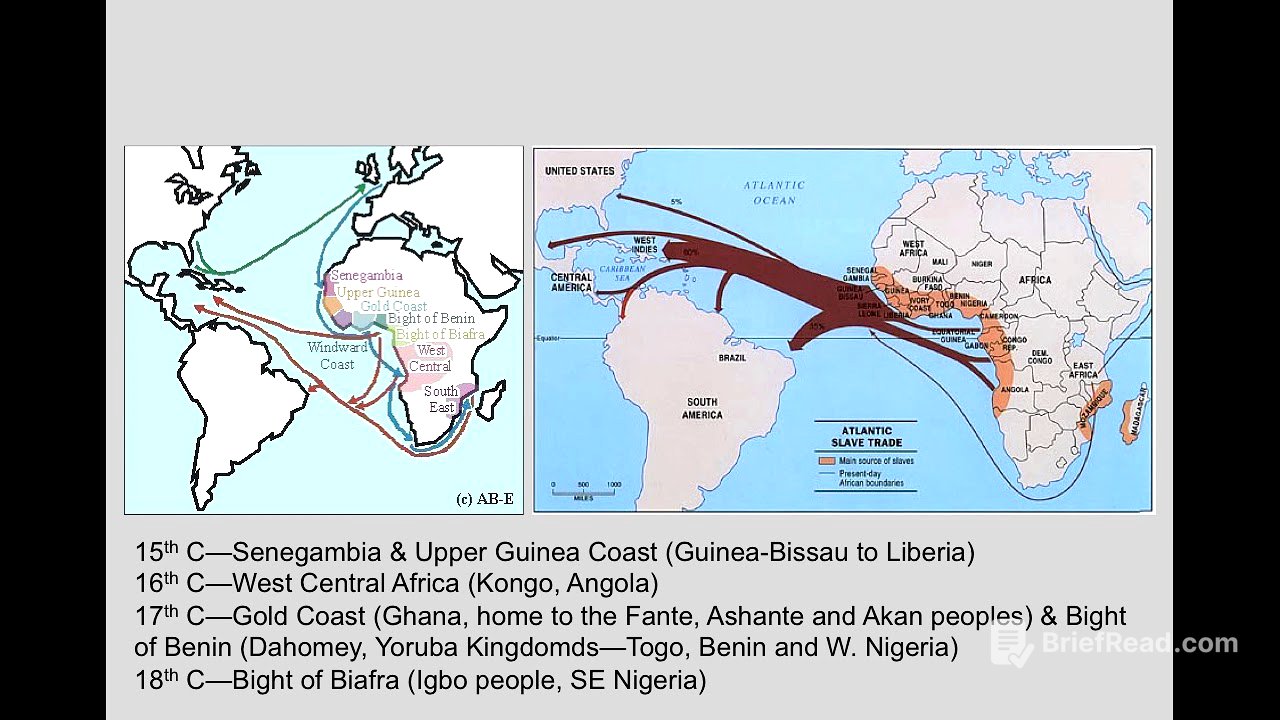
The lecture discusses the shift in slave sources over time, moving from Senegambia and the upper Guinea coast to West Central Africa and the Gold Coast. By the 18th century, the trade expanded to include the Bight of Biafra, where the Ebo people lived.
The Nature of Slavery and the Middle Passage [20:00]
The Middle Passage is described as a harrowing journey where slaves faced overcrowding, poor sanitation, and high mortality rates. It reports that sickness and revolts occurred frequently on these voyages, although conditions improved by the mid-18th century as demand for slaves increased.
Slave Revolts and Rebellion [25:00]
Slave revolts were common, with numerous documented uprisings occurring during voyages. The chances of a successful revolt were slim, with the majority ending in failure and resulting in significant casualties. Notable revolts on specific ships indicated trends regarding the leadership of revolts and the demographics of captives.
Conclusion and Transition to Next Lecture [30:00]
The lecture concludes by stating that the next discussion will focus on how slavery developed in the American colonies and its complex relationship with the notion of freedom throughout American history.