TLDR;
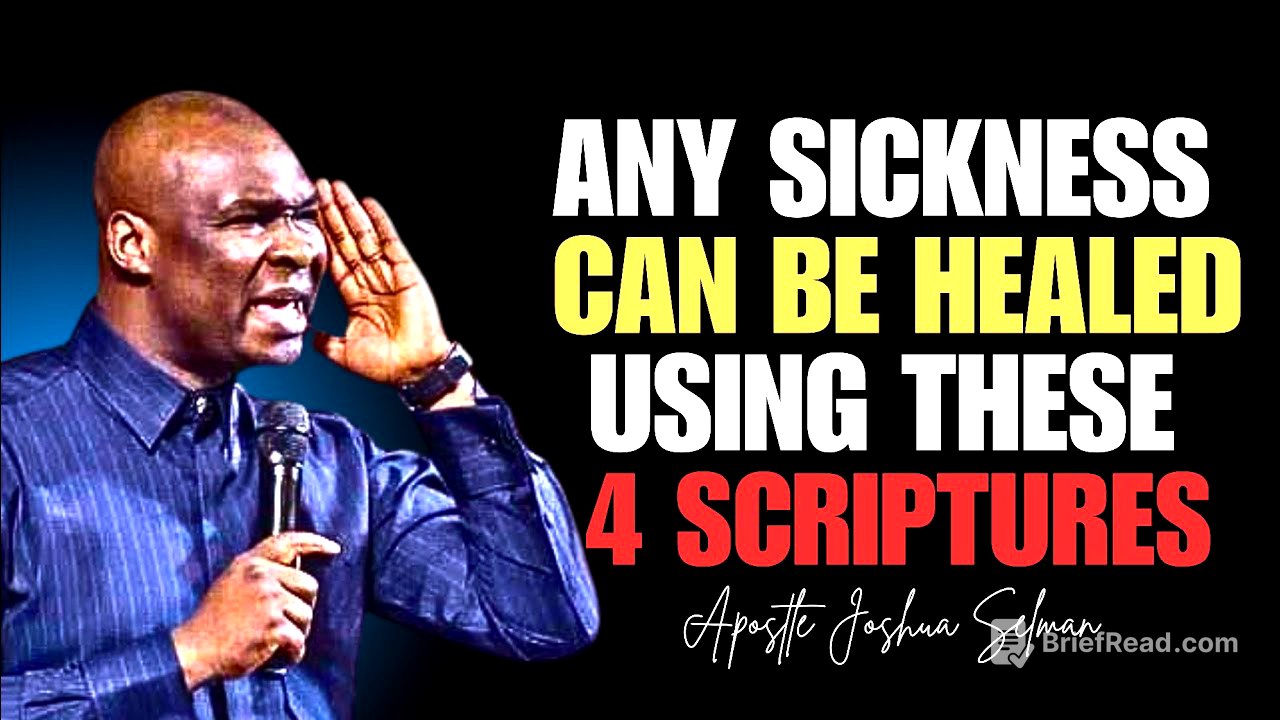
In this powerful sermon, the speaker discusses the promise of restoration and healing as mentioned in Jeremiah 30:17. He emphasizes the importance of understanding key concepts such as health, healing, wounds, and the term outcast. The speaker provides definitions and deeper insights into these words, showing how they relate to personal and spiritual restoration. Additionally, he offers practical steps to experience God's healing power, including standing on the Word of God and reaching out in faith, highlighting numerous scriptural examples. The message concludes with a prayer for restoration and the removal of barriers that prevent healing and blessings.
- Health is defined as a state of complete physical, mental, and social well-being, synonymous with liberty.
- Healing involves restoration to an original or better state, including emotional strength following trauma.
Restoration and Healing [0:00]
The sermon begins by reading Jeremiah 30:17, where God promises restoration and healing. The significance of the words "restore health" and "heal wounds" is emphasized, suggesting that God’s healing is not just from physical sickness but from deeper emotional and spiritual wounds. The term "outcast" refers to those who feel rejected, which is also addressed in the context of God’s restoring work.
Understanding Key Terms [3:00]
The speaker outlines four important words in the context of restoration: health, heal, wounds, and outcast. He defines health as a state of complete well-being and emphasizes that healing also encompasses emotional and psychological recovery. The term heal means to restore someone to soundness, suggesting that healing goes beyond mere absence of illness. Wounds are described not only as physical injuries but also as emotional hurts caused by life events, indicating that healing must address both areas. Finally, being an outcast implies rejection and a lack of acceptance, which God promises to remedy.
Experiencing God's Healing Power [6:36]
The speaker shares two critical keys to experiencing divine healing: Firstly, locating and standing on the Word of God regarding healing. He cites specific scriptures, such as Isaiah 53:5, emphasizing that acknowledging and claiming these promises is essential. The second key involves reaching out and accepting healing by faith, regardless of current symptoms. Through examples like the story of a man healed after 38 years, he stresses that personal responsibility in faith is necessary for healing to manifest.
Examples of Faith and Healing [12:15]
Drawing from biblical narratives, the speaker discusses Jesus' interactions with individuals needing healing, emphasizing the importance of faith and personal action. He urges listeners to seek God actively and to believe in miraculous outcomes, highlighting the anointing’s power in healing. The woman with the issue of blood serves as a key example, demonstrating that faith can compel God's power to respond.
Call to Prayer and Healing [22:43]
In this segment, the speaker leads an impassioned prayer for restoration and healing for listeners, encouraging them to actively engage by lifting their voices and seeking God's intervention. He addresses financial struggles, emotional wounds, and spiritual barriers, calling for the anointing of the Holy Spirit to break these chains.
Closing Remarks and Encouragement [51:03]
The sermon concludes with reminders of God’s ability to enable breakthroughs and blessings. The speaker encourages those watching to remain faithful and reach out for healing. A heartfelt call to action is made, inviting listeners to share their testimonies and encourage each other in the faith, reinforcing the commitment to pray for each other and see God's promises fulfilled.