TLDR;
This lecture covers the founding of the Mid-Atlantic colonies and the colonial policy during the Restoration period in England. It discusses the consequences of the English Civil War, shifts in colonial governance, and the establishment and development of various colonies such as Carolina, New Jersey, Pennsylvania, and Georgia.
- The English Civil War led to the execution of Charles I and the establishment of a Puritan Commonwealth, influencing immigration patterns to the New World.
- Restoration under Charles II aimed to enforce greater royal control over the colonies and introduced the Navigation Acts to regulate trade.
- Important colonies discussed include Carolina, with its unique aristocratic government; the mid-Atlantic colonies, including the Dutch settlements; and proprietary colonies like Pennsylvania founded for religious freedom.
Founding of the Mid-Atlantic Colonies [0:08]
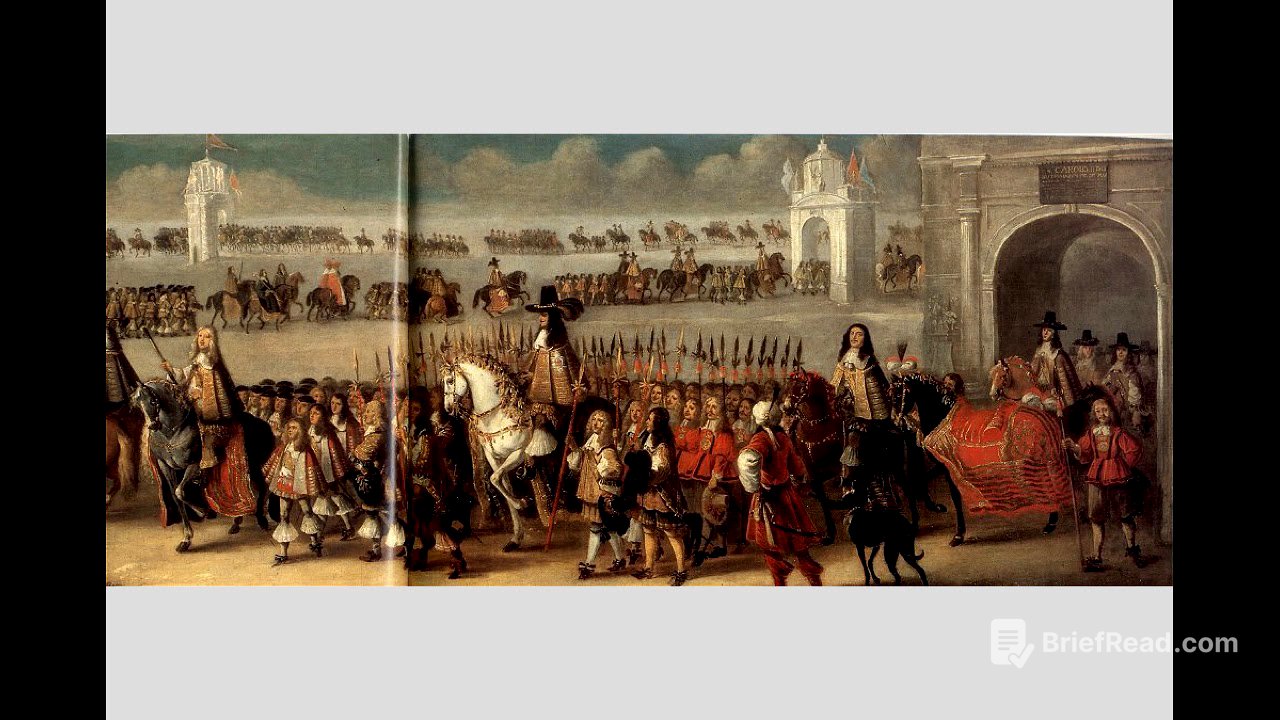
This chapter focuses on the background of England leading to the founding of the Mid-Atlantic colonies. It covers the English Civil War, where conflicts between Stuart monarchs and Parliament led to Charles I’s execution and the rise of Oliver Cromwell. After Cromwell’s death, the Restoration in 1660 saw the return of Charles II, who sought to tighten royal control over the colonies and enforce policies that influenced colonization. The chapter establishes how these historical events shaped colonial governance in the New World.
Colonial Policy and the Restoration [8:12]
This section discusses the colonial policies under Charles II, noting the shift towards more systematic governmental control over the colonies. It highlights that prior to the Restoration, English monarchs had limited direct power over colonies. The chapter details the roles of proprietary colonies and private companies in early colonization, exemplified by the Virginia Company. Charles II's goals included increased direct control and a push to establish a mercantilist economy, culminating in the Navigation Acts that regulated trade, specified commodities, and sought to enhance royal revenue.
Establishment of Carolina [25:48]
Carolina was the first colony established after the Restoration, created under a charter granted to eight proprietors in 1663. The chapter explains how Anthony Ashley Cooper and John Locke contributed to the colony's governance structure, envisioned as an aristocracy rather than a democracy. The initial settlement occurred in Charleston in 1680, with land and power concentrated among a small number of noblemen. The chapter further examines the economic divisions between North and South Carolina, including the types of agriculture practiced in each region, and the eventual split of the colony in 1729.
Founding of New Jersey [43:58]
This chapter introduces New Jersey, acquired by the Duke of York in 1664 and later granted to his supporters. The chapter highlights New Jersey's establishment as a colony promising settlers representative government, religious freedom, and land grants to attract a diverse population. The governance of New Jersey was marked by its relative tolerance and the efforts to promote settlement amidst competition with other colonies.
Founding of Pennsylvania [55:29]
Pennsylvania was founded by William Penn, a Quaker, who sought to create a religious haven. The chapter details Penn’s charter from Charles II, granting him land and political control while requiring adherence to the Navigation Acts. Relations with Native Americans were initially peaceful as Penn negotiated land purchases. The chapter also discusses the colony's growth, which attracted settlers from various backgrounds, and the struggles to balance Penn's aristocratic tendencies with the colonists' demands for self-representation.
Founding of Georgia [1:19:00]
Georgia was established as a buffer between English colonies and Spanish Florida and aimed to reform debtors' conditions. Founded by James Oglethorpe in 1732, the colony had anti-slavery and anti-liquor policies but faced challenges in attracting settlers. The early governance was strict, leading to unrest among colonists who eventually petitioned for more autonomy. With the transition to a royal colony in 1751, slavery and land ownership regulations were relaxed, contributing to Georgia's growth and economic development.