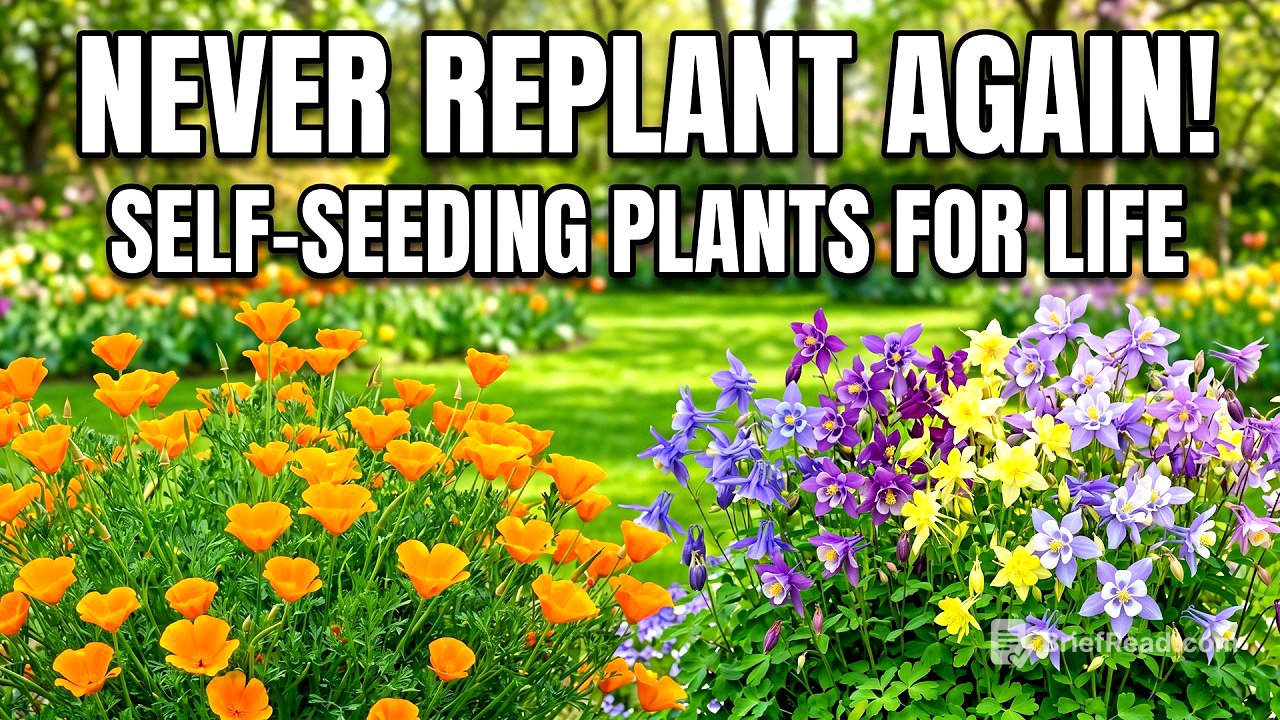
TLDR;
This video provides a guide to 13 self-seeding plants that can be started in May, offering a sustainable and cost-effective way to maintain a vibrant garden. These plants not only thrive with minimal intervention but also support local wildlife and add unique characteristics to your garden.
- Rose Campion, Evening Primrose, Love in a Mist, Borage, California Poppy, Yarrow, Hollyhock, Purple Top Verbena, Foxglove, Bee Balm, Columbine, Black-Eyed Susan, and Purple Coneflower are highlighted for their self-seeding capabilities and various benefits.
- The video emphasizes the importance of understanding each plant's specific needs, such as soil type, sunlight exposure, and hardiness zones, to ensure successful growth and self-seeding.
- It also advises against excessive cleanup in the fall, as leaving seed heads intact and allowing for patches of open soil are crucial for the plants to naturally propagate and return the following year.
Rose Campion [1:00]
Rose Campion is a short-lived perennial known for its bright magenta flowers and soft silver-gray foliage, thriving in USDA zones 4 through 8. It self-seeds prolifically, ensuring its continuous presence in the garden. For planting, scatter seeds on bare soil in May without burying them, as light is needed for germination. It prefers poor, dry, gravelly soil over rich compost. Its woolly foliage is unappealing to deer and rabbits, making it suitable for problem areas.
Evening Primrose [2:10]
Evening Primrose is a biannual that acts like a perennial due to its reliable self-seeding. Its flowers open at dusk, offering a unique visual experience. It grows well in USDA zones 4 through 9, tolerating poor soil, dry ground, full sun, and light shade. Direct sow in May where you want it to grow, avoiding transplanting, and thin seedlings to about 6 inches apart. The plant can reach 4 to 6 feet tall, and leaving the seed heads standing provides food for gold finches and small songbirds.
Love in a Mist [3:15]
Love in a Mist is an annual that self-seeds heavily, ensuring its return each year. Adaptable across USDA zones 2 through 11, it requires direct sowing in full sun on bare soil, with seeds pressed gently but not buried more than 1/8 of an inch deep. It does not transplant well, so start it where it is intended to grow. Gardeners appreciate both the flowers and the seed pods, which dry beautifully and can be used in arrangements.
Borage [4:10]
Borage is a useful self-seeding plant for vegetable gardens, featuring vivid blue star-shaped flowers and edible leaves with a cucumber scent. Although technically an annual, it returns every season through self-seeding in USDA zones 2 through 11. Direct sow seeds in May about half an inch deep in full sun and average to poor soil, thinning plants to around 12 inches apart. Bees love it, and it attracts beneficial insects to tomatoes and squash.
California Poppy [5:10]
California Poppy creates vibrant orange hillsides through its self-seeding and ability to thrive in challenging conditions. It is an annual that can become a repeating display in USDA zones 6 through 10. Direct sow in May on bare soil, avoiding covering the seeds or overwatering, as it prefers lean, well-drained soil. Available in various colors, mixing them can lead to unique color combinations. Dense plantings act as living mulch, suppressing weeds.
Yarrow [6:14]
Yarrow is a tough perennial that tolerates drought, poor soil, full sun, shade, compacted ground, and neglect. It spreads through seeds and underground rhizomes, filling difficult spaces in USDA zones 3 through 9. Sow seeds on the soil surface in May, pressing them gently into raked soil and thinning seedlings to about 12 inches apart. Avoid rich soil to prevent weak growth. It feeds bees, butterflies, and hoverflies, and its seed heads provide winter structure.
Hollyhock [7:19]
Hollyhock evokes a farmhouse garden feel with its tall flower spikes and soft colors. It is a biennial or short-lived perennial that self-seeds reliably in USDA zones 3 through 9. Plant it along fences, walls, or at the back of a border, as it can reach 5 to 8 feet tall. Sow directly in May, pressing seeds about 1/4 inch deep, and thin seedlings to 18 to 24 inches apart. Avoid late transplanting due to its deep taproot. Manage hollyhock rust by allowing seedlings to appear in different spots each year and removing infected leaves.
Purple Top Verbena [8:26]
Purple Top Verbena offers height without heaviness, featuring tall, thin stems with purple flower clusters. It behaves as a perennial in USDA zones 7 through 11 and often returns from self-sown seedlings in zones 5 and 6. Surface sow in May, pressing seeds lightly into the soil, and be patient as germination can take up to 3 weeks. It is highly attractive to butterflies, especially in late summer.
Foxglove [9:25]
Foxglove is a breathtaking but toxic plant with tall spires of tubular flowers in various colors. It is usually a biennial that self-seeds reliably in USDA zones 4 through 9, preferring partial shade. Surface sow the tiny seeds in May, mixing them with dry sand for even spreading. Plant toward the back of the border, as flower spikes can reach 3 to 5 feet. Every part of foxglove is toxic to humans and animals, so grow it away from play areas and wear gloves when handling it. Deer and rabbits avoid it due to its toxicity.
Bee Balm [10:33]
Bee Balm attracts bees, butterflies, and hummingbirds with its shaggy blooms in red, pink, lavender, purple, or white. It is a true perennial and a North American native that spreads by underground rhizomes and self-seeds in USDA zones 3 through 9. Sow seeds on the soil surface in May or divide established plants in spring. Space plants about 18 to 24 inches apart, allowing for spread. Choose mildew-resistant varieties for better performance. Its fragrant leaves were traditionally used as tea.
Columbine [11:42]
Columbine is a self-seeding flower ideal for shade, featuring nodding blooms with delicate petals and long backward spurs. Cross-pollination can lead to new color combinations. It is a perennial in USDA zones 3 through 9, performing well under light tree cover and along north-facing borders. Sow seeds on the soil surface in May, chilling them for 3 to 4 weeks before sowing for better germination. The seeds can be toxic if eaten in large amounts. It is ecologically valuable as a host plant for some butterflies.
Black-Eyed Susan [12:46]
Black-Eyed Susan is a wild, tough cousin of the sunflower with golden yellow petals and a dark central cone. It is a durable native flower for wildlife gardens in USDA zones 3 through 9, preferring full sun and medium to dry soil. Sow seeds on the soil surface in May, pressing them gently into the ground. Thin seedlings to 12 to 18 inches apart. Identify it by the rough texture of its leaves and stems. Leave seed heads standing for gold finches and other small birds to feed on through fall and winter.
Purple Coneflower [13:47]
Purple Coneflower is a native to the North American prairie, hardy in USDA zones 3 through 9, and drought-tolerant once established. It is a long-blooming plant valuable for wildlife, turning a garden into an ecosystem. Its purple-pink petals sweep back from a raised spiky orange-brown cone. Sow seeds on the surface of raked soil in May, chilling them first in colder zones. It may not be impressive in year one but compounds over time, providing years of flowers, pollinator activity, bird food, and self-seeded new plants. The seed heads are important for gold finches through fall and winter.
Planting Recommendations and Avoiding Mistakes [15:17]
For dry, poor grounds, use Rose Campion, California Poppy, and Yarrow. For shade or part shade, choose Columbine, Foxglove, and Evening Primrose. For maximum wildlife value, plant Purple Coneflower, Black-Eyed Susan, Bee Balm, Borage, and Purple Top Verbena. For cottage garden height, use Hollyhock, Foxglove, and Evening Primrose. Avoid cleaning up too early by leaving seed heads standing and small patches of open soil to allow plants to self-seed for the next year.


![Download NetFlix Enola Holmes (2020) Dual Audio {Hindi-English} WeB-DL 480p [350MB] || 720p [1GB] || 1080p [3.3GB] - MoviesMod | Movies Mod 2025, MoviesMod Official, MoviesMod.blue](https://wm-img.halpindev.com/p-briefread_c-10_b-10/urlb/aHR0cHM6Ly9tb3ZpZXNtb2QuYmx1ZS93cC1jb250ZW50L3VwbG9hZHMvMjAyMC8wOS9Eb3dubG9hZC1OZXRGbGl4LUVub2xhLUhvbG1lcy0yMDIwLUR1YWwtQXVkaW8tSGluZGktRW5nbGlzaC1XZUItREwtNDgwcC1NQi03MjBwLTkwME1CLTEwODBwLTEuOEdCLnBuZw==.jpg)


![ChatGPT Tutorial 2025 - [Become An AI Power User in 30 Minutes]](https://wm-img.halpindev.com/p-briefread_c-10_b-10/urlb/aHR0cDovL2ltZy55b3V0dWJlLmNvbS92aS9kRzNPM2VQai1iOC9ocWRlZmF1bHQuanBn.jpg)