TLDR;
This video discusses the concept of "proof" and "truth" through the framework of philosophical discussions rooted in Vedas and scriptures. The speaker emphasizes the importance of verifying the truth of objects through various means of proof, explaining how direct perception, inference, and testimony from authoritative sources contribute to establishing authenticity. The discussion culminates with a focus on key philosophical tenets that guide individuals in understanding the essence and meaning of existence as presented in the scriptures.
- Proof is categorized into several forms, including direct perception, inference, and verbal testimony.
- The significance of scriptures as authoritative sources in understanding spiritual truths is highlighted.
Understanding Proof and Truth [0:00]
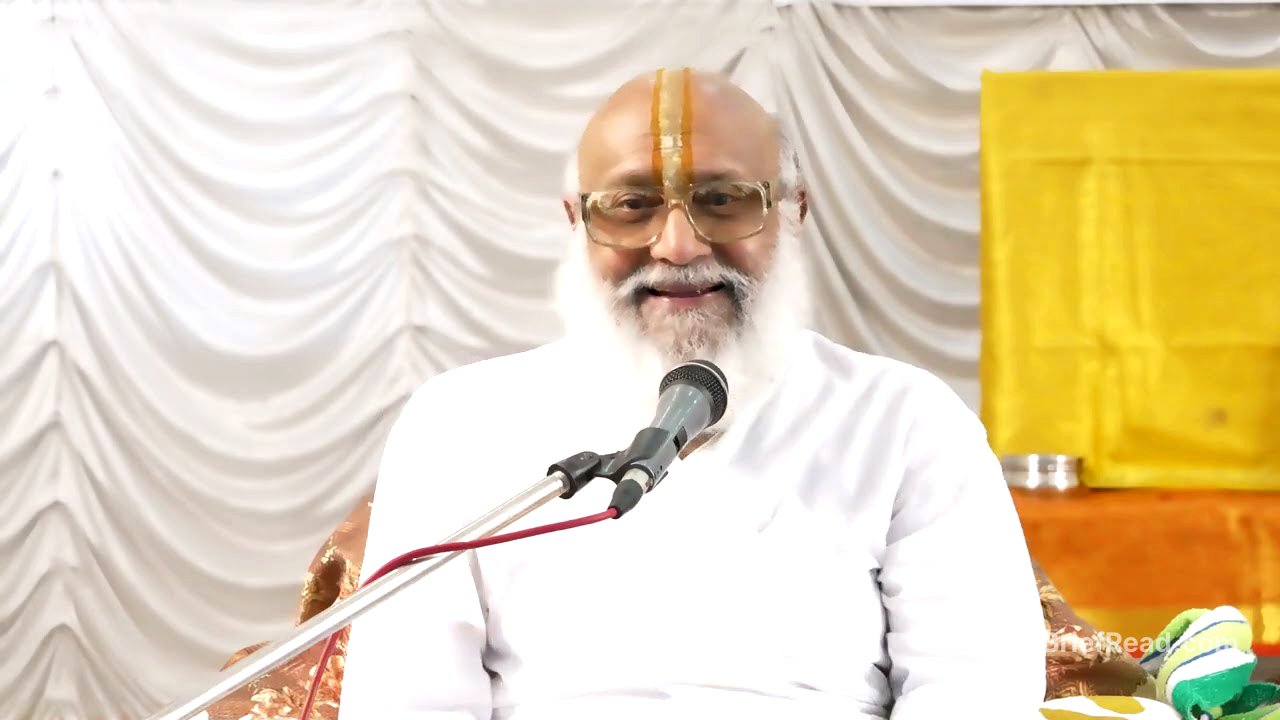
The video begins by explaining how truth is perceived through our senses. The speaker illustrates that when we directly perceive an object, we can confirm its existence and authenticity, using an example of a microphone placed in front of him. This verification process involves recognizing certain instruments as authoritative markers of truth, which are termed as "proof." The speaker introduces the concept of "praman," translating to evidence or proof in this context.
Types of Proof [4:10]
Moving forward, the speaker categorizes various types of proof recognized by philosophers, especially in the Indian philosophical context. He discusses the four main types of proof: direct perception (evidence from our senses), inference (logical reasoning), testimony (scriptural authority), and comparison (analogies). Each serves a specific role in verifying truth and helps distinguish authentic experiences from illusions.
Philosophical Inferences [8:00]
In this chapter, the speaker emphasizes the role of inference in ascertaining truth. He provides an example of concluding that a person must have arrived by plane if they were speaking on a phone in Mumbai earlier and suddenly appeared elsewhere. This logical deduction shows how our minds work to connect observations and make conclusions about reality, exemplifying the inference proof.
Understanding Analogies [12:10]
Here, analogies play a crucial role in understanding unfamiliar concepts. For instance, when encountering a creature resembling a cow but with a blue color, it can be identified as a Nilgai. This chapter illustrates how utilizing familiar references helps in understanding new experiences and is categorized as "upamana," or proof by analogy, confirming the presence and identity of things we encounter.
Significance of Verbal Testimony [15:20]
The speaker goes on to explain the significance of verbal testimony, particularly from scholarly texts. He mentions how language and scripture form a crucial part of understanding spiritual truths that go beyond sensory perception. Therefore, verbal testimony from the scriptures (referred to as "shabda praman") becomes a necessary guide in recognizing what is beyond immediate sensory truths.
The Nature of Reality [18:40]
In this part, the discussion shifts to the distinction between ordinary reality described by sensory experiences and the ultimate truths that scriptures convey. The speaker notes that worldly experiences often fail to represent higher truths that can only be understood through sacred texts, which provide knowledge about the cosmos and spiritual realities beyond the physical world.
Introduction to Shrimad Bhagwat [23:10]
Finally, the speaker introduces the "Bal Bodh" text, a concise summary of the essential teachings from Vedas and scriptures. He outlines that the purpose of this text is to provide clarity to those seeking the right path in life while lacking understanding, much like how children lack awareness of their safety concerning heat. Here, the essence of the teachings is synthesized for deeper comprehension, offering a guide to leading a fruitful life.
The Essence of 'Bal Bodh' [26:20]
In conclusion, the 'Bal Bodh' encapsulates the wisdom within religious scriptures. It aims to consolidate vast amounts of knowledge into digestible insights, allowing individuals to discern the paths of righteousness versus unrighteousness. The speaker encourages the audience to study this condensed form of spiritual guidance to foster a deeper understanding of life and its ultimate truths.