TLDR;
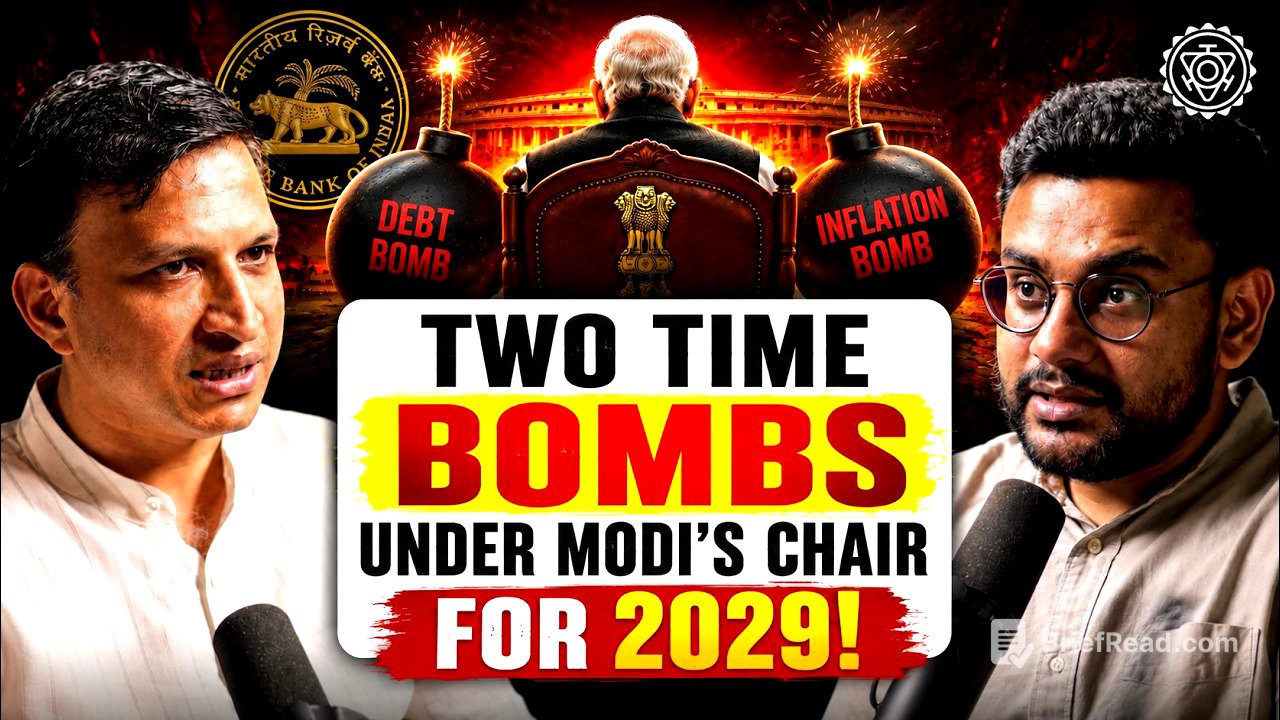
The video discusses the current economic challenges in India, focusing on the large sums of money being printed by the Reserve Bank of India (RBI), the implications of inflation, and the contrasting issues surrounding the Indian rupee's value. Key points covered include:
- The RBI's significant money printing is creating a looming financial crisis.
- The necessity for the RBI to adapt to economic changes driven by states' spending and borrowing.
- Issues related to the depreciation of the rupee and its impact on jobs and exports.
- Recommendations for improving the economy, including letting the rupee fall, clear alternatives for investment, and addressing capital gains taxes.
7 Lakh Crore Time Bomb [0:50]
The RBI has printed an unprecedented 7 lakh crores due to increased spending by state governments on various freebies. This massive sum is seen as a ticking time bomb that could lead to future economic instability, especially as states are borrowing more without clear investment strategies. If interest rates rise as a result of this borrowing, it may slow down economic growth. The question remains on why the government overlooks this impending crisis.
Why RBI Is Forced To Print Money [4:42]
The RBI is caught in a situation where it is compelled to increase money supply due to the high borrowing from state governments. The podcast explains that each state government is borrowing excessively, leading to an artificial suppression of interest rates, which can lead to inflation in the future. The complexities of RBI’s operations and the balance between supply and demand in the market are discussed.
Why Inflation is Inevitable [8:20]
With the current financial strategies, inflation appears to be an unavoidable outcome. The excessive money supply led by state spending creates a risk of future price surges, but immediate inflation may not manifest due to banks' cautious lending practices. Historical comparisons reveal that previous high-interest rates were mitigated, delaying inflation but not preventing it completely.
Sacrifice of Post-COVID Stability [11:02]
Post-COVID recovery illustrated the importance of fiscal discipline, as India managed to keep inflation relatively low compared to other countries. However, current policies are weakening this stability by increasing money supply and offering more state-funded freebies, which disrupts the balance achieved after COVID-19.
Wrongly defending Rupee at all Costs [13:30]
The government’s focus on defending the rupee at all costs is discussed, including the implications of artificially maintaining its value. This approach is criticized for potentially leading to reduced foreign investments and creating an unsustainable economic environment. Maintaining a more flexible exchange rate that reflects market conditions could have better long-term benefits.
Danger of NRI 'Hot Money' [18:20]
The influx of 'hot money' from NRIs, alongside guarantees from the RBI, could pose risks to the economy. This form of capital that seeks short-term benefits rather than long-term investments can create instability when economic conditions change. The discussion includes the mechanisms by which foreign investments are currently repatriated and how this could jeopardize financial stability.
India's Real Investment Crisis [20:44]
The real investment crisis facing India is emphasized, where incoming investments are not matching the required levels for sustained economic growth. Despite a strong export performance, the net foreign direct investment has not been sufficient, suggesting that more needs to be done to attract substantial capital from abroad.
Let the Rupee Fall: Export Argument [24:10]
The argument is made for allowing the rupee to depreciate to stimulate exports. A weaker currency could benefit Indian goods in international markets by making them cheaper, potentially increasing demand and creating jobs. This strategy is portrayed as a more effective long-term solution than maintaining an artificially strong currency.
Real Exchange Rate Explained (Dosa Example) [27:00]
The concept of real exchange rate is illustrated using the example of dosas, emphasizing how relative costs in different economies affect trade. The discussion includes the balance between nominal and real exchange rates, and how maintaining competitiveness in trade requires recognizing and adjusting for inflation differentials.
Why a Weaker Currency Creates Jobs [32:02]
A weaker currency can drive job creation as exports increase, leading to higher production demands within the economy. The relationship between currency value and employment is explored, arguing that Indian firms would benefit significantly from competitiveness abroad, thereby fostering domestic job growth.
Better Alternatives to Save the Economy [36:11]
Potential alternatives to stabilizing the economy are discussed, focusing on fiscal adjustments, increased capital investment, and strategic reforms to attract foreign investment. Strategies such as revising capital gains tax and reducing government expenditure are proposed to bolster economic growth sustainably.
Why Middle-Class Savings are Plunging [40:48]
Middle-class savings levels have been dropping, attributed to unfavorable economic policies and the increasing cost of living. The discussion examines how changes in real interest rates, taxation, and inflation impact saving behaviors and the wider economic consequences of decreasing domestic savings.
The Gift City Arbitrage Scam [43:00]
Concerns surrounding the Gift City initiative highlight issues of arbitrage and foreign borrowing, as entities exploit favorable exchange rates and conditions without contributing to real economic growth. The podcast explains how this could lead to systemic imbalances in the financial market.
Devil's Advocate: The Oil Import Cost [48:48]
The rising costs associated with oil imports and their impact on the economy are analyzed. Strategies for mitigating the effects of increasing oil prices on forex reserves and encouraging local production are discussed, emphasizing the need for a balanced approach to managing commodity imports.
Are We Still on Track for $5 Trillion? [54:33]
The prospects of reaching the $5 trillion economy goal appear uncertain, with discussions on the lack of substantial foreign investment and dependence on domestic growth. A pragmatic outlook suggests that achieving this objective requires significant reforms and changes in policy focus.
A Warning Against Artificial Stability [1:00:17]
The risks of attempting to maintain artificial stability in the economy through short-term measures are warned against. The video concludes with calls for a more genuine approach to policy-making that addresses real economic indicators rather than attempting to manipulate outcomes for immediate political gain.






![সম্বন্ধ | অপেক্ষক | বিপরীত ত্রিকোণমিতিক অপেক্ষক Class12[Sem:3]Maths 1 SHOT In Bengali |UNIT:1](https://wm-img.halpindev.com/p-briefread_c-10_b-10/urlb/aHR0cDovL2ltZy55b3V0dWJlLmNvbS92aS9YNndKaUJaMng1OC9ocWRlZmF1bHQuanBn.jpg)