
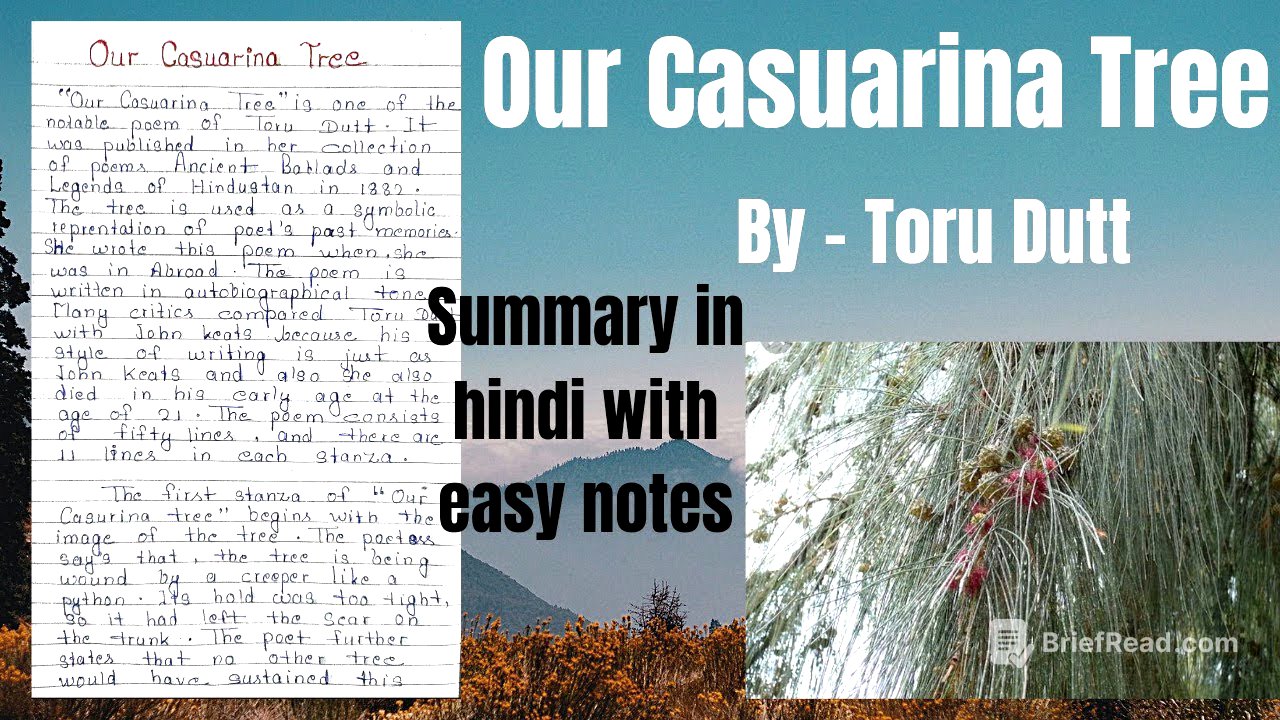
TLDR;
This video elaborates on the poem "The Casuarina Tree" by the poet Taurudat, published in 1882. The poem explores the themes of memory, nostalgia, and loss through the symbolic representation of a casuarina tree. The brevity of the poem and its autobiographical tone parallel the life and style of the poet with renowned poet John Keats.
- The poem consists of 55 lines divided into five stanzas.
- Each stanza reflects the poet's deep connection with the casuarina tree and the memories associated with it.
The Casuarina Tree [0:00]
The video begins by introducing "The Casuarina Tree" as a notable poem by Taurudat, known for its autobiographical essence. The tree symbolizes the poet's past memories and emotions, which she penned while abroad. Critics often draw parallels between her work and that of John Keats, highlighting her similar writing style and early demise.
Structure and Imagery [1:41]
The poem is structured into five stanzas, each containing 11 lines. The first stanza paints a vivid image of the tree, showing it as being entwined and injured by a creeper, likening it to a python. This injury, described as a scar, indicates the tree's strength and resilience as it wears the marks proudly. The poet goes on to describe the tree adorned with crimson flowers that attract birds and bees, weaving a sense of beauty into the narrative.
Morning Reflections [4:17]
The second stanza shifts to a morning scene where the poet opens her window and sees the tree, which evokes various seasonal imagery. In winter, a baboon sits on the top branch, while younger plants play around the lower branches. This connection with nature is further enhanced by the sounds of a cuckoo and the presence of cows, all enveloped in the serene beauty that surrounds the tree.
Memories Associated with the Tree [6:32]
In the third stanza, the poet elaborates on why the tree holds such significance for her. It is a representation of her cherished memories with siblings and signifies intense love that brings tears to her eyes. The poet conveys a sense of mourning as she reflects on lost loved ones, sharing her grief through the symbolism of the tree that bears witness to her sorrows.
Connection to the Universe [8:46]
The fourth stanza expresses a deeper connection between the tree and the poet’s emotions. She imagines a foreign land filled with sounds of waves, evoking nostalgia and memories of the casuarina tree. This imagery leads her to reminisce about her youth and the lasting impact of her experiences, which are mirrored in the tree's steadfastness.
Final Observations [9:40]
In the final stanza, the poet desires to honor the casuarina tree, reflecting on its longevity and drawing on references from Wordsworth's works. The poet wishes for it to continue living, much like the trees of England, which symbolize her feelings of isolation. The casuarina tree represents her memories and nostalgia, capturing the essence of her emotional journey and concluding with a poignant acknowledgment of the intertwining of memories and nature.








![Gautham Govindan | WHATSAPP IS ALL PRIVACY PRIVACY NOW!
.
.
.
.
[Standup comedy, standup India, jokes, WhatsApp, encryption, disappearing messages, feature] | Instagram](https://wm-img.halpindev.com/p-briefread_c-10_b-10/urlb/aHR0cHM6Ly9zY29udGVudC1pYWQzLTIuY2RuaW5zdGFncmFtLmNvbS92L3Q1MS43NTc2MS0xNS81MDMwNjE3NzlfMTg0NTkzMzAwMDEwNzY1NDRfMjk3NzQxMzUzMDg3MjIyMzg3MF9uLmpwZz9zdHA9Y21wMV9kc3QtanBnX2UzNV9zNjQweDY0MF90dDYmX25jX2NhdD0xMDMmY2NiPTEtNyZfbmNfc2lkPTE4ZGU3NCZfbmNfb2hjPXdpWU9TRUVoNWRrUTdrTnZ3R2F6QmI3Jl9uY19vYz1BZGxEd0JtQjRHdjYtdF9XS0NtWklmNzUzUW11aTVJTVAzbE4ySXh3alYtbm9lU3RZcTdJQlFuSXJUX1ZoYXVaMmVjJl9uY196dD0yMyZfbmNfaHQ9c2NvbnRlbnQtaWFkMy0yLmNkbmluc3RhZ3JhbS5jb20mX25jX2dpZD0wR1VETHdZWnVCcG5KWVp6LTZPblhRJm9oPTAwX0FmUXFWQmVBS052UFVRb3hqNWJJT29Ec2c3NVhSWW04LWJSSzZ6TFE1YTMzR0Emb2U9Njg4MDFBQ0M=.jpg)