TLDR;
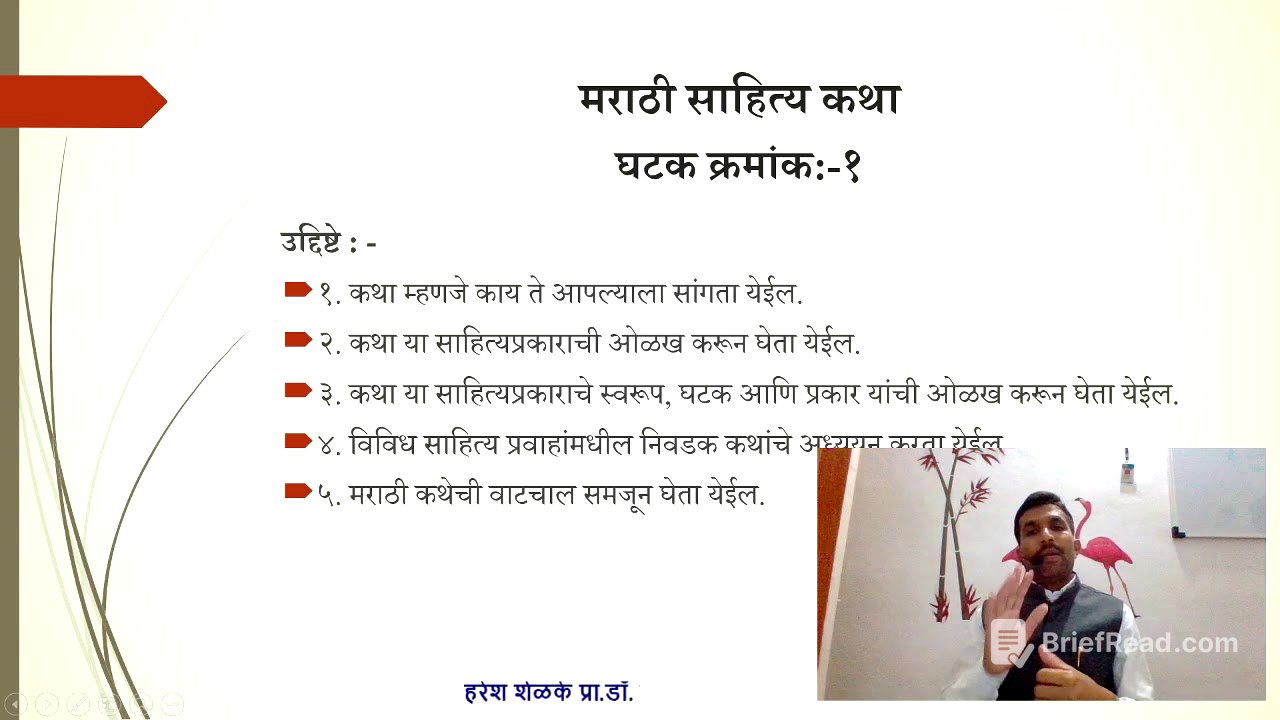
This video is an introduction to Marathi literature and storytelling. It covers various aspects of Marathi storytelling, including its history, different types of stories, key elements of a story, and the impact of stories on readers. The video also emphasizes the importance of reading and understanding Marathi literature, especially during challenging times.
- Introduction to Marathi storytelling
- Key elements of a story
- Impact of stories on readers
Introduction to Marathi Literature [0:00]
The speaker introduces himself and the subject of the video, which is Marathi literature, specifically focusing on storytelling. He mentions that this is part of a skill development and hardware training program. The speaker aims to discuss various aspects of Marathi stories, from their basic structure to their impact on readers.
Elements of Storytelling [1:20]
The speaker talks about the basic elements of storytelling, including plot, characters, and theme. He explains how stories have been a part of human culture since childhood, citing examples like the story of the hare and the tortoise. The speaker also touches upon contemporary writing and how it reflects current societal issues.
Types of Stories [3:31]
The speaker discusses different types of stories, including mythological tales, fables, and modern stories. He gives examples of each type, such as the story of a sparrow and the story of Guru Angad Dev. The speaker also mentions the importance of understanding the context and background of a story.
Writing Process and Reader's Perspective [4:49]
The speaker talks about the writing process and how a writer should be sensitive to the reader's emotions. He emphasizes the importance of creating a connection with the reader and making the story engaging. The speaker also touches upon the different forms of literature, such as novels, poems, and plays.
Components of a Story [6:19]
The speaker discusses the components of a story, including the beginning, middle, and end. He explains how each part plays a crucial role in creating a compelling narrative. The speaker also mentions different types of stories based on their themes, such as horror stories and emotional stories.
Regional and Cultural Influence on Stories [7:19]
The speaker talks about how regional and cultural factors influence storytelling. He explains that stories often reflect the local traditions, customs, and beliefs of a particular region. The speaker also mentions the importance of understanding the social and cultural context of a story.
Marathi Literature and Storytelling [8:33]
The speaker talks about Marathi literature and storytelling, emphasizing the importance of understanding its various forms and styles. He explains that Marathi stories often reflect the social and political issues of the time. The speaker also mentions the role of writers in shaping public opinion.
Elements of Storytelling: Character, Setting, and Language [9:30]
The speaker elaborates on the key elements of storytelling, such as character development, setting, and language. He explains how these elements contribute to creating a vivid and engaging story. The speaker also mentions the different types of narration styles used in storytelling.
Impact of Stories on Readers [11:24]
The speaker discusses the impact of stories on readers, explaining how stories can evoke emotions, inspire thoughts, and provide insights into different aspects of life. He emphasizes the importance of reading stories to understand different perspectives and cultures. The speaker also mentions the role of stories in promoting social change.
Understanding Stories and Their Context [12:54]
The speaker emphasizes the importance of understanding the context of a story to fully appreciate its meaning. He explains that stories often reflect the social, political, and cultural issues of the time. The speaker also mentions the role of readers in interpreting and understanding stories.
Famous Marathi Storytellers [13:41]
The speaker mentions some famous Marathi storytellers and their works. He explains that these writers have made significant contributions to Marathi literature. The speaker also encourages viewers to read and explore the works of these writers.
Impact of Stories on Society [14:56]
The speaker discusses the impact of stories on society, explaining how stories can shape values, beliefs, and attitudes. He emphasizes the importance of reading stories to understand different perspectives and cultures. The speaker also mentions the role of stories in promoting social change.
Qualities of a Good Story [15:56]
The speaker talks about the qualities of a good story, including its ability to engage the reader, evoke emotions, and provide insights into different aspects of life. He emphasizes the importance of creating a compelling narrative and developing relatable characters. The speaker also mentions the role of language in creating a vivid and engaging story.
Example Story: Shyamchi Aai [16:58]
The speaker provides an example of a story, "Shyamchi Aai," and discusses its themes and characters. He explains how the story reflects the social and cultural values of the time. The speaker also mentions the impact of the story on readers and its role in shaping public opinion.
Analyzing "Shyamchi Aai" [18:37]
The speaker continues to analyze the story "Shyamchi Aai," focusing on its characters, plot, and themes. He explains how the story reflects the social and cultural values of the time. The speaker also mentions the impact of the story on readers and its role in shaping public opinion.
Characteristics of Short Stories [19:38]
The speaker discusses the characteristics of short stories, including their brevity, focus, and impact. He explains that short stories often focus on a single event or character and aim to create a lasting impression on the reader. The speaker also mentions the different types of short stories based on their themes and styles.
Writer's Perspective and Reader's Experience [21:08]
The speaker talks about the writer's perspective and the reader's experience, explaining how writers aim to create a connection with the reader and evoke emotions. He emphasizes the importance of understanding the reader's expectations and creating a story that resonates with them. The speaker also mentions the role of language in creating a vivid and engaging story.
Key Elements of Storytelling [21:55]
The speaker reiterates the key elements of storytelling, including plot, characters, and theme. He explains how each element plays a crucial role in creating a compelling narrative. The speaker also mentions the importance of understanding the context and background of a story.
Qualities of Short Stories [22:58]
The speaker discusses the qualities of short stories, including their ability to engage the reader, evoke emotions, and provide insights into different aspects of life. He emphasizes the importance of creating a compelling narrative and developing relatable characters. The speaker also mentions the role of language in creating a vivid and engaging story.
Importance of Reading and Understanding Stories [24:18]
The speaker emphasizes the importance of reading and understanding stories, explaining how stories can shape values, beliefs, and attitudes. He encourages viewers to read and explore different types of stories to broaden their perspectives and understanding of the world.
Marathi Literature and Storytelling for Students [25:12]
The speaker talks about Marathi literature and storytelling for students, explaining how stories can help them develop their language skills, critical thinking abilities, and cultural awareness. He encourages students to read and explore Marathi literature to gain a deeper understanding of their culture and heritage.
Benefits of Storytelling [26:36]
The speaker discusses the benefits of storytelling, including its ability to engage the reader, evoke emotions, and provide insights into different aspects of life. He emphasizes the importance of creating a compelling narrative and developing relatable characters. The speaker also mentions the role of language in creating a vivid and engaging story.
Conclusion and Encouragement [28:37]
The speaker concludes the video by encouraging viewers to read and explore Marathi literature. He emphasizes the importance of understanding stories and their context to fully appreciate their meaning. The speaker also expresses hope that the video has been helpful and informative. He acknowledges the difficult times and encourages everyone to continue learning and growing through literature.
Final Thoughts and Gratitude [29:37]
The speaker expresses his gratitude to the viewers for watching the video. He encourages them to subscribe to the channel and share the video with others. The speaker also reiterates the importance of reading and understanding stories to broaden their perspectives and understanding of the world. He ends the video with a positive message and a call to action.