TLDR;
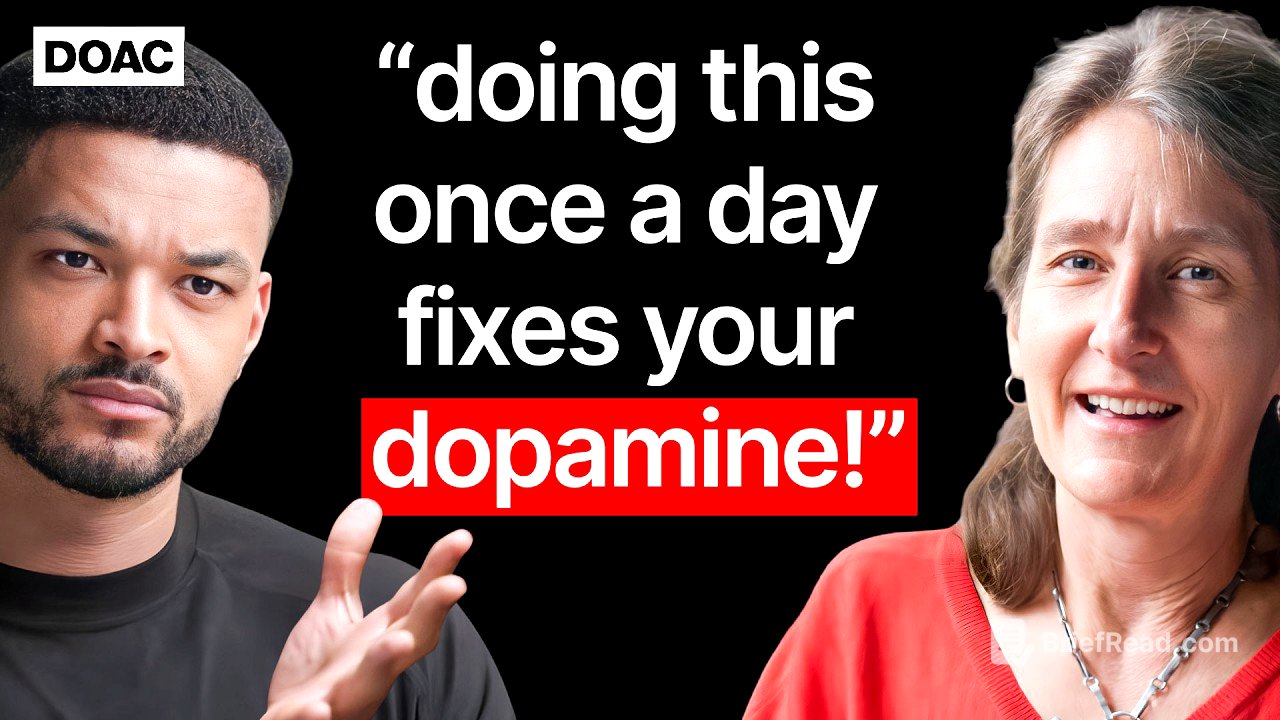
This episode of The Diary Of A CEO features Dr. Anna Lembke, a Stanford professor and addiction expert, discussing the impact of dopamine on our lives. She explains how dopamine, a crucial chemical for survival, influences pleasure, motivation, and addiction. Dr. Lembke highlights the misconceptions about dopamine, the role of pleasure and pain balance in the brain, and how modern society's overabundance of rewards leads to addiction. She also offers practical advice on overcoming addiction and optimizing life for better mental health.
- Dopamine is essential for motivation and seeking rewards necessary for survival.
- The brain's pleasure and pain centers are interconnected, striving for a level balance (homeostasis).
- Modern society's easy access to pleasures disrupts this balance, leading to potential addiction.
- Overcoming addiction involves acknowledging the problem, understanding triggers, and creating barriers to addictive substances or behaviors.
- Intentionally engaging in activities that cause discomfort can indirectly increase dopamine levels and improve overall well-being.
Intro [0:00]
The host introduces Dr. Anna Lembke, a renowned expert on dopamine and addiction, emphasizing the importance of understanding dopamine's role in our lives. He highlights that the episode will explore how dopamine affects our behaviors, relationships, and overall well-being. The host believes this episode will provide insights into overcoming struggles and cycles of behavior that many people face.
Why Does Dopamine Matter? [3:44]
Dr. Lembke explains that dopamine is fundamental for survival as it signals what to approach and explore. It's the brain chemical that motivates us to seek essential things. Dopamine is crucial for experiencing pleasure, reward, and motivation, possibly even more so for motivation than pleasure itself.
What Is Dopamine? [4:08]
Dopamine is a chemical in the brain that helps us experience pleasure, reward, and motivation. An experiment with rats engineered to lack dopamine showed that they would starve even with food nearby, highlighting dopamine's role in motivating basic survival needs.
How Understanding Dopamine Can Improve Your Life [5:35]
Understanding how dopamine works, how we process pleasure and pain, and the transition from recreational use to addiction can be beneficial. In today's world, where we are constantly exposed to reinforcing substances and behaviors, we are all vulnerable to addiction.
Biggest Misconceptions About Dopamine [6:09]
The biggest misconception is that we can get addicted to dopamine itself. Dopamine is neither good nor bad; it's a signal indicating whether something is potentially useful for survival and relates to our predictions about how rewarding something will be. Pleasure and pain are relative, and dopamine provides information about where we are on that scale.
Everyday Activities That Impact Dopamine [7:30]
Almost everything we do has some impact on dopamine. Pleasurable, reinforcing, and rewarding activities affect dopamine levels. Even aversive stimuli can trigger dopamine involvement. Dopamine is also fundamental for movement, as seen in Parkinson's disease, which results from dopamine depletion.
Dopamine and Its Relationship to Pleasure and Pain [9:36]
Pleasure and pain are collocated in the brain and work like opposite sides of a balance. The brain's reward pathway includes the prefrontal cortex (brakes) and limbic areas (accelerator). The balance wants to remain level, and the brain compensates for initial stimuli by tilting an equal and opposite amount. Addictive substances release dopamine, and the more and faster the release, the more addictive the substance is.
Why Do Our Brains Overshoot? [18:26]
The brain overshoots in its attempt to restore homeostasis because, from an evolutionary perspective, this mechanism ensures we are never satisfied and always seeking more. This constant seeking was advantageous in a world of scarcity and danger.
How Our Brains Are Wired for Addiction [20:31]
We are wired for survival in a world of scarcity, but we now live in a world of overabundance. This mismatch between ancient wiring and modern access to synthetic dopamine makes our brains prone to addiction. The brain compensates for high pleasure by tilting the balance to the pain side, and repeated consumption leads to the "addicted brain," where the joy set point shifts to pain.
Finding Ways to Deal With Pain [25:22]
People who are addicted are trying to deal with pain, but their chosen methods become self-destructive, creating a vicious cycle. Trauma and stress can lead to addictive behaviors as individuals seek to medicate their pain. Dopamine plays a role in this by hijacking the reward pathway with artificial rewards.
Stories of Addiction [31:51]
Dr. Lembke shares a story of a patient addicted to water, highlighting the extreme measures people take in pursuit of their addiction. She notes that while trauma can be a factor in severe addiction, many individuals with happy childhoods also become addicted due to the accessibility of drugs and behaviors that release dopamine.
How Many People Have Addiction Disorders? [34:52]
Addiction is a spectrum disorder, with most people experiencing some degree of compulsive overconsumption. The definition of addiction is the continued compulsive use of a substance or behavior despite harm to self or others.
Hiding Away From Friends and Family [40:14]
The host reflects on behaviors that isolate him, such as spending time on the internet or in group chats. Dr. Lembke notes that digital devices are powerful tools but also potent drugs, designed to keep us scrolling and tapping beyond what is pleasurable.
Distinguishing Between Good and Bad Behaviors [41:21]
It's hard to distinguish between good and bad behaviors, but we need to be vigilant about whether we're crossing into addictive use. Cutting out a particular digital medium for a period can help reset reward pathways and allow for re-evaluation. Subtler signs of addiction include depression, anxiety, inattention, and insomnia.
How Addiction Makes You Feel [45:50]
Dr. Lembke shares her experience with a romance novel addiction, noting that these novels were essentially socially sanctioned pornography for women. She describes how she needed more graphic content to find pleasure and hid her reading habits, which led to isolation and exhaustion.
Is Work an Addiction? [47:50]
People can get addicted to work because it has been "drug-ified." Certain types of work are more reinforcing due to stock options, bonuses, social media aspects, and cultural recognition. Novelty, quantity, and accessibility also contribute to work addiction.
What Activities Provide the Biggest Dopamine Hits? [54:18]
Potent drugs like methamphetamine, opioids, alcohol, nicotine, and cannabis are very reinforcing for many people, but individual preferences vary. It's difficult to measure absolute dopamine values in humans, but brain scans show decreased dopamine transmission in individuals addicted to various substances.
Can We Inject or Drink Dopamine? [58:59]
We cannot simply inject or drink dopamine to restore levels in addicts. While L-DOPA, a dopamine precursor, can help Parkinson's patients, it can also lead to new addictive disorders. We must live within a certain homeostasis, which is difficult in today's world.
Why We Must Do Hard Things [1:01:00]
We must intentionally do painful and hard things because when we press on the pleasure side of the balance, the brain compensates with neuroadaptation. Intentionally pressing on the pain side, like with exercise or cold water baths, leads to dopamine release without the deficit state.
Can You Get an Exercise Comedown? [1:02:37]
While people can get addicted to exercise, it's unusual because the upfront cost mitigates vulnerability. The increasing popularity of ultramarathons and obstacle courses reflects a counter-movement towards seeking hard dopamine.
How to Optimize for a Better Life [1:04:19]
We have organized our lives around rewards, missing out on the process. Removing the thought of the outcome and focusing on being present can improve well-being.
How Should We Be Living? [1:05:17]
Being present means being uncomfortable and okay with not controlling pleasure or pain. It's important not to anticipate rewards and to embrace discomfort.
Being Comfortable With the Uncomfortable [1:09:29]
Allowing yourself to deal with being uncomfortable in the moment removes the thing that was making you uncomfortable. We have an expectancy, fed by modern culture, that we should be happy all the time, but life is fundamentally uncomfortable.
Causes of Anxiety Throughout Life [1:10:34]
Dr. Lembke shares that the loss of a child was a turning point in her life, teaching her to accept pain rather than trying to undo it. She relates to the "hitting bottom" moment in addiction, where everything one tries to manage only makes things worse.
Living in a World Where It's Easy to Outrun Pain [1:12:43]
We are wired to outrun pain, but we now live in a world where it's very easy to do so through distractions like doom scrolling or video games.
Where Are You Now in Your Grieving Journey? [1:13:09]
Dr. Lembke feels that her experience with grief has been a gift, informing her life in ways that would have been impossible otherwise.
Youngest Child Seen With Addictions [1:14:43]
Many patients get better, which is incredibly rewarding. For patients who don't get better or die, it's a terrible feeling, and Dr. Lembke carries those losses with her.
Youngest Age When Addiction Can Have an Effect [1:15:37]
Addiction and its consequences can ruin someone's life at a very young age, with some kids starting with drugs and alcohol as early as five or six. Digital media can also be addictive for young children.
Youngest Patient With Addiction [1:16:50]
The youngest patient Dr. Lembke has seen was around 14 or 15, with addictions to cannabis, alcohol, and nicotine. Cannabis is very addictive and harmful, damaging the brain and demotivating people.
Has Society Gone Soft? [1:18:40]
Dr. Lembke believes that society has gone a bit soft, not as a moral problem but as a physiological one. We are insulated from pain and exposed to all kinds of pleasures, resetting our reward pathways to the side of pain.
Victimhood and Responsibility [1:21:05]
The way we tell our personal stories is a marker and predictor of mental health. People who always see themselves as victims are not doing well and are unlikely to improve unless they change their narrative.
How to Help Someone Overcome a Victimhood Mentality [1:25:02]
To help someone overcome a victimhood mentality, it's necessary to validate their victimhood but then encourage them to acknowledge their contribution to the problem.
Connection Between Responsibility and Self-Esteem [1:28:36]
There is a relationship between self-esteem and the ability to take responsibility. Entrenched ideas about ourselves and the world can hold us back from seeing clearly.
Importance of Our Self-Narrative [1:30:13]
How we narrate our lives is important, and there are healthier and unhealthier narratives. Getting stuck in any fixed identity or narrative can become a trap.
How Helping a Loved One Too Much Can Hurt Them [1:38:22]
Codependency refers to the ways in which a loved one of an addicted person can enable or worsen their addiction without realizing it. Real-life negative consequences are often necessary for people with severe addiction to enter recovery.
Overcoming Pornography Addiction [1:44:49]
Pornography addiction is one of the biggest, most silent, and shameful addictions in the modern world. It's not just about sex but about human attachment and self-soothing.
Harms of Watching Porn [1:48:35]
The harms of pornography include addiction, changing a person's conceptualization of sex, and giving a distorted view of real sex and relationships.
Is Dopamine Responsible for Sugar Cravings? [1:51:04]
Sugar is addictive and lights up the same reward pathway as drugs and alcohol. Quitting sugar leads to withdrawal, with intense cravings. Re-exposing the brain to sugar can immediately plunge individuals back into craving.
Turning Addictions Around [1:53:05]
Step one in turning addictions around is acknowledging the problematic behavior. The next steps involve being honest about why we do the behavior, making a list of problems, and considering a 30-day dopamine fast.
Why We Bounce Back to Cravings After Relapsing [1:58:25]
There's a permanent latent echo in our brains once we've been exposed to and become addicted to a particular substance. Even with sustained abstinence, re-exposure can immediately plunge us into the depths of addiction.
Effects of Early Exposure to Addictive Substances on Children [2:02:49]
Early exposure to addictive substances and behaviors can elaborate a neural circuitry based on maladaptive coping, setting individuals up for addiction in adulthood. However, the child and adolescent brain is also plastic, allowing for rewiring.
Final Thoughts on Overcoming Addiction [2:04:43]
Dopamine fasting is an early intervention and not recommended for those who have repeatedly tried to quit on their own or are at risk for life-threatening withdrawal. In such cases, professional help is necessary.
Closing Remarks [2:05:39]
The host expresses gratitude to Dr. Lembke for her insights and emphasizes the importance of understanding dopamine's role in our lives.
What Information Changed Your Life? [2:07:38]
Dr. Lembke shares that the realization that we are probably going to be cybernetically enhanced in the future has been impactful, noting both the potential good and the terrifying aspects of this inevitability.