TLDR;
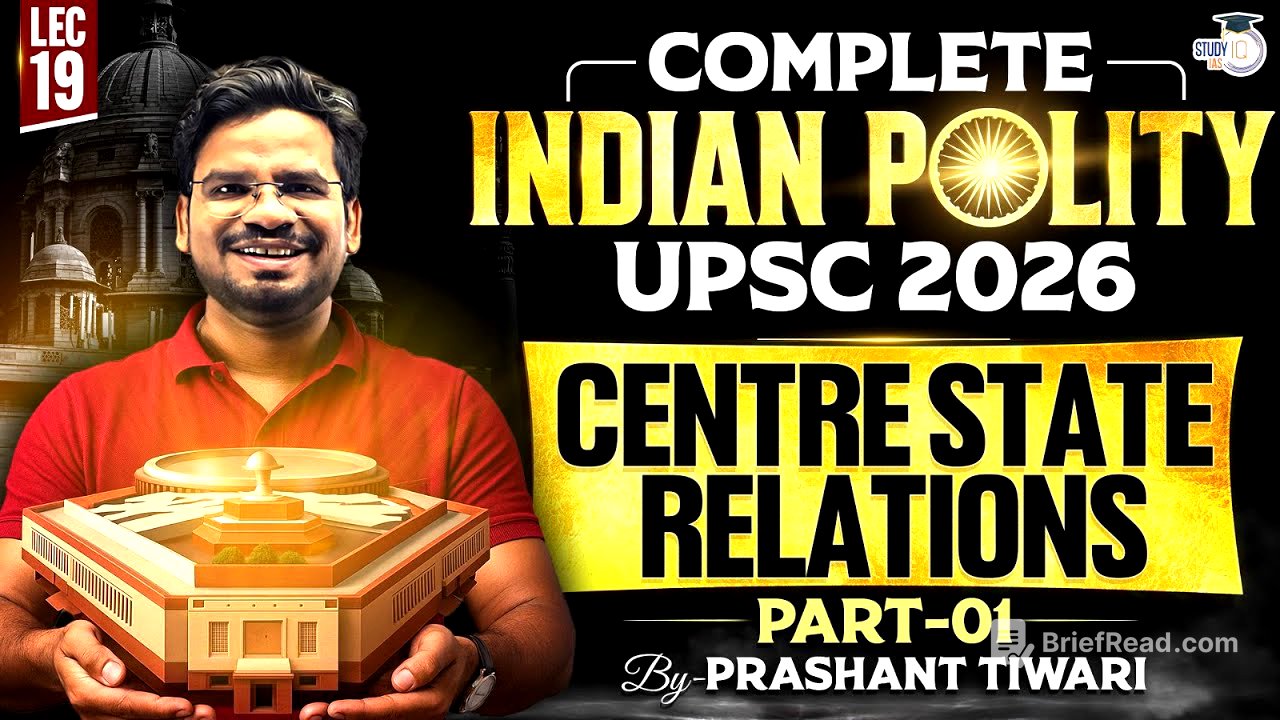
This video covers the topic of Center-State Relations in India, elaborating on the division of powers and interactions between the central and state governments. The discussion is divided into legislative, executive, and financial relations with in-depth explanations of their respective roles.
- The central government has the authority to legislate across the entire country while states have powers confined to their own territories.
- Legislative relations involve the Parliament's jurisdiction over laws and how states can legislate under specific conditions.
- The video further discusses the administrative functions, financial aspects, and mutual delegation of responsibilities between the Center and States.
Introduction to Center-State Relations [0:00]
The video begins by addressing the audience and introducing the topic of discussion, which is Center-State Relations in India. The speaker emphasizes the significance of understanding this topic for future exams and the various aspects that will be covered.
Legislative Relations [6:30]
The speaker explains how legislative powers are divided between the central and state governments. The Parliament can create laws applicable to the whole country, while state legislatures can only legislate within their territories. The importance of Schedule Seven, which enumerates subjects on which both levels can legislate, is highlighted. The concept of legislative supremacy of the Parliament over state laws, particularly in cases of national interest, is explored.
Executive Relations [15:20]
This section discusses the administrative powers of both central and state governments. The central government administers legislative subjects while the states handle their respective areas. The speaker elaborates on how the executive powers are implemented primarily by the states and the conditions under which the central government can intervene.
Financial Relations [20:40]
The financial aspects of Center-State relations are discussed, focusing on financial discipline and responsibilities. The central government has the authority to direct states to manage finances during emergencies, showcasing the financial control exercised by the center. The allocation of financial resources and revenue-sharing mechanisms are described.
Mutual Delegation of Functions [25:40]
In this chapter, the concept of mutual delegation of functions between the central and state governments is explained. The speaker shares examples of how both levels can share administrative responsibilities, highlighting the need for cooperation and consent in the delegation process.
Cooperation Between Center and State [30:40]
The video discusses avenues for cooperation between the central and state governments, especially when resolving disputes over resources like water. The creation of Inter-State Councils and the importance of Article 262 for dispute resolution in water distribution are emphasized.
Conclusion and Future Topics [37:20]
The speaker concludes the session by summarizing the importance of understanding Center-State relations and announces that the next topic will cover financial relations in detail. The audience is encouraged to engage with the material and look forward to further discussions.