TLDR;
The video discusses a mudslide disaster that occurred at Gyirong Port in Tibet along the China-Nepal border on August 26. Chinese rescue response has faced significant criticism, as efforts were prominently staged, leading to doubts about their effectiveness. After the critical rescue window, reports reveal a much higher death toll in Nepal compared to China and highlight the lack of transparency from Chinese authorities regarding casualties. The video addresses the staged nature of rescue operations and the government's focus on maintaining social stability over genuine rescue efforts, hinting at underlying systemic issues regarding disaster preparedness.
- A mudslide devastated Gyirong Port, with delayed rescue efforts after the critical 72-hour window.
- Chinese authorities reported significantly fewer casualties than Nepal, with a lack of transparency regarding the missing.
- Criticism focuses on the staged nature of rescue efforts, prioritising propaganda over effective disaster response.
The Mudslide Disaster at Gyirong Port [0:00]
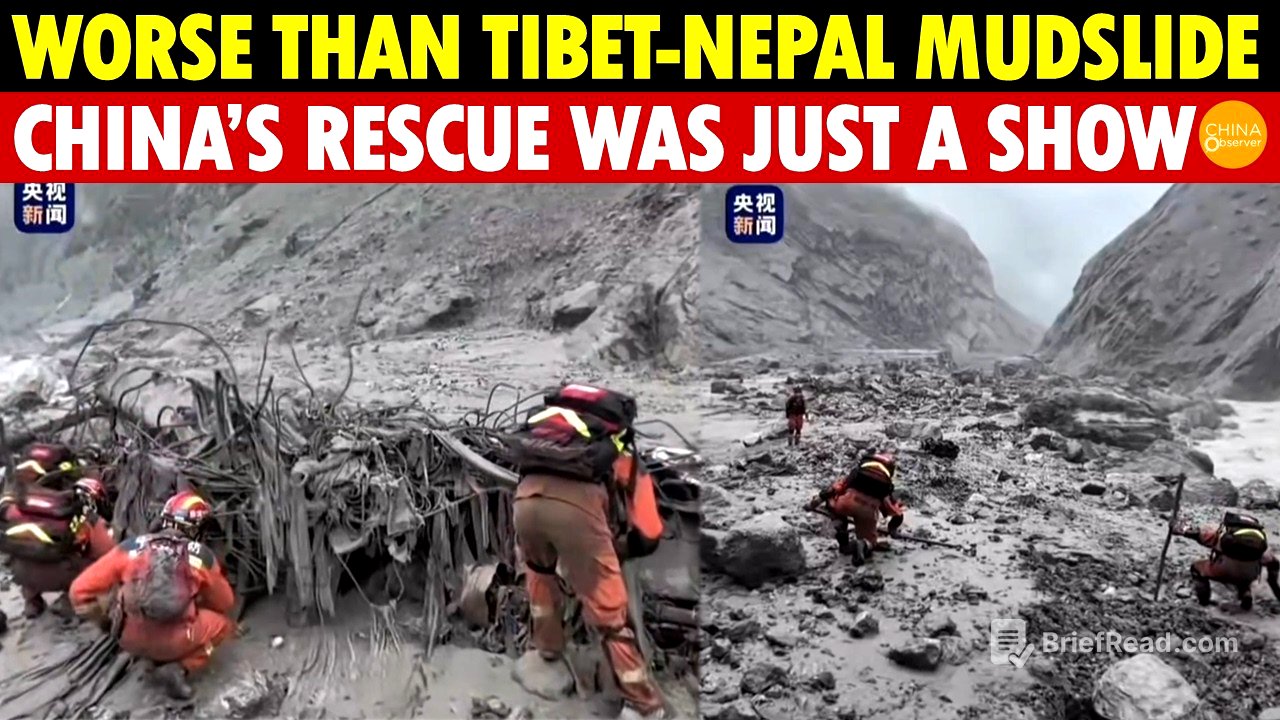
The video begins with the dire aftermath of a mudslide that struck Gyirong Port on August 26, resulting in extensive destruction. Rescue teams began their efforts on August 29, missing the crucial first 48 to 72 hours, known as the golden window for finding survivors. Commentators express skepticism about the rescue operations, questioning whether any survivors could still be found after such a lengthy delay. The video reveals that the port building was completely flattened and highlights the inadequacy of the initial response.
Criticism of Response Tactics [1:00]
As footage of the rescue teams emerged, many users commented on the seemingly rehearsed and choreographed nature of the operation. Observers noted that the teams appeared ill-equipped, with some teams seen over 1.8 km from the disaster site, inspecting rocks rather than engaging in effective rescue operations. The video underscores the discontent of online commentators, who perceive the actions of the Chinese Communist Party (CCP) as shameless performances rather than genuine rescue efforts.
Casualties and Lack of Transparency [2:00]
Reports from Nepal indicated a much higher casualty count, with 675 confirmed deaths and 2,426 people missing. In contrast, Chinese authorities reported only 16 fatalities and 546 people missing. The video draws attention to the lack of actionable information from Chinese officials about the missing individuals, contrasting with Nepal's transparency in releasing casualty data. It suggests that the CCP's narrative prioritises the portrayal of stability and control over an accurate representation of the disaster's impact.
Concerns Over Staging and Propaganda [3:00]
The video highlights concerns regarding the use of staged footage during the rescue operations, suggesting that the Chinese government is more focused on presenting an image of action to the public than on actual rescue efforts. Commentary points out that the teams appeared clean and well-organised, raising questions about their proximity to the disaster site and the effectiveness of their methods. Observers noted that even basic equipment, including inflatable boats, was not used appropriately in the situation.
International Comparisons and Public Backlash [4:00]
Independent reports and comparisons with the responses from Nepal reveal a stark difference in approach. The video highlights the early deployment of rescue teams in Nepal and their use of media to share information about casualties and ongoing rescue operations. In contrast, China's response showed a lack of urgency, with the government reportedly prioritising social stability over effective disaster relief. This difference has led to public discontent, criticism of the government’s communication strategies, and allegations of censorship regarding the true scope of the disaster.
Issues of Censorship and Access to Information [5:00]
Concerns about censorship and control over information flow in China are examined, as authorities restrict media from investigating or reporting extensively on the disaster's impact. Reports suggested that local residents might face repercussions for attempting to contact overseas media regarding the incident. The video illustrates that while international press is able to report on the disaster in Nepal, information from Tibet has been tightly controlled, leading to limited public knowledge about the full extent of casualties.
Systemic Problems in Disaster Preparedness [6:00]
The video wraps up by analysing systemic issues regarding China's disaster preparedness and response systems. Historical warnings about glacial risks in the area were ignored, with experts citing prior disasters that should have prompted proactive measures. Observers point out that the prioritisation of economic interests over human safety by the Chinese government continues to expose populations to significant risk during natural disasters, underscoring a failure in responsibility towards public safety. The final commentary emphasises the harmful impact of the CCP's focus on propaganda and control over transparency and genuine emergency response.