TLDR;
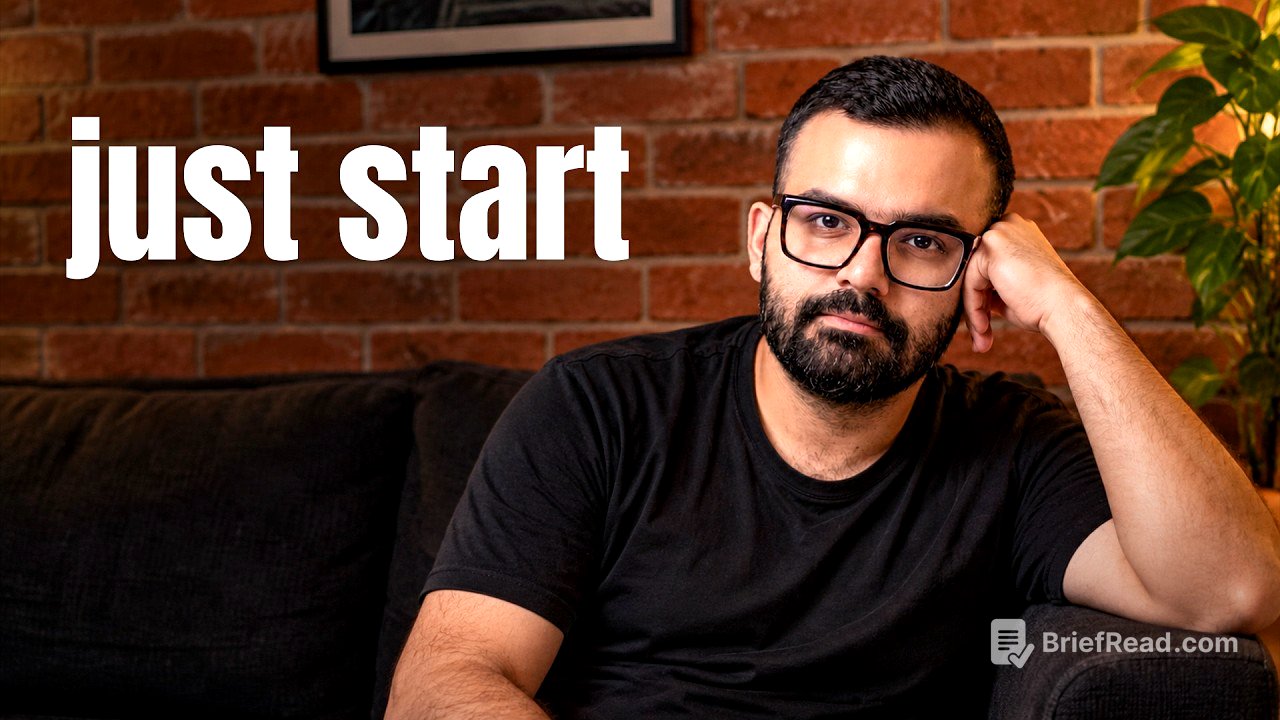
A single YouTube video about a skill the creator already knew changed the direction of his career and became a source of wealth, purpose and new opportunities. Drawing on The Almanack of Naval Ravikant, he explains how media can act as leverage: one piece of content can keep reaching people without requiring the creator to repeat the work. He encourages viewers to share their skills and stories, then outlines a five-step process for making YouTube videos and building an authentic audience.
- Content creation can provide self-expression, help others and generate income through trusted, inbound opportunities.
- A practical workflow is to choose one subject, research successful videos, package the idea with a title and thumbnail, plan the hook and main points, then record and publish.
- Don’t wait until you feel you have achieved everything before sharing; knowledge that seems ordinary to you may be valuable to someone else.
Closing a Business and Finding a New Direction [0:00]
In 2022, the creator and his business partner decided to close their business, which they finally did in December. The team was given notice, and he was unsure what his next career chapter would be. He planned to take a break, travel, read and speak with people, while feeling concerned that the business he had been working on was neither enjoyable nor succeeding. During that break, he read The Almanack of Naval Ravikant, a book that reshaped how he thought about work, wealth and leverage.
Leverage Through Code, People and Media [1:30]
The book’s central idea, as the creator presents it, is that people should develop leverage: something that helps them create value and wealth without having to repeat the same effort each time. He describes three forms: code, such as software that can serve many customers; people, such as employees working in a company; and media, including videos, music, films and written content. Although he had a computer science background, coding did not suit him, and he did not enjoy managing teams. Media felt like a better fit because one video can continue reaching viewers after it is made.
He had previously posted YouTube and Instagram content, but it was mostly informal and made without a serious plan. In January 2023, he uploaded a case study about print-on-demand, an e-commerce business model he had practised for years and used to generate revenue and profit. He describes the decision to make that focused video as one of the best decisions of his life.
Three Reasons to Create YouTube Content [5:05]
The first reason is self-expression: everyone has experiences, struggles, failures, successes and skills that may be meaningful to share. Putting these ideas into the world can create a sense of purpose beyond one’s immediate personal needs. The second reason is that personal stories can help other people. A creator’s experience may seem ordinary to them but can inspire someone else, encourage them to take action or help them feel less alone.
The third reason is that YouTube can help build wealth organically. Sharing useful, authentic information can create trust with viewers, who may later choose to pay for access to a service, programme or consultation. This can lead to inbound enquiries—people approaching the creator, rather than the creator having to repeatedly pitch to them. The creator lists several possible income sources: generating leads for a business, YouTube advertising revenue, affiliate commissions, paid speaking opportunities and free or paid communities. He stresses that viewers may not watch the first video, but consistency can help the right audience find the creator.
Step 1: Choose One Subject to Share [9:00]
The first step is to identify one subject that the creator knows well or has a natural interest in. It could be a skill learned through experience, something people already ask for advice about, or an area where the creator has helped others. He gives examples such as teaching handstands, playing guitar, singing, running a business, discussing mental health or gardening. Even an activity that seems simple can be valuable: relatively few people may be able to perform a handstand, so those who want to learn may be willing to pay for instruction.
If several possible subjects come to mind, he recommends choosing the one that could add the most value to other people’s lives. His own choice was print-on-demand, because it was the subject he understood best at the time. The aim is to start with a clear focus rather than overthinking the perfect idea.
Step 2: Research Videos That Outperform [10:48]
The second step is to install a free Chrome extension that shows a video’s “outlier score”. This measures how many times more views a video has received than the channel’s usual average. For example, if a channel typically gets 10,000 views per video but one video gets 100,000, that video has a 10x outlier score. He mentions the vidIQ extension as one option and says he usually looks for videos with at least a 3x score.
He searches for videos on the chosen subject and saves screenshots of several strong performers—typically three to five. These examples provide clues about what viewers respond to, such as effective titles and thumbnails. The aim is to learn from proven patterns and adapt them, not to copy another creator’s content.
Step 3: Package the Idea with a Title and Thumbnail [12:51]
The third step is packaging. Even valuable information may go unnoticed if its presentation does not attract attention; on YouTube, packaging mainly means the title and thumbnail. The creator suggests sharing the screenshots of successful videos with an AI tool such as Claude or ChatGPT and asking it to identify patterns and propose two or three title ideas for the new video. A title that has already performed well can also be adapted directly; he argues that titles are not copyrighted, while the creator should still use their own content and identity.
For thumbnails, he recommends selecting examples with useful designs and modelling their layout. For instance, a creator could use a similar arrangement but replace another person’s image, figures and dashboard with their own. The thumbnail can be made personally or outsourced. Once the title and thumbnail are ready, the video’s packaging is prepared.
Step 4: Plan the Hook and Main Content [15:47]
The fourth step is deciding what to say. He divides a video into the hook and the body. The hook is usually the first 30–60 seconds, and its purpose is to give viewers a reason to keep watching. To study effective hooks, he recommends using a YouTube transcript extension to copy the transcripts from the three to five successful videos. An AI tool can then compare their openings and identify common patterns. These patterns can inform a new, original hook.
For the main content, the creator speaks freely about his knowledge, stories, figures, experiences and processes, using a transcription tool to capture his ideas. He then asks AI to organise those ideas into a “recording map”: a structured guide showing which points to cover and in what order. He prefers this to a word-for-word script, because reading a full script can make delivery difficult. He gives an example of a video for which he supplied his thoughts to Claude, requested a recording map, and then shaped the hook and points in his own words.
Step 5: Record, Publish and Include a Call to Action [20:15]
The fifth step is to record the video using a phone, camera or tripod, then edit it yourself or send it to an editor and publish it. He advises keeping the main delivery natural and authentic: study other creators’ patterns, but share your own experiences rather than copying their stories or wording. An authentic voice helps viewers form a connection with the creator.
Every video should also include a call to action—a clear invitation for viewers to take a next step. Examples include joining a free community, applying for a programme, booking a call or buying a product or service. The right call to action depends on what the creator offers and how it can benefit the audience. His five-step process is to choose a subject, research outlier videos, prepare the title and thumbnail, create a recording map, then record and publish.
Share Before You Feel You Have Achieved Everything [21:27]
The creator recalls asking himself what he would do with his life if he had already achieved everything he wanted. When he asked friends and students the same question, he noticed a common answer: sharing. Some people imagined sharing money or helping others; others wanted to write, make podcasts or create videos. He advises against waiting for a future day when every goal has been achieved, because people tend to set new goals as they progress.
Instead, he encourages viewers to start sharing now. A person does not need to be an expert in everything: being only a few steps ahead may be enough to help someone who has not yet learned the same skill. For example, someone who can swim may be able to help a person who cannot. YouTube can offer a space for self-expression and meaningful, in-depth sharing, while allowing people who connect with the creator to build trust and choose to work with them.
Programme Invitation and Final Encouragement [23:54]
The creator invites viewers who have a skill, expertise or service that can help others to join the waiting list for Origin, his three-month programme. He says it is designed to help participants identify their “one thing”, create authentic YouTube content around it, attract customers and monetise their knowledge through a premium knowledge business or service. He describes having monetised his own personal brand since 2015 through books, courses, programmes, masterminds, events and services.
The waiting list is available through a WhatsApp channel, where participants can find out when enrolment opens and access an application link. He says the first cohort will be limited to 25 people because he plans to work with each participant personally and meet them in person at the end. He closes by encouraging viewers to share the video with people who have valuable skills to offer and to subscribe for further content about building a personal brand and a knowledge-based business.