TLDR;
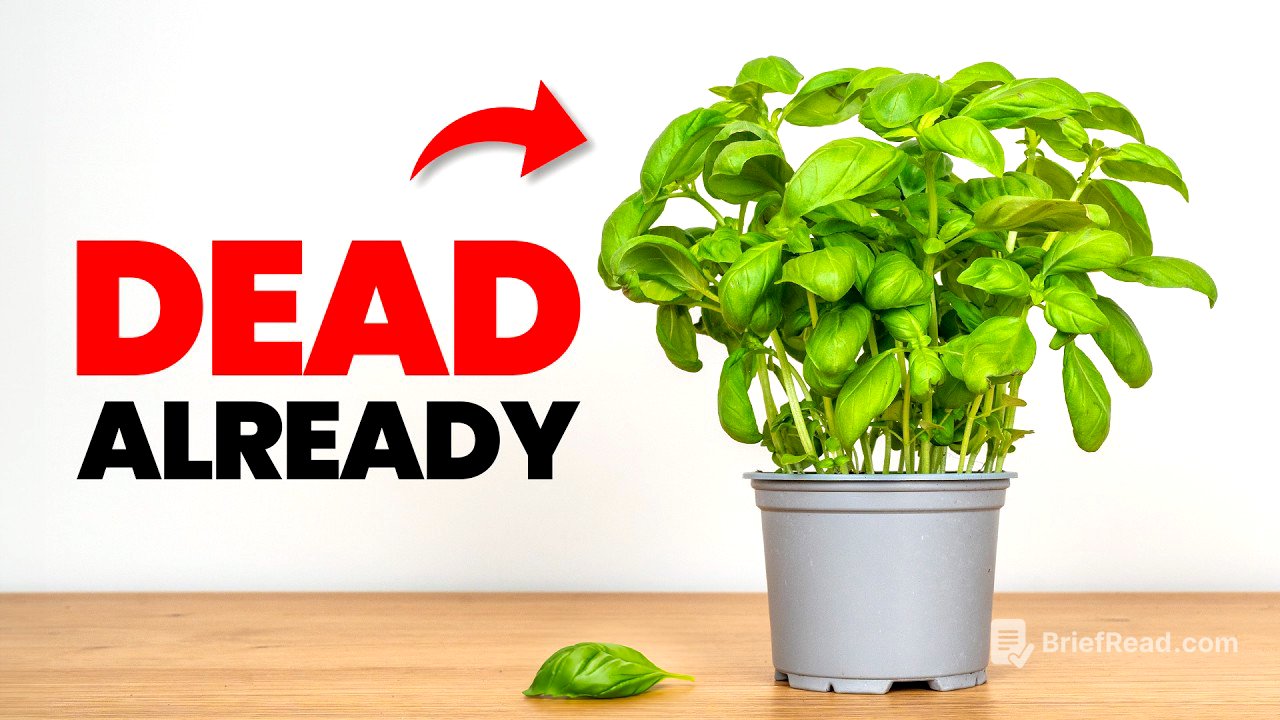
This video explains why supermarket basil often dies quickly and provides a guide on how to grow and maintain a thriving basil plant at home. It covers separating the multiple seedlings in a typical supermarket pot, repotting them individually, pruning techniques to encourage bushy growth, propagation methods for creating more basil plants, and essential care tips regarding light, temperature, watering, and feeding.
- Supermarket basil pots contain many seedlings, not one plant, leading to overcrowding and quick demise.
- Separating and repotting individual seedlings is crucial for long-term growth.
- Pruning techniques, like cutting above leaf nodes, promote bushy growth and increased yield.
- Basil requires ample sunlight, warmth, consistent watering, and regular feeding to thrive.
The Supermarket Basil Problem [0:36]
Supermarket basil is not a single plant but rather a collection of 20 to 30 seedlings crammed into one pot. This overcrowding leads to a struggle for space, light, and nutrients, causing the basil to exhaust itself and die within a week. Supermarkets sell basil this way because the full, leafy appearance is more appealing to customers looking for a short-term culinary solution. The intention is for consumers to use the basil for a recipe or two and then discard it, creating a cycle of repurchase.
Separating and Repotting Basil Seedlings [2:13]
To save supermarket basil, the first step is to carefully separate the seedlings. The root system will be a solid, matted block. Gently tease the seedlings apart, and don't worry if some roots tear. Alternatively, soaking the root ball in water for a few minutes can make separation easier, though messier. The goal is to have individual seedlings, each ready to be planted in its own pot. Use a small to medium-sized pot with drainage holes. For indoor growing, a mix like coconut coir and perlite is recommended to deter gnats. After potting, water thoroughly and place in a bright, warm location.
Pruning for Bushy Growth [4:28]
To encourage a bushy and productive basil plant, pruning is essential. Instead of picking individual leaves, prune the stems. Basil grows from the tips, and cutting the growing tip encourages two new stems to grow from below the cut. Wait until the seedling has at least two sets of leaves on the stem, then cut the stem just above a pair of leaves. This encourages the leaves in the nooks of the stem to develop into new stems, causing the basil to branch out. Repeat this process every time the plant grows another two sets of leaves.
Propagating Basil Cuttings [6:10]
The cuttings from pruning can be used to propagate new basil plants. Simply take a stem with a couple of sets of leaves, remove any leaves that would be submerged, and place it in a glass of water. No rooting hormone is needed. Place the glass in a bright location, but out of direct sunlight. After about a week, roots will begin to form. Once the roots are a few centimetres long, pot the cutting as before. This method allows for an endless supply of basil.
Essential Basil Care: Light, Temperature, and Watering [7:05]
Basil thrives in sunlight, needing at least 6 hours of direct sun per day. A south-facing window is ideal; east or west-facing windows can also work. Inadequate light leads to leggy stems and small leaves. Supplement with a grow light, especially during winter. Basil also loves heat and should be kept above 12°C at all times. Avoid cold spots and radiators. Basil is thirsty and needs consistent watering. Check the soil moisture regularly and water thoroughly when the soil starts to dry out, ensuring the pot doesn't sit in soggy soil.
Feeding Your Basil Plant [9:25]
Basil is a fast grower and needs regular feeding to replenish nutrients in the soil. Use a general-purpose liquid fertiliser, following the instructions on the label. A balanced fertiliser or even tomato feed can be used. Yellowing leaves or slow growth indicate a need for feeding. Avoid over-fertilising, which can lead to bitter leaves or weak growth. Regular feeding will keep the basil producing flavourful leaves for months.