TLDR;
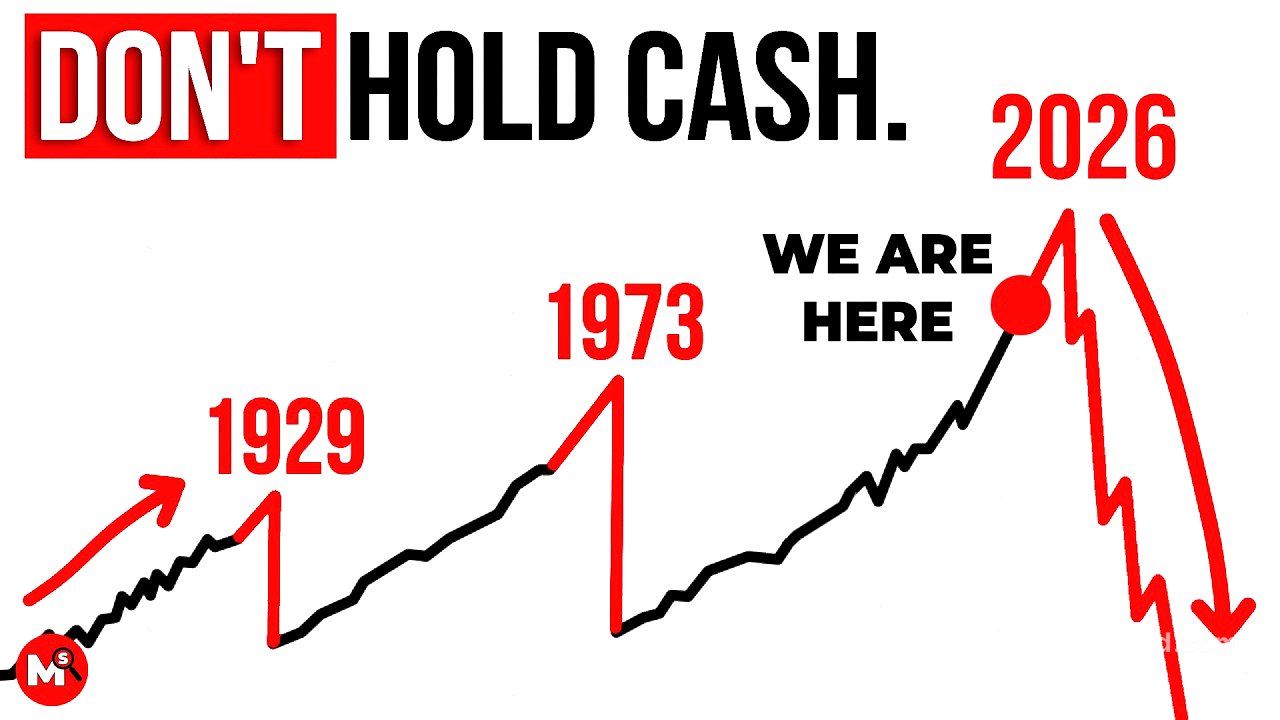
This video discusses the potential for a stagflation event in 2026, drawing parallels to the economic conditions of the 1970s. It examines the impact of such an environment on investors and highlights key investment areas that could perform well, including energy, defence, AI infrastructure, and real assets. The video stresses the importance of understanding economic trends and acting proactively rather than waiting for certainty.
- Stagflation is a dangerous economic combination of rising prices, slowing economy, and worsening job market.
- The economic conditions of 2026 mirror those of the 1970s, including money printing and an oil shock.
- Investors who proactively positioned themselves in assets like energy and commodities fared better than those who stayed in traditional investments or cash during the 1970s stagflation.
- Opportunities in 2026 lie in energy, defence, AI infrastructure, and real assets.
Introduction: A 50-Year Event [0:00]
The video introduces a situation mirroring economic events from 50 years ago, specifically the 1970s, where a combination of factors led to significant financial consequences. It highlights that while some investors panicked and lost money, a smaller group became wealthy by understanding and preparing for the economic conditions. The video aims to provide data and analysis to help viewers understand the current situation in 2026 and learn from the strategies of successful investors from the 1970s.
Understanding Stagflation [1:16]
Stagflation is defined as a rare and challenging economic environment characterised by rising prices (inflation), a slowing economy, and a worsening job market. The danger of stagflation lies in the fact that conventional measures to address one aspect exacerbate the others, creating a difficult situation for economic policymakers. The last time the United States faced a similar predicament was in the 1970s.
The 1970s Stagflation Crisis [2:32]
The 1970s crisis began in 1971 when President Nixon removed the US dollar from the gold standard, allowing the Federal Reserve to print money without limit. This led to increased government spending and a rapid expansion of the money supply, causing inflation. The situation worsened in 1973 with the Yom Kippur War and the subsequent oil embargo by Arab members of OPEC, which quadrupled oil prices and further fuelled inflation. The Federal Reserve responded by raising interest rates to 20% by 1981, leading to recessions and high unemployment.
2026: Echoes of the 1970s [4:59]
The video draws parallels between the 1970s and the current economic situation in 2026, highlighting similar factors that are in play. The first parallel is the money printing that occurred after COVID-19 in 2020, where the US government and Federal Reserve printed trillions of dollars to prevent economic collapse, leading to a surge in inflation. The second parallel is the oil shock in early 2026, triggered by military actions against Iran and the subsequent blockage of the Strait of Hormuz, causing oil prices to spike. The third parallel is the economic slowdown and job losses, with the US economy shedding jobs and the unemployment rate climbing. The Federal Reserve is now in a difficult position, unable to cut interest rates due to rising inflation and risking a recession if they raise rates.
Investor Performance During the 1970s [8:40]
The video analyses the performance of three hypothetical investors with $100 to invest each month from 1971. Alex invested in the S&P 500 and saw growth, but inflation eroded purchasing power. Veronica kept money in a savings account, which offered high interest rates but still failed to outpace inflation. Lucy invested in gold, which initially performed well but lagged behind stocks over a 20-year period. The key takeaway is that understanding why an asset is moving and knowing when that reason no longer applies is crucial.
Differences and Opportunities in 2026 [13:36]
The video highlights the differences between the 1970s and 2026, particularly the presence of artificial intelligence, geopolitical shifts in supply chains, and restructuring of global energy infrastructure. It suggests that investment opportunities in 2026 lie in energy, defence, AI infrastructure, and real assets. The video references a Citi Wealth Q2 2026 market commentary, noting a shift towards energy, critical minerals, and AI infrastructure.
Key Investment Areas for 2026 [14:39]
The video identifies four key investment areas for 2026. Firstly, energy companies benefit from high oil prices due to supply disruptions. Secondly, defence and aerospace companies profit from increased defence spending amid geopolitical uncertainty. Thirdly, the physical backbone of AI, including data centres, semiconductors, and critical minerals, presents opportunities. Finally, real assets like energy, copper, steel, and critical minerals are highlighted as a potential shift from paper assets.
Conclusion: Lessons and Actions for 2026 [18:29]
The video concludes by emphasising the importance of understanding the economic environment and positioning investments accordingly. It advises against inaction, as inflation erodes the value of cash. The key is to identify where economic pressure is creating genuine demand and invest before the headlines fully reflect it. While uncertainty remains, the setup for potential stagflation is in place, and history suggests that proactive movement is better than waiting for certainty. The video advises viewers to assess their portfolio's exposure to energy, real assets, and AI infrastructure.