TLDR;
A six-step YouTube strategy can turn videos into a connected system that generates consistent views, leads and sales without paid advertising. The approach combines strong introductions, an early standout insight, an early call to action, fresh ways to present familiar ideas, repeated reminders to act, and end-screen recommendations based on tracked performance.
- Make several useful videos that YouTube can recommend to viewers who enjoyed one of your other videos.
- Give viewers a clear reason to watch, offer value early and direct them to relevant next steps.
- Track clicks, sign-ups and conversions to identify which videos best support business growth.
Build a YouTube Video Network That Generates Sales [0:00]
How connected videos keep attracting viewers
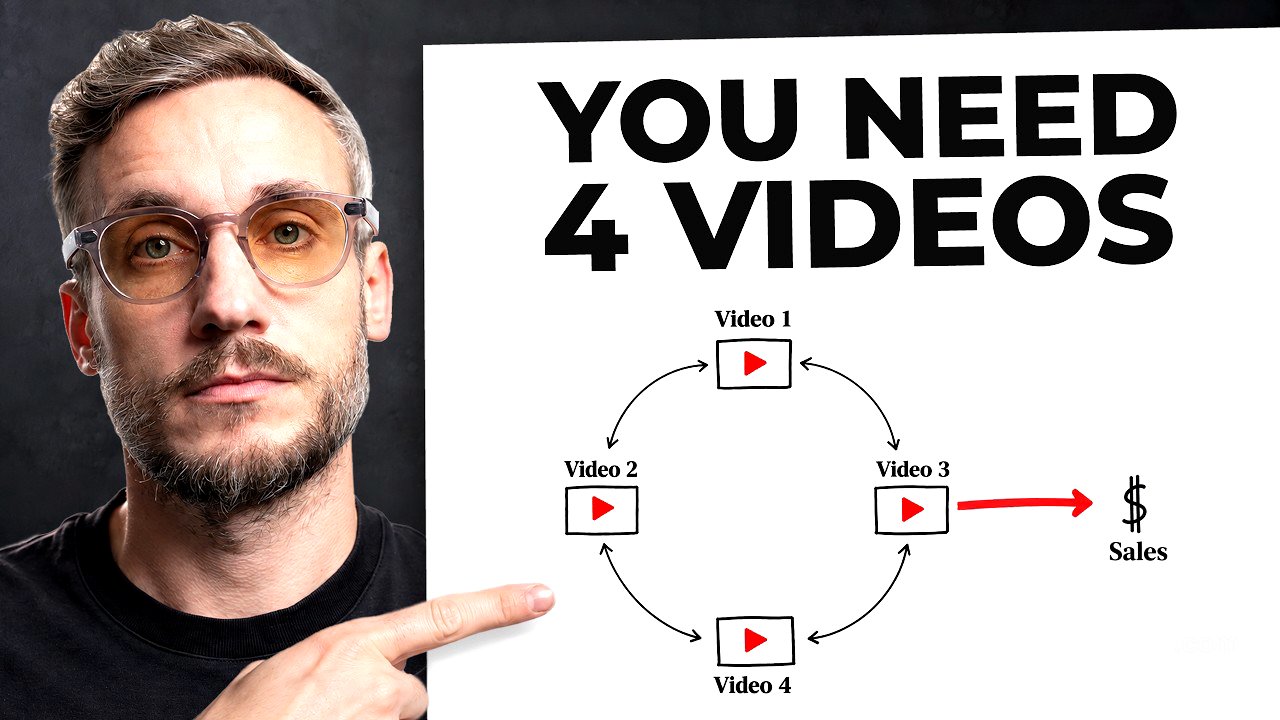
A set of videos can generate views continuously when YouTube sees that viewers enjoy them. Once someone watches one video, YouTube may recommend other videos from the same channel that similar viewers have liked. If several videos perform well, they can keep sending viewers to one another, forming a referral network that generates more views over time. The creator says three or four videos on his channel regularly attract 70–100 views per hour each, and argues that businesses can use this same network to generate leads and sales.
Step 1: Create a focused introduction
The introduction should quickly establish why the viewer should care, what they will learn and why the presenter is worth listening to. Set up a problem the audience recognises, explain the value of watching, and support credibility with relevant results or experience. Keep the introduction under 15 seconds so viewers can quickly decide to stay.
Step 2: Rehook viewers with the strongest insight
Place the video’s most compelling insight immediately after the introduction. This gives viewers valuable information early, helping them get past the first third of the video. Viewers who stay beyond that point are more likely to continue to the end, where further opportunities to generate leads and sales can be presented.
Step 3: Ask for a lead-generating action early
Include a call to action (CTA)—a request for the viewer to take a specific step—within the first 90 seconds. For example, ask viewers to follow a link and sign up to an email list. The creator compares videos that received different numbers of views and leads, explaining that a lower-view video generated more leads because viewers were asked to click sooner. Across a network of videos, these early requests can direct a steady stream of viewers towards an email list.
Step 4: Present familiar information in a fresh way
Viewers may already have heard common advice, so simply repeating it can make a video feel predictable and cause them to leave. Instead, show the idea in a distinctive, practical format that helps viewers understand it for themselves. For example, the creator used a spreadsheet to connect channel views with expected sales at different sales-page conversion rates. The spreadsheet also served as a lead magnet—a useful free resource offered in exchange for contact details—and generated email sign-ups. In another example, a triangle diagram helped explain different YouTube creator styles without relying on familiar comparisons.
Step 5: Repeat the CTA throughout the video
Remind viewers to take the action mentioned near the start, including towards the end. For a lead magnet, this could mean asking them again to download a free planner before the video finishes. The creator recommends placing CTAs in the first 90 seconds, in the middle and at the end. They do not always need to interrupt the presentation: brief on-screen text can also remind viewers to act.
Step 6: Track results and direct viewers to the best video
Track video links, clicks, sign-ups and conversions to find which videos are most effective at generating leads. Once a high-converting video is identified, use the end screen of other relevant videos to direct viewers to it. If several videos consistently attract viewers and point to that strong-performing video, they can work together as an automated system for growing an email list, calls, leads and sales. The creator concludes that effective content planning still matters: businesses need videos their buyers want to watch. He presents Story OS as a programme offering a content system for businesses, planning software, AI-assisted scripts and content planning, and live channel reviews.