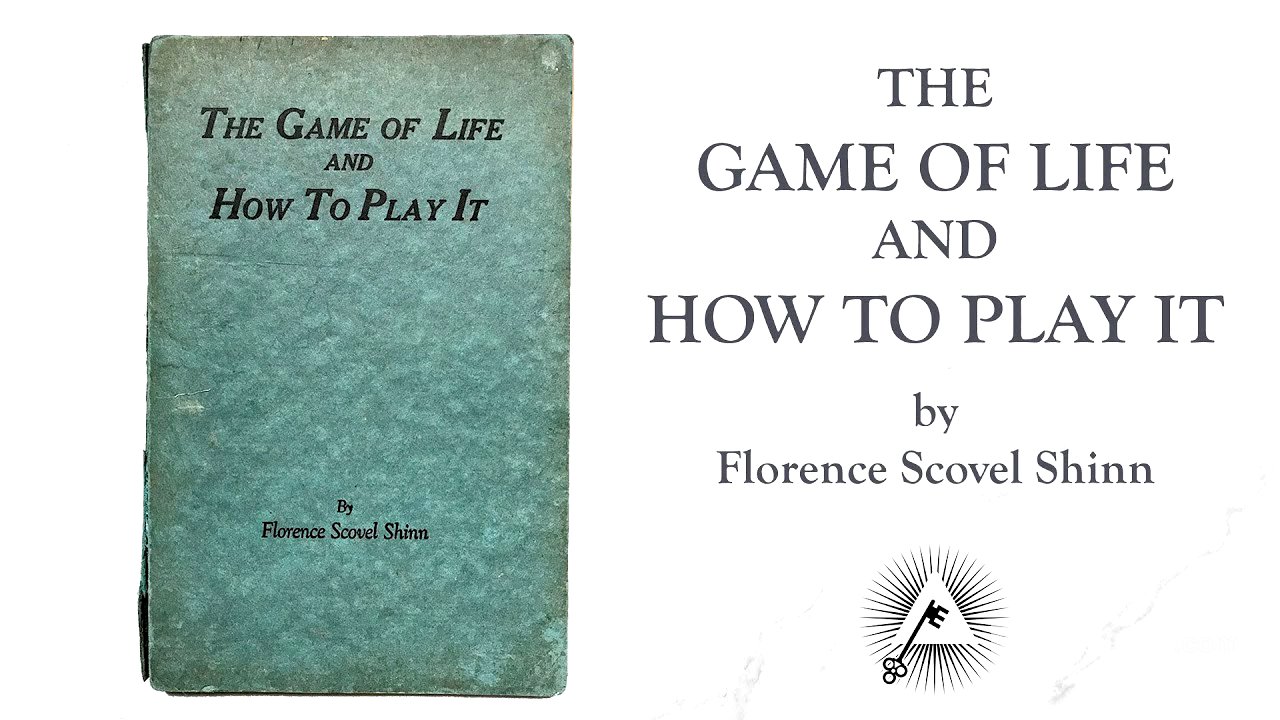
TLDR;
This video provides a comprehensive overview of Florence Scovel Shinn's teachings from her book "The Game of Life and How to Play It." The main points include the idea that life is a game governed by spiritual laws, the significance of the power of words, and how one's beliefs and attitudes influence their reality. Through various chapters, it highlights concepts such as the law of prosperity, the role of intuition, and the importance of love and forgiveness in transforming one's life experiences.
- Life is viewed as a game rather than a battle, where spiritual laws dictate outcomes.
- The words one chooses can either empower or hinder their life experiences.
Intro [0:00]
The introduction sets the stage for discussing the central themes of the video, which cover the teachings of Florence Scovel Shinn and how understanding spiritual laws can influence one's life positively. It emphasizes that life is a game and mentions Shinn's methods and wisdom in navigating it.
I. The Game [0:29]
In this chapter, the speaker explains that many perceive life as a struggle, but it can be seen as a game that requires knowledge of spiritual law to succeed. The teachings of Jesus Christ about giving and receiving highlight the importance of what one puts out into the world, as it returns to them. The imagination is a powerful tool that can manifest desires based on one's thoughts and feelings, defining the quality of one’s reality.
II. The Law of Prosperity [13:50]
This chapter discusses how God is seen as a supply for all needs, and that spoken words can release abundance. Perfect faith in one's demands is essential for manifesting prosperity. Real-life examples illustrate the need for trust in divine provision and the importance of 'acting rich' as a demonstration of belief in abundance.
III. The Power of the Word [25:21]
The speaker stresses the transformative ability of words, explaining how language can create one’s reality. Examples of individuals affirming their experiences demonstrate the dual nature of words that can justify or condemn. A narrative about superstitions illustrates how self-made laws manifest based on spoken beliefs, underlining the necessity of mindful conversation.
IV. The Law of Nonresistance [37:57]
In this chapter, the idea of nonresistance is introduced as a way to overcome challenges. The speaker uses various examples, including a metaphor of water's power due to its non-resistant nature, illustrating that acceptance and goodwill can neutralize adverse situations. The law of nonresistance is presented as a method to attract positive outcomes by blessing circumstances rather than fighting against them.
V. The Law of Karma and The Law of Forgiveness [52:05]
This chapter addresses karma, explaining that all actions, thoughts, and words come back to the individual. The speaker shares personal anecdotes demonstrating how resentment and negative thoughts can create immediate miasmas in life. The law of forgiveness is portrayed as a means to break away from negative karmic cycles, thus freeing oneself from past grievances and reducing their hold on one's present.
VI. Casting the Burden / Impressing the Subconscious [1:05:12]
The speaker elaborates on the importance of impressing the subconscious mind with positive affirmations. Strategies for casting burdens and the significance of surrendering negative thoughts to the 'Christ within' are discussed, with narratives illustrating how a change in consciousness can yield miraculous results, such as improved circumstances or the resolution of desires.
VII. Love [1:17:47]
In this chapter, love is depicted as the central theme in life’s game. The speaker highlights how selfless love can transform relationships and enable positive outcomes, contrasting it with jealousy and resentment that limit one’s ability to receive love. Real-life examples show how embracing love can heal and align individuals with their true desires by fostering positive connections.
VIII. Intuition or Guidance [1:32:37]
This chapter explains how intuition serves as an inner guide, allowing individuals to take aligned actions based on spiritual insights. The speaker encourages asking for guidance and highlights instances where following intuitive nudges has led to breakthroughs. Emphasis is placed on trusting these inner voices and awaiting divine leads in all situations, thereby aligning with one’s path.
IX. Perfect Self-Expression or The Divine Design [1:47:21]
The chapter focuses on each individual's unique destiny and divine design. The speaker asserts that everyone possesses a perfect idea that awaits recognition and manifestation. Encouragement to seek clarity on one’s highest potential shows that, through opening up to this divine plan, one can experience fulfillment in various aspects of life, including health and prosperity.
X. Denials and Affirmations [2:03:00]
The concluding chapter discusses the significance of denial and affirmation as tools for creating desired realities. The speaker elaborates on stating demands with clarity and gratitude for that which is already manifested. Guidance is given on the proper framing of affirmations to ensure they resonate truthfully with the subconscious mind, leading to successful manifestations.



![Tomb Raider: Legend - 01 - Bolivie [Visite Guidée] [français]](https://wm-img.halpindev.com/p-briefread_c-10_b-10/urlb/aHR0cDovL2ltZy55b3V0dWJlLmNvbS92aS8xTlk4cWczOHg1WS9ocWRlZmF1bHQuanBn.jpg)