TLDR;
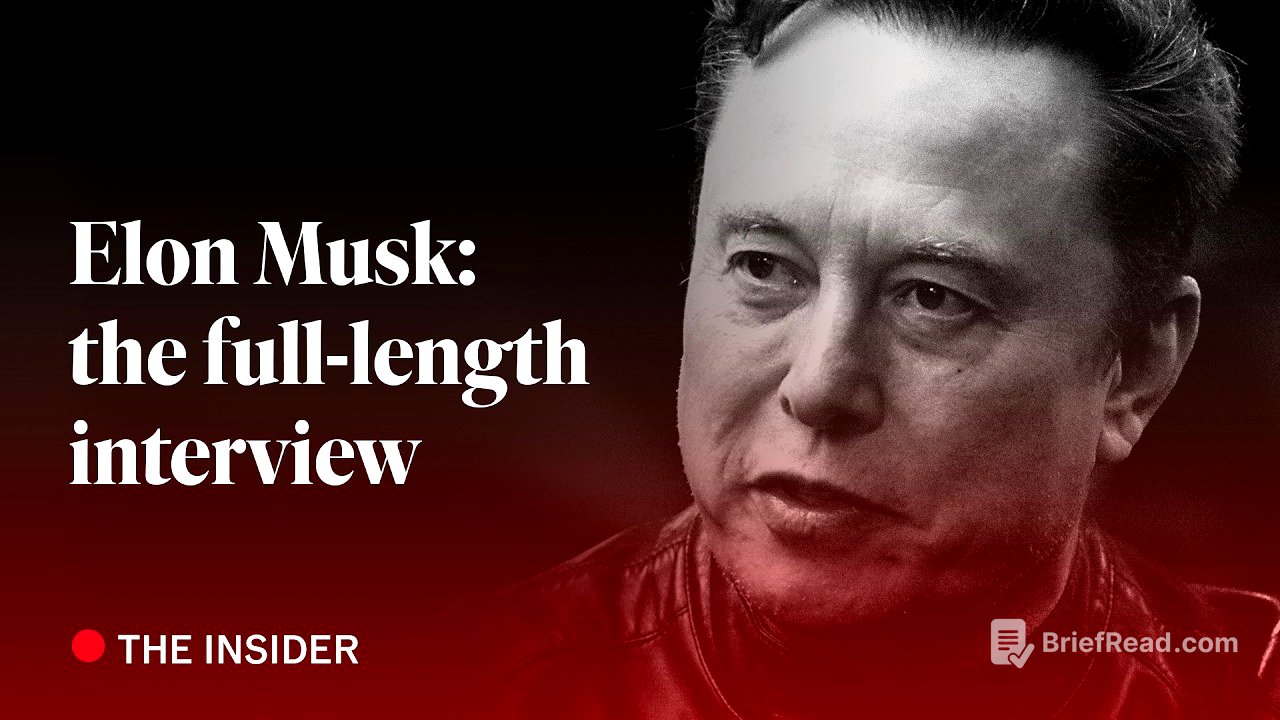
In this interview, Elon Musk discusses the future of artificial intelligence (AI), self-regulation in the AI industry, the potential for China to lead in AI technology, and the influence of powerful individuals on global politics. He predicts that AI will surpass human intelligence within five years, leading to a period of abundance. Musk also explores the implications of AI on employment and society, mentioning that work may become optional. He touches on the geopolitical power of his companies, particularly Starlink, and reflects on his involvement in politics and the responsibilities that accompany such power.
- AI will exceed human intelligence in approximately five years.
- There may be an age of abundance due to advanced technology.
- Musk believes that work might become optional in the near future.
- He expresses concern about the concentration of power in the hands of a few individuals and its implications for democracy.
AI will be smarter than humans in five years [0:00]
Musk predicts that within five years, AI will surpass human intelligence significantly. He emphasises the rapid pace of AI development, suggesting that AI will create a future of unimaginable abundance. Musk notes that traditional economic models may not apply as goods and services could be provided by vast numbers of robots, leading to fewer demands for money. He raises the question of how economies will function when everyone has access to everything they need.
How AI companies could regulate themselves [12:10]
Musk suggests that AI companies should engage in regular discussions regarding safety and security among themselves. He believes that self-regulation is necessary and encourages companies to share concerns about potential risks before releasing new AI models. He emphasises the need for collaboration among leading AI firms to ensure that new technologies do not pose dangers to society.
Will China be the leader in AI? [15:20]
Musk expresses concerns about China's progress in AI and its potential to become a leader in the field. He notes that China has significant resources, including electricity and technology companies, giving it an advantage. He acknowledges that if China improves its capabilities for developing AI and digital models, it could dominate the market in the future. Musk believes it's crucial for the U.S. and other nations to compete effectively to maintain a balance in AI leadership.
Elon Musk on Sam Altman and the AI bosses [25:43]
Musk discusses Sam Altman and the dynamics within the AI industry. He reflects on the challenges of ensuring that AI aligns with human values and ethics. Musk praises the need for AI models to be developed with humanity's best interests in mind. He acknowledges the competition between AI leaders but reiterates the necessity for cooperation to mitigate risks associated with advanced AI.
“Work is going to be optional” [31:20]
Musk states that he believes work will become optional as AI and robotics advance. He compares future work to gardening—an enjoyable activity rather than a necessity. In this envisioned world, people could choose to work for personal fulfillment rather than financial necessity, as goods and services will be provided more efficiently by robots and AI.
Should one man have so much power? [41:07]
The conversation addresses the immense power that individuals like Musk hold in shaping technology and society. Musk acknowledges the concerns regarding concentration of power, especially in contexts like AI and space exploration. He argues for a balanced approach to governance that recognizes the benefits of innovation while safeguarding against potential abuses of power.
Starlink and the war in Ukraine [49:44]
Musk outlines the role of Starlink in the Ukraine conflict, noting how it has provided critical communication support. He discusses the complexities of ensuring that the technology is used responsibly and shares his decision-making process regarding access for both Ukrainians and Russian forces. He stresses the importance of pragmatism in conflict resolution.
“I got too involved in politics” [55:18]
Musk reflects on his level of political involvement, stating he may have overstepped by attempting to influence government spending and policies. He expresses a desire to focus on his companies while acknowledging the complexities of navigating the political landscape and public response to his actions.
Musk: zero people died because of USAID cuts [57:14]
Musk argues against claims that cuts to USAID directly caused deaths in regions reliant on aid, insisting that there are alternatives and resources available. He maintains that effective aid could come from various private and public entities, not solely from U.S. government funding.
Europe, the far right and civil war in Britain [1:01:15]
Musk discusses the rising concerns over political extremism in Europe, specifically mentioning the potential for civil unrest. He believes that the growing number of immigrants with differing values could lead to societal tensions. He advocates for strong immigration policies that uphold Western ideals.
Musk: I’m not a racist [1:08:21]
Musk addresses accusations of racism, arguing that his views stem from a desire to promote societal cohesion and safety. He discusses his multicultural family and the diversity within his companies as evidence against such claims. He maintains that his stance on immigration is about ensuring shared values.
What do people get most wrong about Musk? [1:20:27]
Musk concludes by stating that many misconceptions about him arise from media portrayals and public misunderstanding. He asserts his centrist views and aims for clear communication while indicating that he wishes to focus on the future of technology and its benefits for society.


![[타로]🌹갓 신내림 받은 것처럼 잘맞는🔥현재 그 사람, 100% 이런 감정 느낍니다🔮상대방의 진짜 속마음](https://wm-img.halpindev.com/p-briefread_c-10_b-10/urlb/aHR0cDovL2ltZy55b3V0dWJlLmNvbS92aS9UWVVVQmZEdUNXOC9ocWRlZmF1bHQuanBn.jpg)