TLDR;
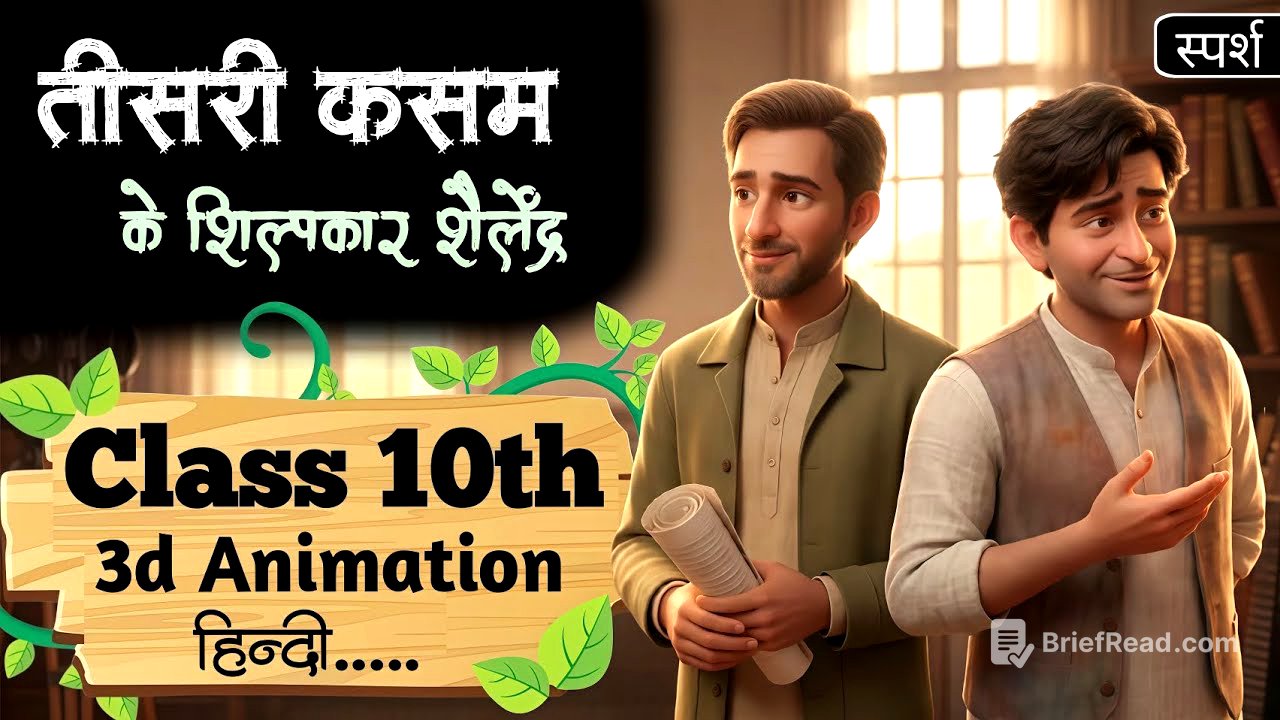
This video summarises the Hindi chapter "Teesri Kasam ke Shilpkar Shailendra," highlighting the film Teesri Kasam as a landmark in Indian cinema, despite its difficult journey to success. It explores the dedication of Shailendra and Raj Kapoor, the film's artistic achievements, and its lasting impact on portraying genuine human emotions and social realities.
- Teesri Kasam is celebrated for its artistic value and sincere portrayal of emotions.
- Shailendra's commitment to artistic integrity over commercial appeal is highlighted.
- Raj Kapoor's dedication to the role of Hiraman, foregoing his superstar persona, is praised.
Introduction to Shailendra and Teesri Kasam [0:00]
The chapter introduces Shailendra, the creator of Teesri Kasam, a film based on Phanishwar Nath Renu's story "Mare Gaye Gulpham." The film is described as a milestone in Indian cinema, unmatched in its quality. However, its success was hard-earned, proving the difficulty of creating meaningful cinema in the Hindi film industry. The film highlights the risks involved in producing quality cinema.
Raj Kapoor's Commitment and the Film's Production [0:57]
Following the success of Sangam, Raj Kapoor announced multiple film projects. While working on Mera Naam Joker, Shailendra's Teesri Kasam was released in 1966, featuring what is considered Raj Kapoor's finest performance. The film is portrayed as a poetic adaptation of Hindi literature, marking Shailendra's first and last film. It received numerous accolades, including a President's Gold Medal and recognition at the Moscow Film Festival, celebrating Shailendra's sensitivity.
The Challenges of Releasing Teesri Kasam [2:14]
Shailendra's genuine emotions resonated with Raj Kapoor, who worked on the film without expecting payment. Despite Raj Kapoor's star power and popular music by Shankar Jaikishan, distributors were hesitant to release Teesri Kasam because its emotional depth was beyond the comprehension of ordinary traders. The film's release suffered from a lack of promotion, leading to it going largely unnoticed.
Shailendra's Artistic Integrity [3:36]
Despite spending 20 years in the film industry, Shailendra maintained his simplicity and humanity. He insisted on keeping complex lyrics in songs, like in the song from Shree 420, resisting the pressure to simplify them for wider appeal. Shailendra believed that artists should elevate the audience's understanding rather than cater to superficial tastes. His songs, filled with deep emotions and simplicity, became very popular.
The Film's Artistic Achievements and Impact [4:55]
Teesri Kasam is recognised for doing justice to its literary source material. Shailendra transformed Raj Kapoor into Hiraman, ensuring the character overshadowed the star. Waheeda Rehman's portrayal of Hirabai was equally authentic. Memorable scenes, like the conversation by the Kajri River, conveyed deep emotions. The film captured the dreams of people living in poverty, filled with delicate emotions and simplicity.
Message and Raj Kapoor's Performance [6:04]
The video contrasts Teesri Kasam with typical films that exaggerate tragedy for emotional exploitation, highlighting its natural and relatable portrayal of sorrow. The author views Shailendra as a poet rather than just a musician, who remained detached from the allure of fame and money. His songs conveyed not only sorrow but also a message of struggle and progress, teaching that sorrow strengthens rather than defeats. Raj Kapoor's performance is considered his finest, with critics praising his ability to communicate through his eyes. He fully embodied the character of Hiraman, a simple cart driver who thinks with his heart.