TLDR;
This video discusses injury prevention and rehabilitation, highlighting advancements in technology and research that are making these processes more accessible and effective. It covers topics such as understanding movement patterns to prevent ACL injuries, the role of the neuromuscular system and brain activity in injury and recovery, robot-assisted rehabilitation, the use of sensors for prehabilitation, advancements in force measurement, 3D printing for personalised prosthetics, virtual and augmented reality for training and therapy, and the application of genomics in understanding injury propensity and tailoring interventions.
- Injury prevention can be seen as prehabilitation.
- Rehabilitation involves therapy to recover functions after an injury.
- Advancements in technology and research are making rehab processes more accessible.
Injury Prevention and Rehabilitation [0:00]
Injury prevention can be viewed as prehabilitation, while rehabilitation is the process of recovering functions after an injury through physical, physiological, or occupational therapy. Rehabilitation addresses injuries, such as ACL tears, which require surgery, physiotherapy, and recovery time due to the instability caused by ligament loss. Studying an individual's movement characteristics can help identify their propensity for injury, allowing for targeted training programs to improve movement patterns, enhance performance, and reduce injury risk.
The Neuromuscular System and Brain Activity [3:24]
The human body is a musculoskeletal system where the neuromuscular system produces outcomes. Research indicates that correcting knee collapse alone may not prevent ACL injuries, highlighting the importance of the neuromuscular system. Technologies like fMRI and EEG can map brain activity during movement, helping to understand which brain areas are active in injury-prone individuals. Interventions can then be designed to translate learning to the correct brain areas for injury-proof movements. Advancements in EEG and fMRI have aided research in injury rehabilitation after stroke, concussion, or ACL reconstruction, building a connection between brain control and injury.
Robot-Assisted Rehabilitation [6:53]
Robot-assisted rehabilitation standardises and customises treatment by providing assistance or resistance in a calculated manner. This approach helps to standardise treatment protocols, adjust to individual behaviour, and record performance data. Robotic interventions increase the accessibility of rehab and provide data for understanding an individual's progress during rehabilitation.
Sensors and Prehabilitation [8:57]
The availability of sensors in daily devices helps individuals understand their movement patterns and prevent injuries through prehabilitation. Using video recordings or IMU sensors can identify problematic movement patterns causing pain, leading to form correction, postural adjustments, or external aids. Solutions with sensors provide the reward of prehabilitation, reducing the need for rehab after an injury.
Advancements in Force Measurement [10:28]
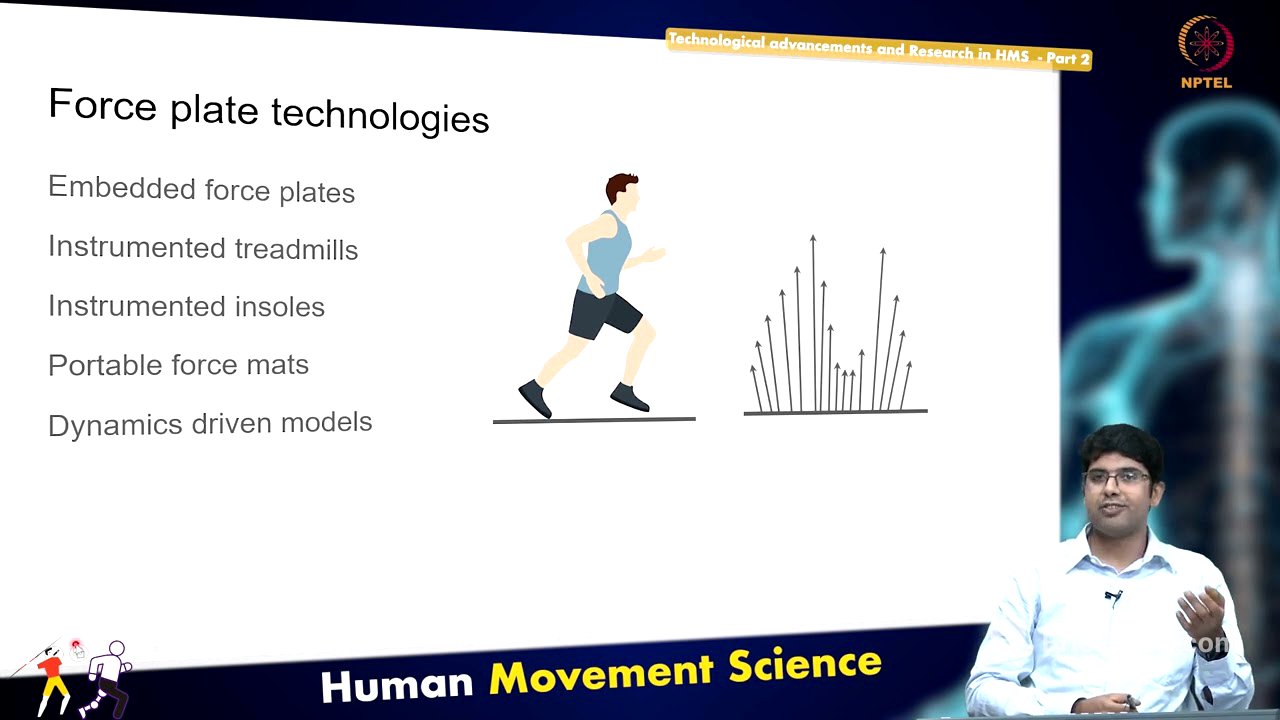
Force measurement is crucial for understanding human movement dynamics. Improvements in force plates, including embedded force plates, allow for gait analysis and the identification of force movement patterns. Instrumented treadmills, with embedded force plates, provide similar precision and accuracy in measuring force patterns. Instrumented soles and portable force mats offer ways to measure forces in ecologically relevant tasks, though they may not be as precise as embedded force plates. Dynamics-driven models, using IMUs, can predict force and calculate joint moments, providing approximations in the absence of direct force measurement data.
3D Printing for Personalised Prosthetics [17:34]
3D printing has enabled the development of personalised prostheses, medical implants, tailored sports equipment, and customised assistive devices. Open-source projects offer 3D-printed prosthetic hands or legs, making the technologies more accessible. Recent advancements include 3D-printed prostheses for bone repair, revolutionising the field of medical devices by creating biocompatible parts that can be internally embedded and perform the same function as the original body part.
Virtual and Augmented Reality for Training and Therapy [19:57]
Virtual reality (VR) and augmented reality (AR) provide immersive environments for training and interventions. Photorealistic rendering and advancements in computational science make virtual environments hard to differentiate from actual environments. VR is used for sports training and rehabilitation therapy, offering haptic and force feedback. These technologies allow for tasks that are not physically possible, such as altering the visual field or gamifying therapy, making the process more engaging and improving rehabilitation outcomes.
Genomics and Personalised Medicine [23:46]
Genomics is used to understand the relationship between genetics, biomechanics, performance, and injury propensity. It helps identify an athlete's potential, their response to training, and personalise injury prevention protocols. Advancements in genomics and gene therapy correlate the fundamental characteristics of movement to genes, offering insights into personalised medicine.
Conclusion [25:37]
Developments in engineering and medical sciences, including materials, sensors, computational resources, robotics, imaging techniques, genetics, and neuromuscular modelling, are democratising and increasing the accessibility of technologies, interventions, and rehab processes. These advancements aim to improve performance, enhance abilities, and enable possibilities for the common public.