TLDR;
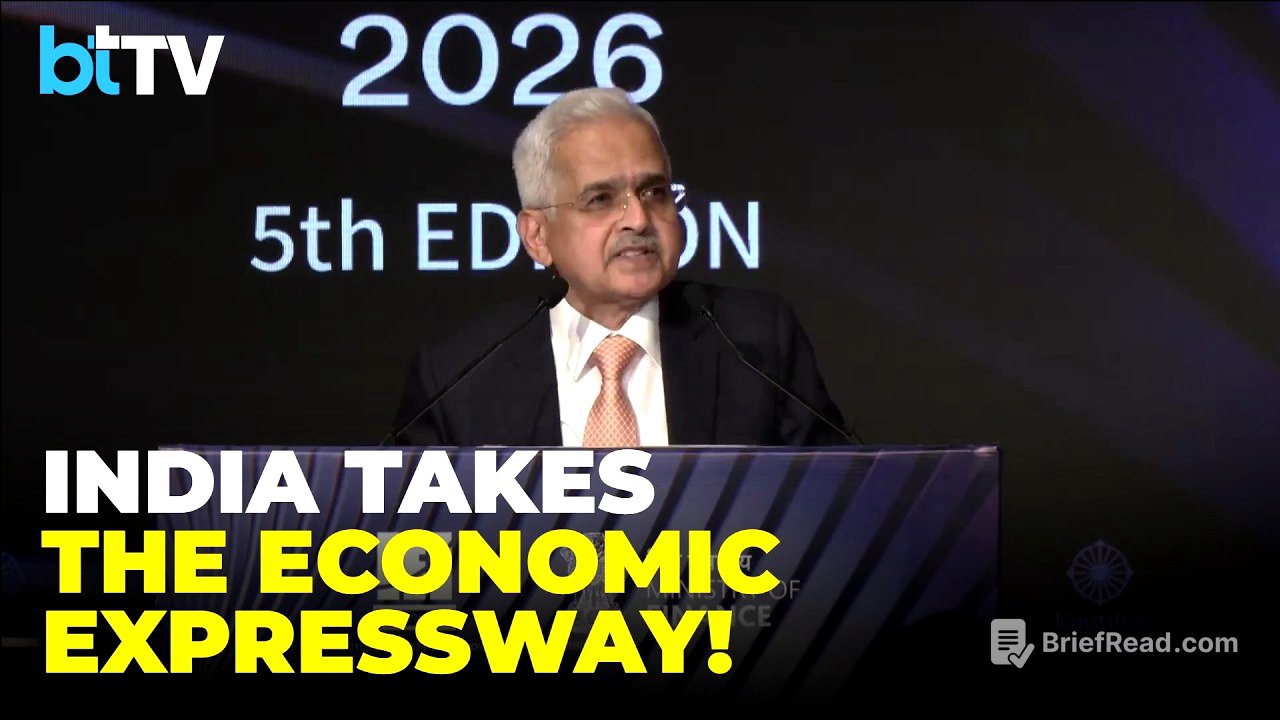
The video focuses on the Kotella Economic Conclave 2026 and highlights the contributions of Kautilya, an ancient Indian scholar, to economic strategy and governance. It summarises India's recent economic developments, emphasising resilience and growth amidst global uncertainty. Key points include the importance of infrastructure investment, fiscal prudence, technological advancement, and human capital development as critical elements in propelling India's economy towards a sustainable future.
- Kautilya's principles remain relevant for modern governance and economic strategy.
- India's economy shows impressive growth and resilience, despite global challenges.
Introduction to Kautilya's Contributions [0:00]
The speaker expresses excitement to return to the Kotella Economic Conclave 2026, which has become a significant platform for intellectual discussion since its start in 2022. Kautilya, renowned for his role in shaping the Mauryan Empire through his work, the Arthashastra, laid the groundwork for contemporary strategies in economics and governance. His analysis of previous scholars demonstrated an evidence-based approach to decision making, which still resonates in today’s strategic frameworks.
India's Economic Context [1:10]
The importance of Kautilya's principles is highlighted against the backdrop of India’s current economic vitality. Concepts like "yoga shea," which prioritises the welfare of the populace, align with recent government policies aimed at enhancing public infrastructure and encouraging private enterprise. The focus is on sustainable fiscal management while avoiding burdensome debt for future generations, which speaks to India's emphasis on fiscal consolidation.
Global Economic Challenges [3:00]
The speaker outlines the challenges faced by the global economy, including wars, inflation, and rising public debt levels in advanced countries. These factors contribute to economic uncertainty, influencing monetary policies worldwide. Despite these challenges, India’s real GDP demonstrates impressive growth due to strong domestic demand and investment, with metrics suggesting GDP growth exceeds 8%.
Factors Behind India's Economic Resilience [4:52]
Key factors contributing to India's economic resilience include anticipating risks and safeguarding against threats, drawing from Kautilya’s teachings. Over the past 12 years, governance reforms have been implemented proactively to strengthen institutions and buffer against crises. Specific examples include flexible inflation targeting and digitisation initiatives that enhance financial stability and transparency.
Strengthening Governance and State Capacity [6:12]
The speaker discusses the need for strong governance foundations that foster citizen engagement. Improvements in infrastructure and welfare services have built confidence in government institutions. India’s digital public infrastructure has facilitated better service delivery, allowing quick responses during crises such as the COVID-19 pandemic.
Building Macroeconomic Stability [8:24]
Focusing on macroeconomic stability, the speaker outlines five pillars, including inflation control and fiscal prudence that have driven economic growth and resilience. These measures include the implementation of the Goods and Services Tax (GST) to unify markets and enhance compliance, along with ensuring the health of the financial sector through necessary reforms.
Investment in Long-Term Productive Capacity [11:48]
Investment in infrastructure and energy has revolutionised India’s productive capacity. Projects aimed at improving logistics and connectivity demonstrate the government's commitment to enhancing growth and market access. India’s rise as a powerhouse in renewable energy and manufacturing signifies its strategic focus on sustainable development.
Path Forward: Embracing Technological Advancements [15:20]
The speaker outlines five emerging areas for growth, emphasising the importance of harnessing artificial intelligence (AI) to boost productivity and public service efficiency. India's initiatives in AI and technology aim to create a robust foundation for future competitiveness while addressing critical governance and ethical issues associated with technological advancements.
Financial Sector Deepening and Self-Reliance [17:10]
As India’s economic influence expands, there’s a pressing need to deepen the financial architecture to support growth. This includes building robust long-term finance mechanisms and fostering strategic self-reliance to strengthen domestic capabilities while remaining integrated with the global market, all while encouraging defence production and critical technology development.
Sustainable Development and Human Capital Investment [18:22]
The importance of sustainable environmental practices alongside economic growth is underlined. Initiatives focused on renewable energy, electric mobility, and sustainable agriculture are necessary for future development. Investing in human capital, particularly in education and healthcare, is essential for enhancing workforce skills and improving overall quality of life.
Conclusion: A Vision for Resilient Growth [19:28]
In conclusion, the speaker reiterates the importance of sustaining reform momentum in India, drawing parallels to Kautilya's teachings that highlight the long-term benefits of strategic decision-making. India’s focus is not merely on rapid growth but on sustainable and resilient development for years to come.




![Rebel at work: Joseph Weizenbaum 04.05.2007 [Teil 8]](https://wm-img.halpindev.com/p-briefread_c-10_b-10/urlb/aHR0cDovL2ltZy55b3V0dWJlLmNvbS92aS9ydV9Vd1ZPT3F6by9ocWRlZmF1bHQuanBn.jpg)