TLDR;
In this webinar, Dr. Krisha Patel discusses self-harm and suicide, focusing primarily on defining self-harm and exploring the reasons behind it. Key points include:
- Self-harm is a broad category of deliberate self-injury, regardless of suicidal intent.
- Rates of self-harm are increasing, particularly among children and young people, and coping strategies can vary widely.
- The relationship between self-harm and suicide is complex, with self-harm being a significant risk factor for suicide.
Understanding Self-Harm and Suicide [0:00]
Dr. Krisha Patel opens the webinar by introducing the topic of self-harm and suicide, clarifying that it is directed towards healthcare practitioners. She explains the definitions of self-harm, also abbreviated as SH, and deliberate self-harm, or DSH, noting that self-harm is prevalent both in the UK and globally. The conversation progresses to highlight that self-harm encompasses any deliberate self-injury, independent of the presence of suicidal intent.
Reasons for Self-Harm [0:36]
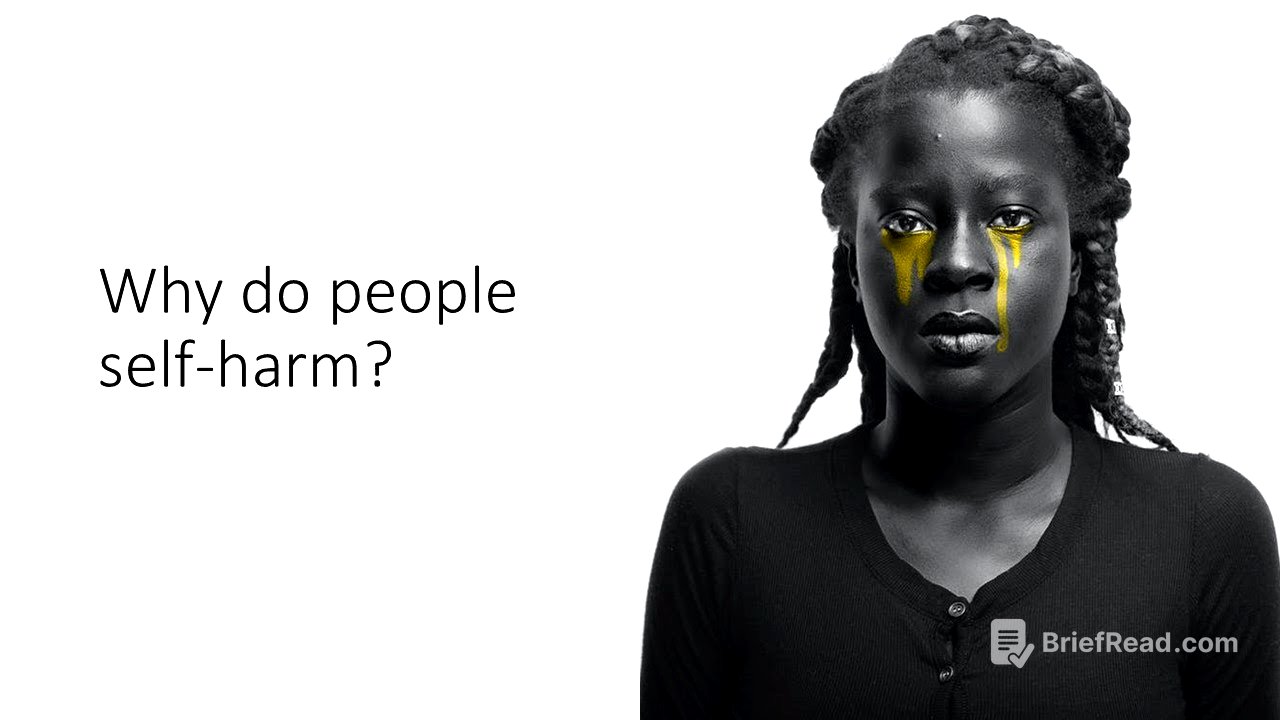
The discussion shifts to the various reasons why individuals may engage in self-harm. Dr. Patel points out that some individuals self-harm due to severe emotional distress, using it as a coping strategy. It can also stem from a desire to exert control in a life that feels unmanageable or to express feelings that are hard to articulate. Other motivations include feelings of guilt, emotional numbness, and, at times, genuine suicidal intent. Dr. Patel invites participants to pause and discuss different methods of self-harm and common triggers among individuals.
The Cycle of Self-Harm [4:12]
Dr. Patel illustrates the cycle of self-harm, whereby emotional distress leads to a need for immediate relief through self-injury. This relief is often temporary and leads back to feelings of shame and emotional suffering, thereby perpetuating the cycle of self-harm. She emphasises that self-harm is not a psychiatric diagnosis on its own but is often linked with conditions such as depression, anxiety, and other mental health disorders. In cases of learning disabilities, self-harm may serve as a non-verbal expression of distress.
The Relationship Between Self-Harm and Suicide [6:48]
The relationship between self-harm and suicide is complex, as self-harm is a known risk factor for suicidal behaviour. While many individuals with a history of self-harm may have suicidal thoughts, not all will complete suicide. Dr. Patel explains that there is considerable overlap between those who self-harm and those who have committed suicide, debunking the idea that they are entirely distinct groups. She challenges the misconception that self-harmers are solely impulsive and explains that many people who complete suicide may have planned their actions.
Suicide Statistics [9:25]
Dr. Patel provides statistics on suicide rates, revealing that approximately six and a half thousand people die by suicide annually in the UK, which relates to an age-standardised mortality statistic of about 11.2 per 100,000 people. She highlights that, although the presence of suicidal thoughts is concerning, most individuals do not go on to complete suicide. She underlines that each suicide is a tragedy that affects not only the individual but also their loved ones, reinforcing the importance of approaching self-harm and suicide assessments with both awareness and compassion.
Conclusion of Part One [11:43]
The first part of the webinar concludes with Dr. Patel stating that the next session will focus on suicide risk assessments, indicating the continuation of this important dialogue around mental health and the measures healthcare professionals can take to support individuals at risk.