TLDR;
This video discusses the recent protests related to the CJP (Committee for Justice and Peace) in India, highlighting the government's handling of the situation and the involvement of various political parties. The speaker criticises the BJP's strategy of initially ignoring the protests, which ultimately led to an escalation of tensions and violence. They also point out the problems faced by students and the significance of communication between the government and the affected communities.
- The Indian government's handling of the CJP protests is scrutinised.
- The BJP's strategy of ignoring protests was ineffective and led to conflict.
- The influence of opposition parties and student issues are explored.
Government Response to CJP Protests [0:00]
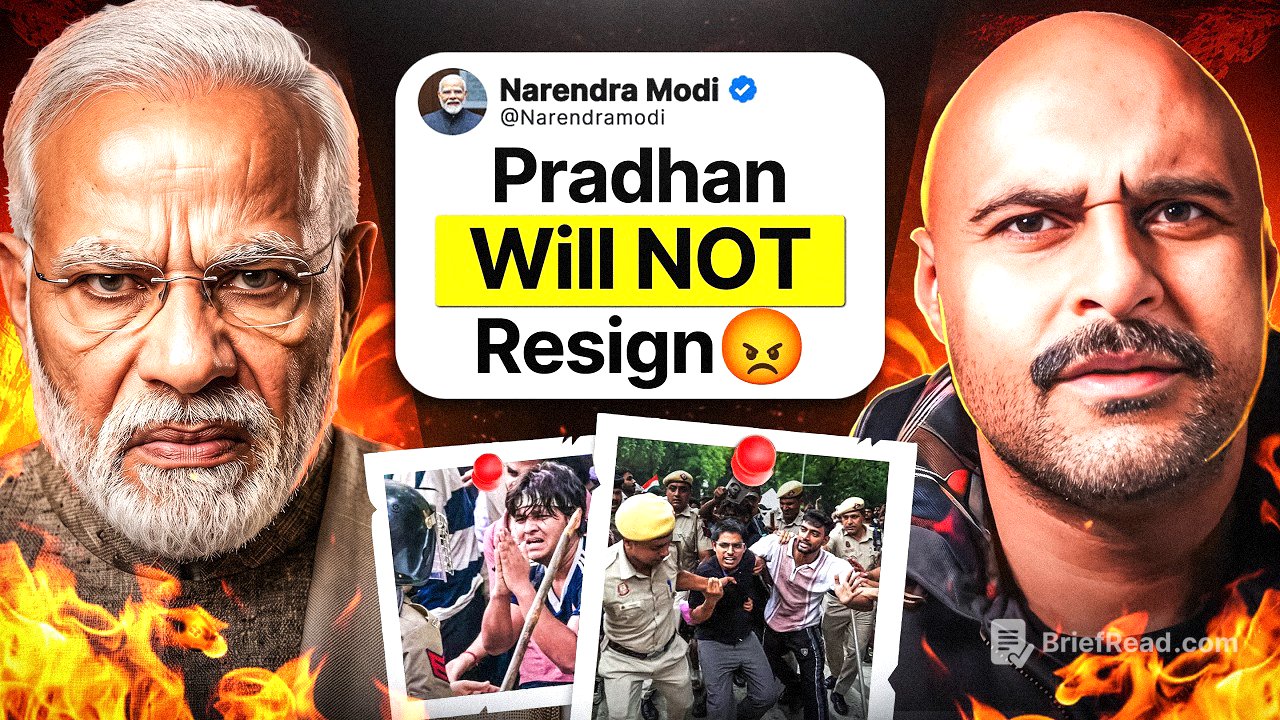
The video opens with a focus on how the Indian government has worsened controversies by banning the CJP regarding their protests. The context is set at Jantar Mantar, where large crowds have gathered, and tensions are rising as people disregard guidelines from the police. As protestors threaten to uproot the Parliament if their demands are not met, the initial strategy of the ruling party, BJP, was to ignore the protests, believing that they would diminish over time.
Protests and Political Hijacking [1:50]
The speaker notes that the BJP recognised the protests were hijacked by political parties and anti-national elements. He mentions individuals, like Arundhati Roy and Prashant Bhushan, who have previously advocated for controversial causes, as being linked to the movement. Despite an early decision not to engage for 20 days, the BJP then shifted tactics abruptly as the CJP announced its largest protest yet, suggesting poor strategic management by the government.
Understanding BJP's Initial Strategy [3:23]
Initially, the BJP's approach seemed to be to deny oxygen to the protests by not engaging at all. Early on, very few supporters were attending the protests, suggesting this strategy was somewhat effective initially. However, the involvement of various leftist student organisations started to increase attendance. Despite claims of a grassroots movement, there are accusations of insincerity by CJP leaders who are accused of merely seeking political advancement.
Mistakes in Handling Protesters [6:39]
The BJP's significant mistakes in handling the protests include ignoring legitimate student grievances, particularly regarding paper leaks in education. The speaker argues that immediate accountability from Education Minister Dharmendra Pradhan was necessary following these scandals to maintain trust with students. He states that a press conference or direct engagement with students would have been more appropriate than the government's passive approach.
Protests Escalate and Violence Erupts [10:14]
As tensions grew, police used force against protesters who defied barricades, leading to clashes. The protesters had initially aimed for a peaceful protest, but provocateurs from opposing parties disrupted the tranquility, leading to violence and injury on both sides. The video highlights the role of opposition-associated agents who incited violence, risking the movement’s integrity and creating a narrative that tarnished students' image.
CJP's Leadership Questioned [12:35]
Criticism is directed at the leadership of the CJP, which is portrayed as detached from the genuine concerns of students while seeking to raise their political profiles. Key CJP leaders were also noted to be absent from the frontline during the violence. The speaker underscores a disconnection between protest leaders and genuine protest experiences, suggesting that their priorities lie elsewhere rather than with the students' needs.
BJP's Confused Strategy [14:42]
The BJP's strategy lacked clarity as they swung between ignoring and engaging with the protests. The moment when protests teamed up with political opposition marked a turning point that prompted the BJP to engage abruptly. This confusion is critiqued for signalling to future protestors that only violent actions would warrant governmental engagement, which could set a dangerous precedent.
Final Thoughts on Strategy and Student Engagement [19:02]
The speaker urges that the government should have established separate channels of communication with students that focused on addressing their grievances rather than reacting to protests involving political hijacking. Emphasising that a proactive, structured communication plan could have fostered goodwill and trust, the speaker calls for continued pressure on the government for tangible solutions while advising against participation in violence-driven protests.
Call to Action for Students [19:30]
The video concludes by encouraging students to persistently demand accountability from the government without engaging with anti-national elements. The importance of non-violent protests is reiterated, along with a recognition of genuine student concerns, advocating for their voices to be heard while maintaining focus on constructive dialogue for resolution.