TLDR;
This video features an interview with Andrea Nach Chavez, a Venezuelan journalist reporting from Caracas, about the US attack on Venezuela and the kidnapping of President Maduro. She discusses the situation on the ground, the response of the Venezuelan people, and the broader implications for Latin America. Key points include:
- The US conducted strikes on multiple locations in Caracas, including civilian areas.
- The Venezuelan people are denouncing the kidnapping of President Maduro and demanding his return.
- There is a strong sense of solidarity and resistance among Venezuelans, who are drawing on their past experiences of resisting US sanctions.
- The attack is seen as part of a larger US plan for domination in Latin America.
Initial Reports and Government Response [0:00]
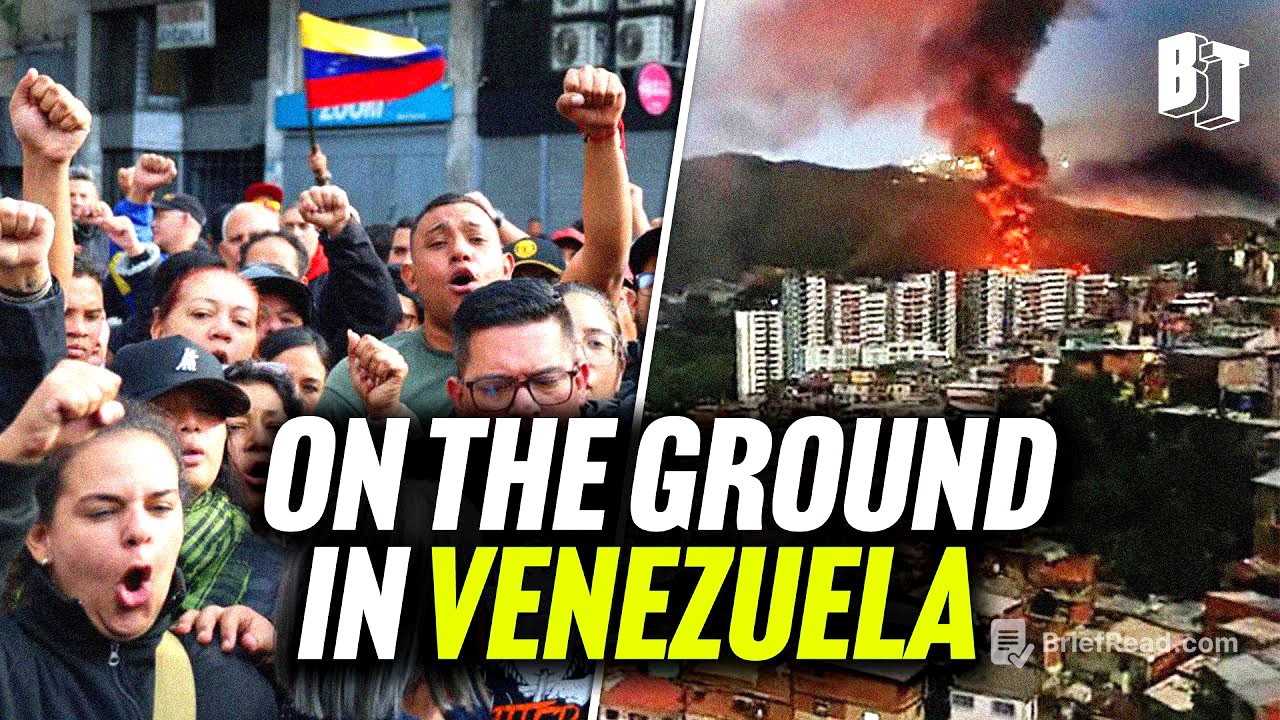
Andrea Nach Chavez reports from Caracas about the immediate aftermath of US strikes. She explains that the attacks, which began in the early hours of the morning, hit at least seven points in Caracas, including residential areas, contrary to US claims that only military complexes were targeted. People gathered near the Miraflores Palace, denouncing the kidnapping of President Maduro by the US, emphasising he is not a criminal to justify such actions. The population demands proof that he is alive and his return, along with his wife, to Venezuela. There's a call for strength, solidarity, and continued resistance against what is perceived as an illegal US bombing and regime change attempt aimed at controlling Venezuela's political life and oil resources.
Public Sentiment and Reactions [4:58]
Chavez addresses how US media portrays Venezuelans celebrating the events, clarifying that this is not the reality on the ground. She states that Venezuelans are generally peaceful and protective of their sovereignty. While there might be some who support the intervention, they are not the majority. Most people are staying home, ensuring they have essential supplies, while "Chavista" community movements are gathering to support each other and protect their territories. These communities are listening to Venezuelan authorities, who urge calm, preparation, and resistance, while denouncing the US actions globally.
The Role of Independent Journalism [8:58]
The interviewer acknowledges the importance of independent journalists and community media in Venezuela, particularly their role in countering mainstream media narratives. Chavez's reporting on communal and grassroots movements is highlighted as crucial to understanding the Venezuelan process. These movements have sustained Venezuela through difficult times, such as the economic crisis caused by US sanctions since 2017.
Venezuelan Resilience and Self-Sufficiency [10:57]
Chavez explains that Venezuelans have been "trained in resistance" due to over a decade of facing challenges. The US sanctions on the oil industry in 2017 led to a severe humanitarian crisis, but it also pushed Venezuela to become more self-sufficient. The country now produces almost 100% of the food it consumes, reducing its dependence on imports. Solidarity initiatives, like the "Plan PBLO," have emerged to distribute food to schools and communities. This has fostered a deeper understanding of sovereignty, focusing on taking control of the means of production as a people. Despite never facing a military intervention of this scale, Venezuelans are prepared to resist, with a strong military-civilian union and support expected from Latin America and the global south.