TLDR;
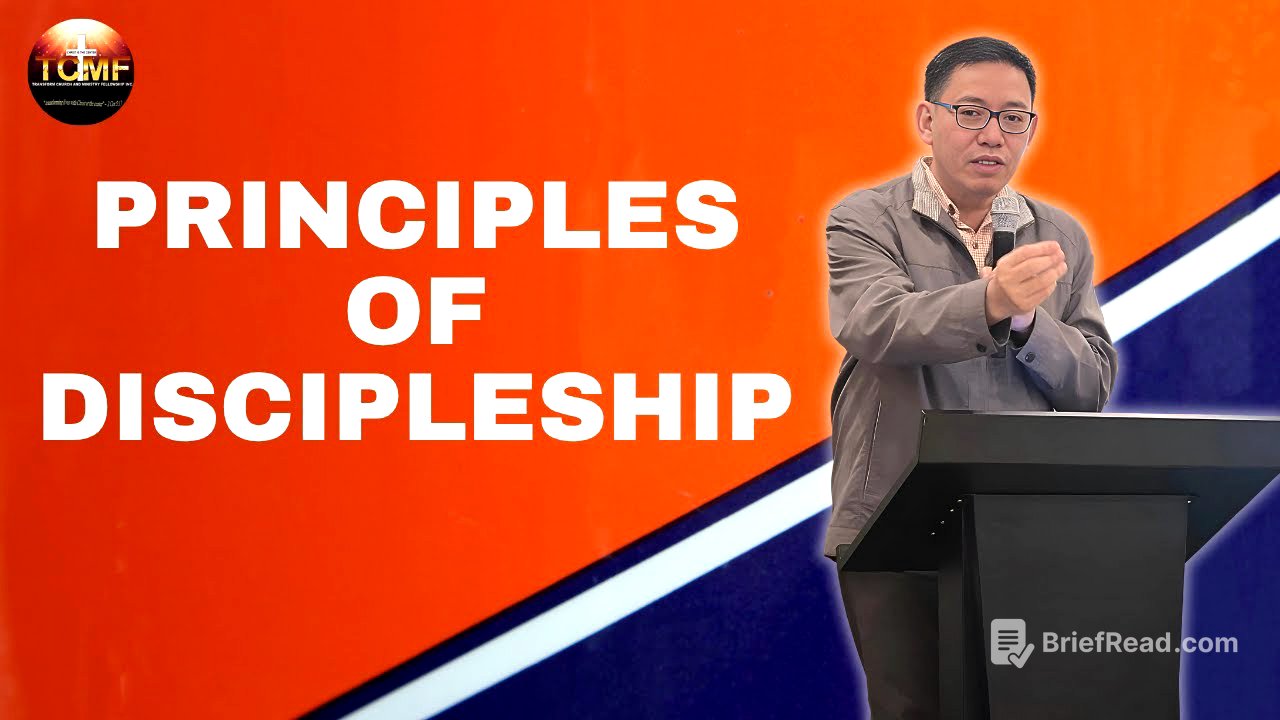
This video features a worship service with music and singing, followed by a sermon on the principles of discipleship based on Matthew 28:19-20, known as the Great Commission. The sermon defines disciple-making, outlines the qualities of a disciple, and details key principles such as relationship with Christ, reliance on the Holy Spirit, equipping others, and multi-generational impact. It emphasises that all believers are called to be priests and participate in ministry, not just pastors. The sermon concludes by using the metaphors of a soldier, athlete, and farmer to illustrate the commitment, discipline, and perseverance required in discipleship.
- The Great Commission is the key focus, urging believers to make disciples.
- Relationship with Christ and reliance on the Holy Spirit are foundational.
- Equipping and empowering others are essential for spiritual multiplication.
- All believers are called to be priests and participate in ministry.
- Discipleship requires commitment, discipline, and perseverance, illustrated through metaphors.
Worship Service [0:00]
The video begins with a vibrant worship service featuring music, singing, and enthusiastic participation from the congregation. The lyrics of the songs emphasise faith, reliance on God's plan, and the goodness of God. The atmosphere is filled with praise and a call to worship, encouraging attendees to feel the presence of the Lord.
Introduction to Discipleship [14:03]
The speaker introduces the topic of the morning: the principles of discipleship. He references Matthew 28:19-20, known as the Great Commission, and the congregation reads it together. The Great Commission is the key text for the sermon, setting the stage for a discussion on making disciples.
Defining Disciple-Making and Disciples [15:48]
The speaker defines disciple-making as bringing people to Christ through evangelism, building them up in faith towards Christlikeness, and preparing them for spiritual multiplication. A disciple is defined as a committed follower of Jesus who is Christlike in character, mission, manner, and method. Christlikeness involves growing in faith and love, not just attending church.
Principle 1: Relationship with Christ [18:10]
The first principle of discipleship is having a living relationship with Jesus Christ. The closer the relationship, the greater the influence. Spending time with Jesus daily is crucial, and cutting off this relationship affects all other aspects of Christian life, such as missions and evangelism. The speaker references Mark 3:14, highlighting the importance of being with Jesus before being sent out.
Principle 2: Reliance on Christ [22:00]
The second principle is reliance on Christ, empowered by the Holy Spirit. The Holy Spirit, present in every believer, reminds, inspires, and illuminates the scriptures. Reliance on Christ means not being overly confident in oneself but trusting in God's word, spending time in intimacy with God, and having a vibrant prayer life.
Principle 3: Equipping [26:51]
The third principle is equipping others, which involves teaching and preparing them to teach others. This is not just classroom training but also on-the-job training (OJT) using the MRI acronym: modelling, relationship, and intentionality. Equipping involves conscious modelling of a Christlike life, building relationships, and intentional effort to counteract worldly influences. The speaker also highlights the importance of purposeful small groups for building relationships, practicing accountability, serving together, and developing leaders.
Roadmap to Discipleship [32:05]
The church has a discipleship roadmap with four stages: engage (build relationships and share Jesus), establish (grow together in small groups), equip (lead a discipleship group), and empower (help others start their own groups). The goal is to move people from being participants in small groups to leading their own.
The Role of Lay People and Pastors [33:11]
The speaker addresses the traditional model where paid pastors do most of the ministry, contrasting it with the biblical model where all believers are priests called to serve. Pastors are trained to equip the saints for the work of service, building up the body of Christ. He dispels the myth of full-time versus part-time Christians, emphasising that God wants everyone involved in His work.
Principle 4: Multi-Generational Discipleship [39:51]
The final principle is multi-generational discipleship, reaching out to the next generation. This starts with the family, where every family should be a small group led by the men. Ministry is not a solo effort but a collective one, with everyone discipling others. The speaker emphasises the importance of clear focus due to limited time and resources, given the imminent return of Jesus.
Metaphors of a Disciple: Soldier, Athlete, and Farmer [43:32]
The speaker uses three metaphors to describe a disciple. First, a soldier who suffers hardship and avoids entanglement with worldly affairs to please Christ. Second, an athlete who competes according to the rules, exercises self-control, and strives for an imperishable reward. Third, a farmer. These metaphors illustrate the commitment, discipline, and perseverance required in discipleship.
Final Thoughts and Encouragement [48:23]
The speaker encourages the congregation to focus on pleasing God and doing His will, emphasising the importance of the Great Commission. He urges believers to help others come to know the Lord and grow in their faith, reminding them that rewards await those who serve faithfully. The sermon concludes with a call to reach out to the community and share God's love.