TLDR;
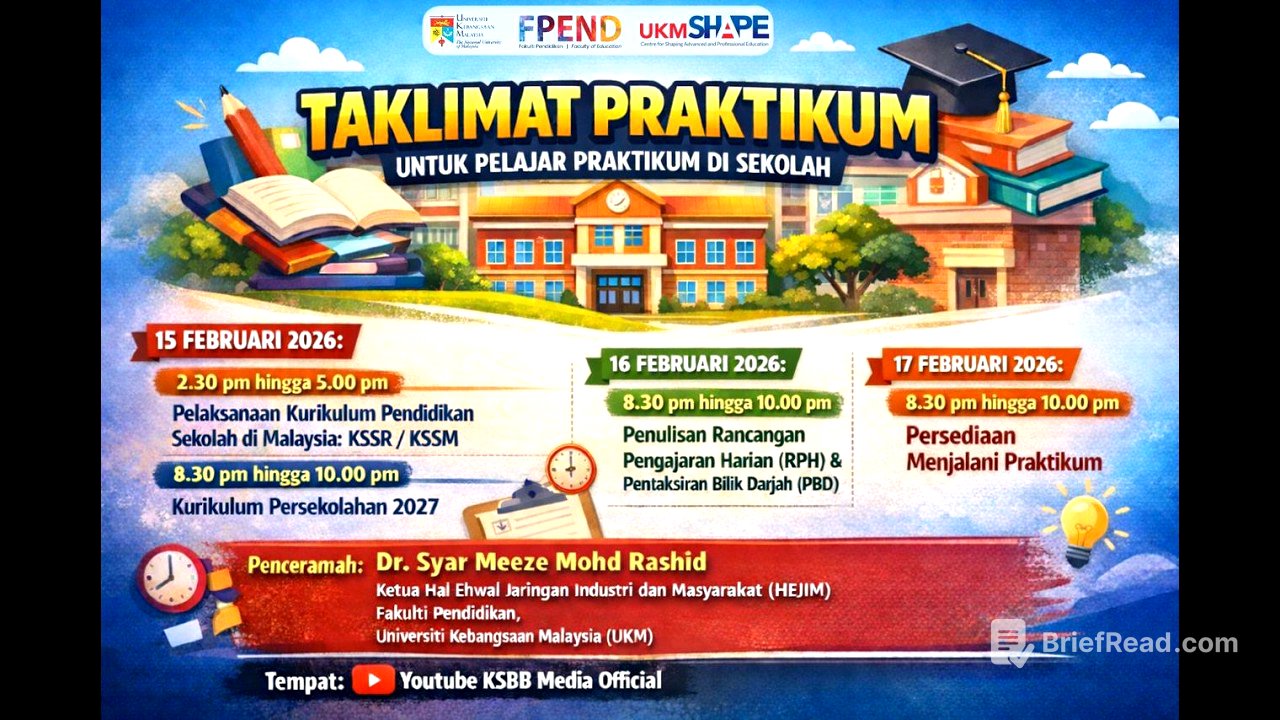
This video provides a comprehensive takedown of the expectations, guidelines and advice for students undertaking their teaching practicum, covering everything from RPH (lesson plan) preparation and professional conduct to managing student behaviour and avoiding potential pitfalls. The instructor emphasises the importance of maintaining professional boundaries, adhering to ethical guidelines, and prioritising student safety and well-being.
- RPH preparation and submission guidelines
- Professional conduct and ethical considerations
- Managing student behaviour and maintaining boundaries
- Practical advice and warnings based on past experiences
Introduction [0:06]
The video starts with an introduction of a new history teacher, Cikgu Muni, to the class.
The Meaning of the Pledge [0:34]
The teacher questions the students about the meaning of the pledge they recite every Monday, pointing out that they have been reciting it for years without truly understanding its significance. The teacher explains that the pledge is a promise to unite everyone, foster understanding among those with differences, and turn adversaries into friends, stressing the importance of sincerity when making such a commitment. Cikgu Murni then pledges to educate the students with dedication, inviting them to make a heartfelt promise in return.
Introduction to the Taklimat [8:53]
The speaker welcomes the students to the briefing, expressing hope that they are prepared and motivated. He apologises for any inconvenience caused by holding the briefing close to the fasting month and extends Chinese New Year greetings to those celebrating. He emphasizes the importance of live briefings for the added motivation they provide, noting that recordings can lead to missed details.
The Speaker's Background and Career Advice [11:48]
The speaker shares his background, mentioning his formal attire to show his commitment to education since 2011. He expresses his passion for teaching, a dream since his school days, and how he became a lecturer through unforeseen circumstances. He advises students that career paths can change unexpectedly and depend on individual opportunities. He encourages them to pursue various roles within education, such as becoming excellent teachers, administrators, or working in different educational departments, based on their interests. He clarifies the need to resign from KPM to join KPT as a lecturer in university, but suggests IPG or Institut UMNO as alternatives without resignation.
Using the Chatbox AI [17:04]
The speaker introduces a chatbox AI designed to assist teachers, cautioning against asking inappropriate questions as it is programmed to correct impolite language. He stresses that the AI is meant to guide, not replace, the user in creating lesson plans (RPH), highlighting the importance of teachers developing their own skills. The AI can offer suggestions for activities and ideas based on specific content standards, especially those related to 21st-century learning. He demonstrates how to ask the chatbox for activity suggestions, objectives, and success criteria, encouraging users to explore its features and use polite language. He also advises users to consult the secretariat for issues the chatbot can't resolve.
Introduction to Teaching Practicum Briefing [24:40]
The speaker transitions to the main topic: a briefing on teaching practicum for Diploma Pasca Siswaza Pendidikan students. He outlines three key areas: teaching practicum introduction, teaching professionalism, and practicum assessment.
Teaching Practicum Introduction [26:36]
The speaker emphasizes that the teaching practicum is a mandatory professional practice for PP students. He clarifies that the DPP programme is at MQA level seven, focusing on practical skills. He discourages DPP students from asking questions about the Rancangan Organisasi Sekolah (ROS), as it is not part of their curriculum, unlike the ISMP programme. The practicum lasts from 1 March (or 2 March) to 12 or 13 June, depending on the state. He explains that the practicum aims to provide experience and skills related to education, preparing students to become teachers. He advises KAFA and My Step teachers doing their practicum at their workplace to inform their administration and secure a mentor. They must also create 12 RPHs following the UKM format, with the rest following the school's format.
RPH Guidelines and Expectations [33:52]
The speaker stresses the importance of creating RPHs using the UKM template, warning that failure to do so will result in failure of the practicum. He dismisses any instructions from school administrators to use other templates, asserting his expertise in practicum matters. RPHs must be prepared at home and well-planned. He advises students to upload their RPHs to Google Drive for their supervisor's review and to print them for inclusion in a physical RPH file. This file should be submitted weekly to the school for endorsement.
Google Drive Setup and Group Responsibilities [38:40]
Students will be divided into sets of 12-15, each with a designated lecturer. Before knowing their lecturer, students should prepare an RPH file and a Google Drive to store practicum-related information. Each set should appoint a leader to create a Google Drive for submission to their lecturer. Lecturers will not visit schools for DPP practicums due to the large number of students and limited lecturers. The speaker criticises KPM for creating bureaucratic hurdles, such as preventing video recordings for assessment, despite the need for more teachers. He advises students to remain resilient and patient when facing difficult school administrations, focusing on completing the practicum.
RPH File and Endorsements [46:51]
The RPH file should be printed and endorsed by the school administrator and mentor. The speaker suggests including comments from the mentor in the RPH to impress SPP interviewers. While optional, obtaining endorsements from UKM lecturers after the practicum can further enhance the file. RPHs should be written in Malay or English, even for subjects like Arabic, to ensure they are accessible to all supervisors.
Required Files and Storage Advice [50:36]
Students need to prepare three files: an RPH file, a professional practice file, and a PBD (classroom assessment) file. While the PBD file is optional, it is recommended to store assessment documents neatly. These files serve as proof of completing the practicum during SPP interviews. Students should store these files carefully to protect them from damage, especially in flood-prone areas.
Examples of RPH and Professionalism Files [1:01:21]
The speaker shows examples of well-organised RPH files, highlighting features like neatness, clear content, and additional notes. He emphasizes that there is no specific format for reports, encouraging creativity. He shares examples of weekly reports, including those for weeks with limited teaching due to events like Ramadan. He also presents examples of professional practice files, noting that the content will be provided.
Google Drive Structure and Content [1:21:13]
The speaker explains the Google Drive structure, where each set leader creates a main folder, and each student creates a subfolder with their name and matric number. The subfolder should contain files for medical leave, timetables, school programmes, RPHs (organised by month and week), RPTs, supervised video recordings and RPHs, and a final video file. He advises using personal email addresses instead of UKM email for the Google Drive to avoid access issues.
RPH Organisation and Monthly Reflections [1:26:05]
The speaker details how to organise RPHs within the Google Drive, including creating folders for each month and week. He shows examples of weekly reports and RPHs, emphasizing that reports should be simple and concise. He also mentions the importance of including monthly reflections on what was learned and achieved during the month.
Video Recordings for Supervision [1:33:24]
The speaker explains that lecturers will conduct three supervisions, so students should create three folders for these. Each folder should contain a video recording of the lesson and the corresponding RPH. He advises uploading the video to YouTube and providing the link in the folder. He stresses that the video should showcase the student's best teaching practices, not just routine textbook reading.
Final Video File and Required Documents [1:45:25]
The final video file should contain recordings of the RPH file and the professional practice file. The speaker shows examples of these recordings, emphasizing that the student should open each file and page to allow the lecturer to review the contents. The file should also include attendance records.
Practicum Logistics: Transfers, Leave, and Attendance [1:51:10]
The speaker states that practicum location transfers are no longer permitted due to logistical issues. Medical leave requires documentation from government clinics or hospitals and is limited to five days; any leave exceeding this limit must be made up. Emergency leave must also be made up. Students must obtain permission from the school principal for any leave and inform their lecturer.
Strict Rules Regarding Umrah, Marriage, and School Attendance [1:58:29]
The speaker firmly states that leave for Umrah or marriage is not permitted during the practicum. He emphasizes the importance of prioritizing the practicum and communicating with family members to avoid conflicts. Students must adhere to the school's schedule, arriving before 7:30 AM and staying until the end of the school day. Leave for a wife's delivery is also not permitted, as students are not government employees during the practicum.
Attendance Procedures and School Responsibilities [2:07:24]
The speaker explains that students will receive attendance forms that must be signed by the principal monthly and included in their files. School holidays are followed, but students must comply with any requests from the school to work during those holidays. He reiterates that pregnant students are discouraged from undertaking the practicum and should consider postponing it.
Health, Safety, and Ethical Considerations [2:14:23]
Students who experience illness or accidents resulting in more than two weeks of absence will be required to postpone their practicum. The speaker emphasizes the importance of prioritizing health and well-being.
Assessment and Evaluation Criteria [2:16:13]
The speaker outlines the assessment criteria, with 60% of the grade coming from the lecturer and 40% from the mentor. The lecturer's assessment is based on planning skills (20%), teaching skills (60%), personality (10%), and general performance (10%). The minimum teaching time is 12 hours per week, with a maximum of 15. Students can teach subjects outside their specialisation to meet the required hours. Each student will have one mentor, and a mentor can supervise up to three students.
Financial Matters and Potential School Issues [2:22:22]
The speaker explains that letters confirming the final year of study for claiming practicum allowances will be issued after course registration. He warns against schools pressuring students for these documents prematurely, as the process occurs monthly. He expresses concern about potential issues with PPD Kuching in Sarawak, urging students to report any problems.
Professionalism and Ethical Conduct [2:27:07]
The speaker stresses the importance of maintaining professional competence, ethical behaviour, and appropriate attire. He advises male students to maintain neat hairstyles and trim beards and moustaches. He also cautions male students with muscular builds against wearing overly tight clothing. Female students are advised to dress modestly, avoiding short skirts and excessive jewellery.
Maintaining Professional Boundaries and Avoiding Inappropriate Relationships [2:36:12]
The speaker emphasizes the importance of maintaining professional boundaries and avoiding inappropriate relationships with students. He warns against drug use, stating that drug addicts are not fit to be teachers. He also strongly condemns any form of sexual harassment or romantic relationships with students, reminding students of the legal consequences under the Child Act.
Additional Ethical Guidelines and Reminders [2:41:59]
The speaker advises against posting photos of students on social media and cautions against using social media during class time. He reminds students to avoid transporting students in their vehicles and to ensure that a teacher is present on any school trips. He also advises against buying food from unhygienic sources.
Establishing Boundaries and Maintaining Professionalism [2:56:24]
The speaker advises students on how to establish boundaries with students from the beginning. He suggests maintaining a professional demeanour, avoiding excessive friendliness, and setting clear rules and consequences. He also advises against accepting friend requests from students on social media and using professional profile pictures on WhatsApp.
Classroom Management Techniques [3:11:13]
The speaker shares classroom management techniques, such as using silence to address disruptive behaviour and establishing a reward system. He emphasizes the importance of understanding adolescent psychology and avoiding power struggles.
Final Reminders and Closing Remarks [3:15:41]
The speaker reminds students to follow classroom etiquette, such as writing the date and subject on the board. He concludes by expressing his hopes for their success and apologising for any harsh words. He encourages students to reach out if they need assistance and wishes them a successful practicum.