TLDR;
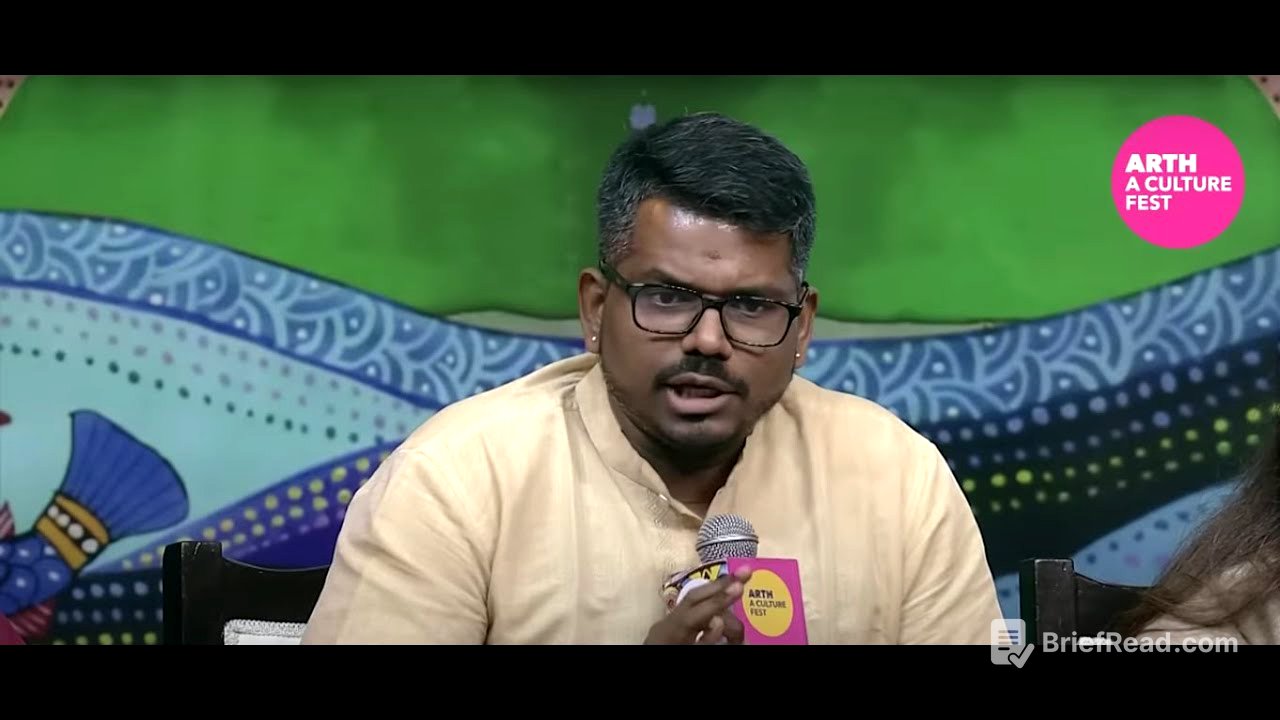
This YouTube panel discussion revolves around the highly debated topic of "One Nation, One Law," specifically focusing on the Uniform Civil Code (UCC) in India. The panellists explore historical perspectives, constitutional implications, and societal impacts of implementing a uniform set of personal laws across the country. Key points of contention include the need for uniformity versus the preservation of diverse cultural and religious traditions, the potential impact on minority communities, and the role of the state in intervening in personal laws.
- Historical context of legal uniformity in India.
- Constitutional and legal aspects of implementing UCC.
- Potential impact on diverse communities and religious freedom.
- Debate on modernity versus tradition in legal frameworks.
Introduction and Initial Perspectives [0:00]
The panel begins by addressing the historical context of legal uniformity in India, noting that historically, India has never been governed by a centralised authority imposing uniform social, cultural, and religious laws. Sai Deepak questions the modern need for a "one nation, one law" approach, suggesting it stems from a eurocentric, nation-state-based approach that assumes homogeneity. He expresses agnosticism towards the UCC, stating that his support would depend on whether the draft is based on Bharatiya ethos and doesn't require further concessions from the majority community.
Diversity and Rights [0:16]
Anand raises concerns about India's diverse communities, questioning why they should surrender their rights and traditions to a modern, secular republic. He argues that there are universal goods, such as the equality of men and women, that should be upheld, and laws that contradict these goods, like child marriage and unequal inheritance, should be removed. He advocates for progressiveness and scientifically proven correctness in legal reforms.
Community Concerns and Constitutional Directives [8:28]
focuses on the broader implications beyond the Hindu-Muslim binary, considering the concerns of various tribal and regional communities. She questions whether a modern state should override cultural and social concerns to create a uniform law. She highlights that the UCC is recommended but not enforceable under the Indian Constitution, and stresses the importance of consulting various stakeholders from different communities to assess their willingness to tweak their personal laws.
Critique of Uniform Civil Code [12:34]
Vishnu Shankar expresses strong opposition to the concept of a Uniform Civil Code, calling it a hoax. He argues that many provisions of the UCC could go against the majority community. He points out that the Law Commission had previously rejected the proposal due to a lack of clarity on the areas requiring uniformity. He suggests that uniformity should primarily be enforced in penal laws, such as making bigamy an offense for all citizens regardless of religion.
Historical Context and Political Motivations [16:28]
Taslim Rehmani discusses the historical debate around the UCC, noting that it was concluded in the constituent assembly in 1946. He states that Article 44 places the duty on the government to create a consensus on the UCC, but successive governments have failed to do so, using it instead as a political tool. He argues that the issue is more political than social and that the government should focus on legislative debates rather than public discussions.
Debate on Desirability and Implementation [20:17]
The discussion shifts to whether the idea of a Uniform Civil Code is desirable, with panellists debating its potential benefits and drawbacks. The lack of a concrete blueprint for the UCC is highlighted as a major obstacle to informed discussion.
Legal Perspectives and Constitutional Framework [26:21]
Lokesh Batra provides a legal perspective, noting that Article 44 of the Constitution does not mandate the state to bring about a suitable legislation for a UCC. He emphasises the need to balance the directive principles of state policy with fundamental rights, and to uphold the secular structure of the Constitution. He argues that a uniform civil code might sound like an unconstitutional civil code if it does not align with the constitutional ethos.
Secularism, Human Rights, and Community-Specific Interventions [31:24]
Sai Deepak responds to the legal perspectives by questioning which community has a problem with equal treatment regarding issues like polygamy, succession, and maintenance. He argues that the issue is Muslim exceptionalism and that the government should address this directly rather than hiding behind discussions of uniformity. He asserts that India is equally committed to human rights and gender justice and can intervene in cases of social injustice without resorting to a uniform civil code.
Tradition vs. Modernity and State Intervention [44:11]
The discussion addresses the conflict between modernity and tradition, with panellists debating the extent to which the state should intervene in personal laws. It is argued that while tradition has its place, the state has the right to decide which practices can survive in the current age, particularly in sensitive areas like gender justice and child marriage.
Closing Remarks and Audience Participation [1:04:11]
The panel concludes with closing remarks from the panellists, followed by a brief audience poll on their support for or opposition to "one nation, one law." The discussion highlights the complexities and deeply entrenched opinions surrounding the Uniform Civil Code in India, underscoring the need for continued dialogue and careful consideration of diverse perspectives.