TLDR;
This video discusses systems for personal knowledge management, note-taking, and reflection, focusing on the creator's journey towards becoming well-read and improving media literacy. Key points include:
- The problem of data hoarding and the issue of dead notes in traditional note-taking systems.
- A proposed shift in mindset regarding note-taking, emphasising the importance of human thought and reflection rather than mere note archiving.
- The use of modern tools and methods for effective knowledge aggregation and management.
Introduction to Personal Knowledge Management [0:00]
The video begins with the creator sharing his experiences over summer and his 2026 goal of becoming well-read and media literate. He reflects on his chaotic life while striving to maintain consistency with his goals, leading him to revisit personal knowledge management systems and note-taking.
Data Hoarding and Dead Notes [1:10]
The creator introduces the concept of data hoarding, which refers to the accumulation of "dead notes" — notes that are created but never referenced again. He argues that the notion of a "second brain" is flawed, as it contrasts with the fluid and emotionally complex nature of human thinking. He highlights how traditional knowledge management often defers the necessary process of distilling thoughts rather than facilitating original thinking.
Reorienting Note-Taking Practices [2:56]
The creator suggests shifting the focus of note-taking from the notes themselves to the underlying frameworks and goals. He advocates for starting with a specific philosophical framework or project before processing and producing notes, thereby ensuring that notes serve a clear purpose related to one's goals.
Modern Tools for Knowledge Aggregation [6:05]
The discussion moves to modern tools such as Kimmy, an AI-driven platform for data aggregation. The creator explains how this tool, valued at over $20 billion, can handle multiple information sources, autonomously collate data, and create formatted documents, enhancing the efficiency of research and note-taking.
Critique of Second Brain Systems [7:45]
While acknowledging the usefulness of second brain systems for structured contexts like academics, the creator expresses reservations about their effectiveness for personal thoughts and emotional insights, feeling they lead to creations intended more for machines than for personal reflection.
Influence of Historical Note-Taking Methods [9:02]
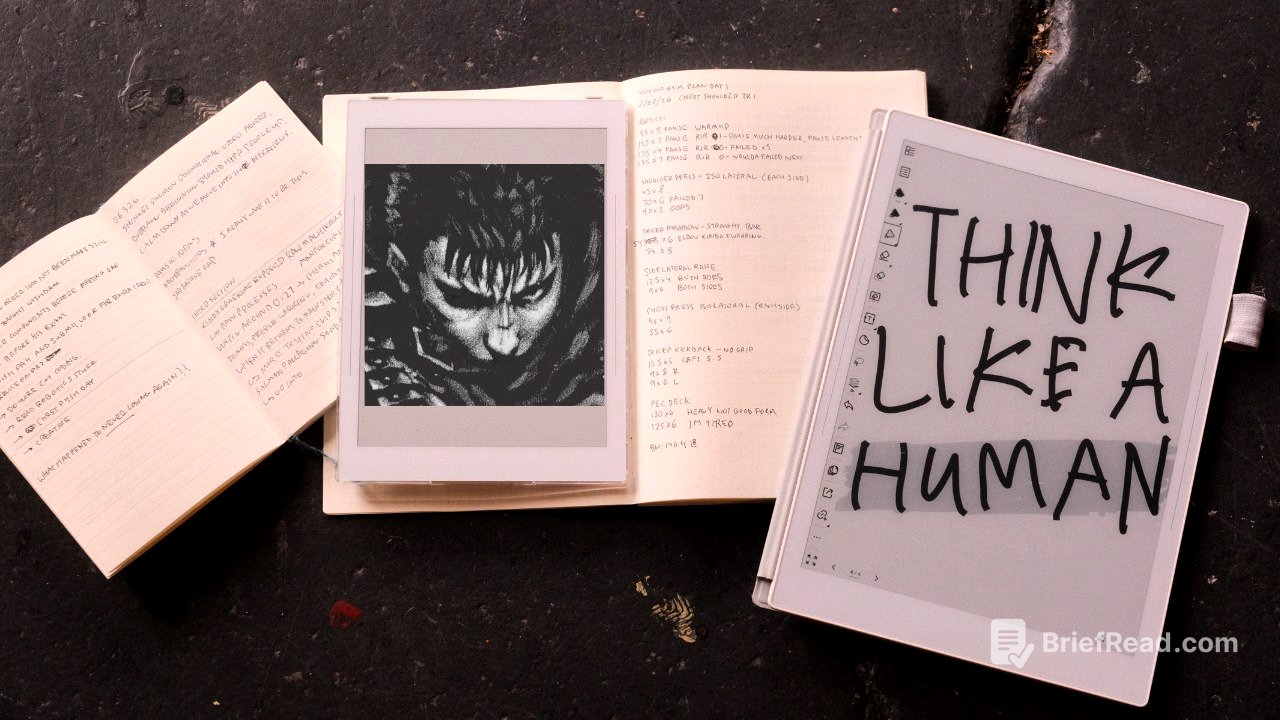
The creator highlights older note-taking methods, particularly pen and paper systems. He argues these methods encourage thoughtful engagement and referencing rather than simple archiving. He admires the commonplace book method, which categorises notes and facilitates easy referencing while still demanding active engagement.
The Zubaldon Framework [10:01]
He introduces the Zubaldon framework, which tracks the mind's movements throughout daily life. The emphasis is on making note-taking a reflection of one's mind, promoting thought cultivation rather than mere data storage.
The Devices Used for Note-Taking [11:55]
The creator showcases two note-taking devices from Supernote, explaining their functionality and form factor. These devices sync with his computer and store handwritten notes, which can be indexed for easy retrieval, allowing him to combine the benefits of handwriting with the efficiency of digital tools.
Note Organisation and Workflow [15:00]
He explains his note organisation strategy, highlighting daily notes and a consumption note that tracks all media consumed. He describes how this system allows for easy retrieval and referencing as ideas develop, enhancing his overall workflow.
Consumption Apps and Recommendations [19:00]
The final segment covers several reading apps, including Mihon and Moon Plus Reader, detailing his recent favourite reads. He discusses the importance of keeping all his favourite materials accessible while underlining that effective note-taking can be achieved with any medium, not just high-end devices.
Conclusion and Future Thoughts [21:40]
The creator wraps up by stressing that anyone can adapt the principles discussed to devise a personalised note-taking system suited to their unique needs, encouraging viewers to develop a workflow that complements their own thinking processes.