TLDR;
Growing on YouTube takes resilience, a clear channel focus and a willingness to learn from each upload. The key steps are to choose an audience and provide them with a reason to watch, build momentum by making cohesive videos, and improve titles, thumbnails and ideas as the channel grows. At larger stages, creators should learn from underperforming videos and build systems that let them increase quality without losing consistency.
- 0–1,000 subscribers: Choose a starting lane, launch with several connected videos and keep publishing while improving.
- 1,000–10,000 subscribers: Strengthen titles and thumbnails, repeat formats that work, and start building an email list.
- 10,000–100,000 subscribers: Develop stronger ideas, reduce avoidable underperformers and reinvest in a sustainable production process.
- Growth is rarely linear, so persistence and belief in your work matter.
Intro [0:00]
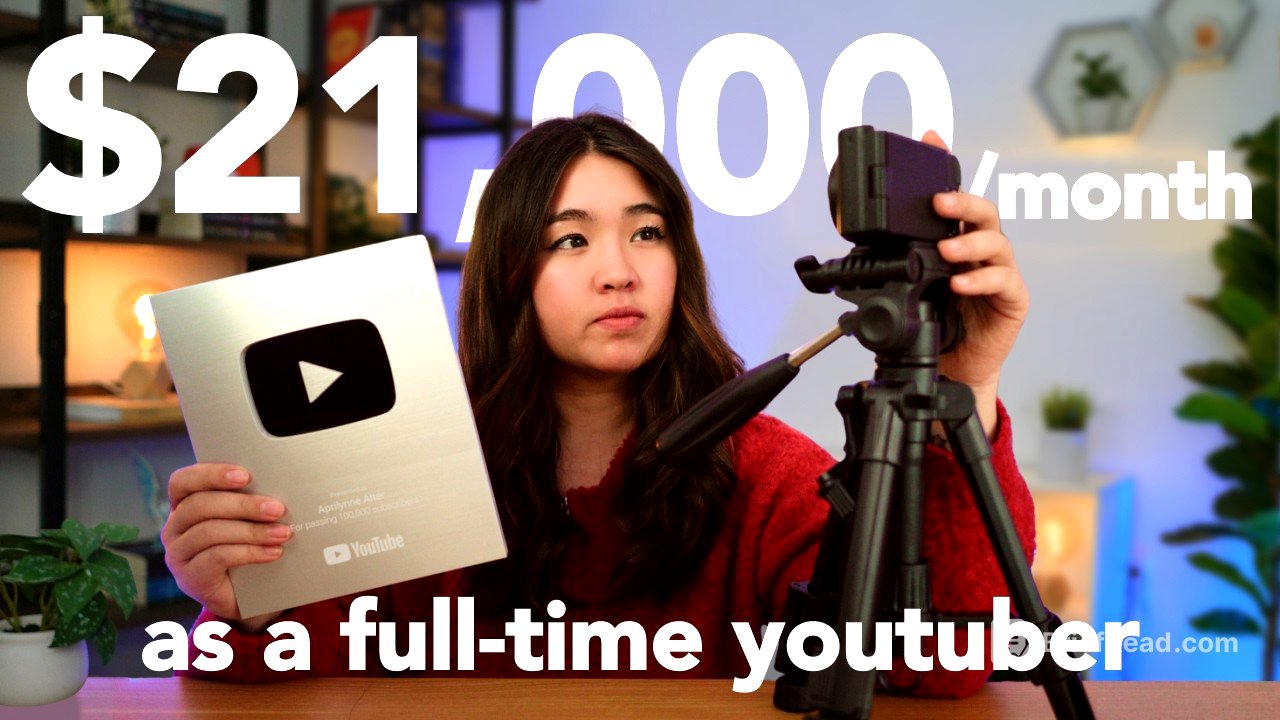
After more than two years on this channel, plus experience from an earlier one, Aprilynne has become a full-time YouTuber earning over $20,000 a month. Her videos have also been used in training by major YouTube teams and included in PBS digital creator training. She shares advice for three stages of growth: reaching 1,000 subscribers, growing from 1,000 to 10,000, and scaling from 10,000 to 100,000 and beyond. She also saves an award for an unboxing later in the video.
0 to 1K Subscribers [1:23]
Reaching the first 1,000 subscribers is difficult chiefly because it demands resilience. Many creators give up before they see results, so the priority is to keep going rather than expect immediate success. Instead of posting random videos and hoping one takes off, start with a clear lane: a defined audience and the value your videos offer them. A video should give viewers a reason to watch even if they do not know you. For example, an ordinary Minecraft gameplay recording offers little to a stranger, while a distinctive challenge such as beating the game without jumping gives the video a clear hook.
Choose a lane by considering what you enjoy, what you are good at, and what you admire in established creators. Treat the choice as a hypothesis, not a permanent commitment: publish enough videos to gather useful evidence, then adjust if needed. To launch, release four connected videos rather than just one. Link each video to another using end screens and calls to action, encouraging viewers to watch more than one and helping YouTube identify the audience for your content. Together, the videos should establish what the channel covers and why people might return.
Early videos will probably fall short of your ambitions; closing the gap between your taste and your current skills takes repetition. Aim for at least one upload a week, or two if sustainable, while recognising that publishing less often usually means slower progress. Avoid changing lanes before you have enough evidence—around 10 focused videos is a useful starting point—but do not keep repeating the same approach indefinitely if many uploads show no signs of working. Focus on one platform rather than spreading yourself across several, keep expectations realistic, and find creator friends who can offer encouragement and accountability. By choosing a lane, launching deliberately and uploading consistently, you will have built habits that many aspiring creators never develop.
1K to 10K Subscribers [14:20]
After reaching 1,000 subscribers, the next major skills are packaging—the title and thumbnail—and building momentum. Packaging matters because viewers cannot watch a video they do not click. Its effectiveness depends less on colours or fonts than on whether it sparks curiosity, desire or fear, and makes viewers want the answer promised by the video. Generate many options rather than settling for the first idea: Aprilynne aims for at least 30 title concepts, drawing on her own brainstorming, successful channels that offer similar value to a different audience, unusually high-performing videos, and AI-generated variations. Studying successful examples can also reveal thumbnail structures and ideas that work across different niches.
Once a video performs better than usual, treat it as an outlier: a signal that some element is attracting a wider audience. Develop that success into a repeatable video recipe, made up of a consistent audience, value, format and vibe. Format is how the value is delivered—for instance, through a challenge, vlog or interview—while vibe comes from elements such as editing, pacing, language and setting. The videos need not be identical, but a useful check is whether 80% of the people who enjoyed the previous video would also want to watch the next one.
It is normal to publish less frequently while improving ideas, packaging and production, but avoid letting pressure make you stop. As the channel grows, brand deals may bring extra work, approval rounds and possible retention problems; unless you need the income, it may be better to prioritise reaching 10,000 subscribers first. Start an email list, however, so you can contact your most engaged viewers directly rather than relying on YouTube recommendations. A free checklist, template or PDF can encourage sign-ups, and that audience may be valuable if you later launch a product, service or course.
10K to 100K Subscribers [27:13]
From 10,000 to 100,000 subscribers, the aim is to raise the channel’s view floor: the lowest number of views its videos receive each day, including days without a new upload. A higher view floor means more ongoing discoverability. Three levers can help: make more breakout videos, reduce the number of underperformers, and improve video quality without sacrificing output.
Breakout videos, or “bangers”, depend especially on the idea. Strong ideas have some evidence of success in another form, appeal to a broad TAM (total addressable market, or the potential audience size), and trigger curiosity, desire or fear. Make ideation a regular habit and maintain a collection of useful inspiration, then assess each idea for feasibility, likely interest from new and existing viewers, potential reach, evidence of prior success, fit with a video recipe, and the strength of its possible title and thumbnail. Finally, make the concept distinctly yours rather than copying another creator. Aprilynne found that viewers responded to her research, case studies and detailed visuals, so she made those features part of her signature style.
When a video underperforms, work out whether the problem was clicks, watch time or the idea itself. If viewers are not clicking, revise the title or thumbnail. If they leave early or average view duration is weak, inspect the retention graph to identify where the video loses them. If packaging and retention look healthy, the concept may not have had enough broad appeal or emotional pull. Use each flop to improve your idea-selection criteria; the goal is not to avoid every failure, but to learn from misses and raise the hit rate.
To increase quality while maintaining output, reinvest in the channel and buy back time and energy. Brand deals may become useful at this stage, both for income and for funding support. A time audit can help identify what to eliminate, simplify, automate or delegate across the whole process, from brainstorming and scripting to editing, packaging and uploading. This shows where extra help or tools would make the biggest difference. Sustainable growth comes from systems that support and compound effort, not effort alone.
A Special Milestone and Final Advice [36:30]
Aprilynne unboxes her milestone award and thanks viewers, whether they joined before her first 1,000 subscribers or more recently. Her final advice is to keep believing in yourself when other people doubt your ambitions and when a video performs poorly. Growth is not linear: like a plant, a channel may build unseen roots for a long time before visible progress appears. She encourages creators to keep making the next video and persist through the slow periods.
The video closes by featuring artist and creator Kayla Evelyn, whose thoughtful videos focus on creativity. Viewers are encouraged to visit her channel and leave a supportive comment. Creators can also take part in the 90-day YouTube challenge by watching the challenge video and posting with #Arllinschallenge.