TLDR;
This video discusses various methods of food preservation, focusing on their importance, objectives, benefits, and types. Key points include:
- Preservation prevents microbial growth, maintains nutritional value, and reduces waste.
- Techniques discussed include drying, smoking, chilling, freezing, salting, pickling, sugaring, fermentation, vacuum packing, canning, irradiation, and pasteurisation.
Methods of Food Preservation [0:14]
The video begins by explaining that food preservation is essential to prevent spoilage. It identifies food spoilage types—physical, chemical, and microbiological—and discusses how various preservation methods like low temperatures and low water activity levels can inhibit spoilage. Objectives include retaining nutritional value, minimising food wastage, and providing easy access to prepared food.
Importance of Food Preservation [2:58]
Food preservation is vital for prolonging shelf life, ensuring sanitary conditions, retaining essential nutrients, and improving product quality. It allows off-season access to seasonal items while keeping food safe from microbial contamination and enzyme activity. Overall, it contributes to food security and sustainability.
Advantages and Disadvantages [5:09]
The video highlights advantages such as minimising food loss and enhancing convenience. Preservation supports bulk storage for emergencies, helps maintain food quality, and aids in transport. However, it also mentions disadvantages, including potential nutrient loss, changes in taste and texture, and high energy costs related to refrigeration and freezing processes.
Types of Food Preservation Methods [7:11]
The methods covered include:
- Drying: Reduces moisture to inhibit microbial growth, with techniques like sun-drying and dehydrating.
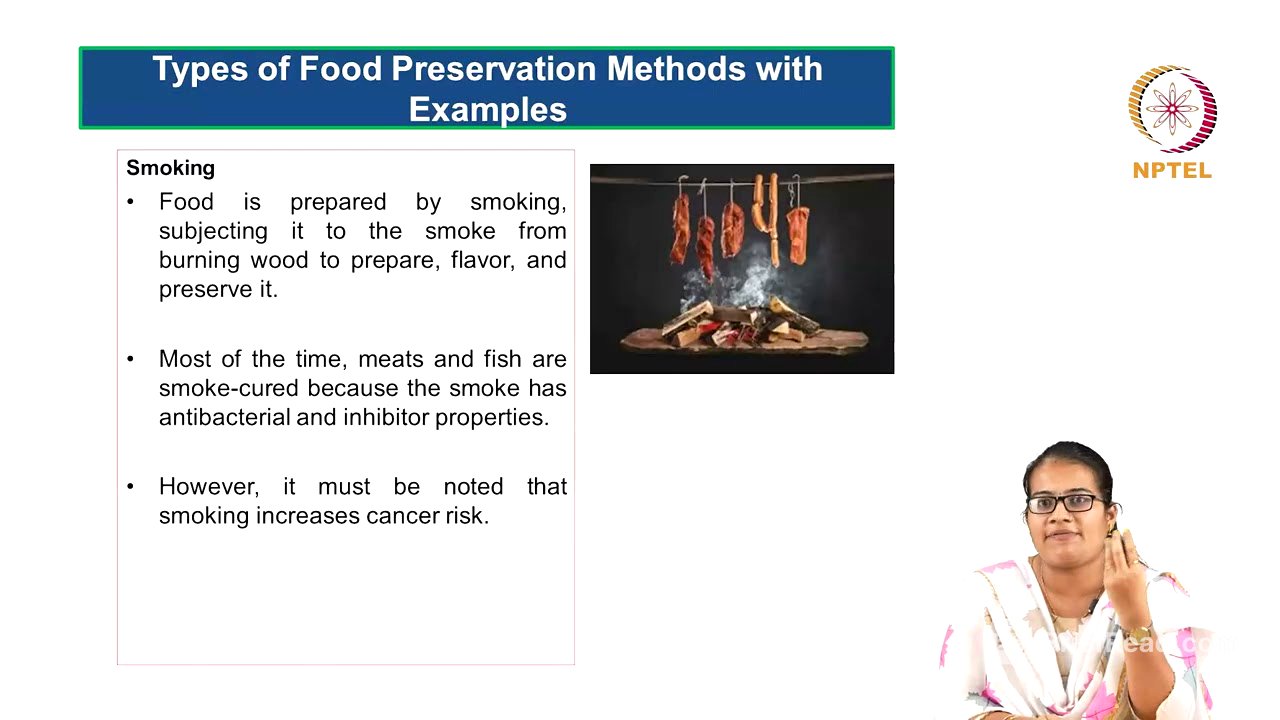
- Smoking: Utilises smoke to preserve and flavour meat and fish, although it carries cancer risks.
- Chilling: Keeps foods at temperatures below 5°C to halt microbial activity, essential for perishables.
- Freezing: Fast preservation method that retains nutrients and prevents spoilage by maintaining low temperatures.
- Salting and Pickling: Uses salt and acidic solutions to dehydrate food and alter pH levels to prevent microbial growth.
- Sugaring: Draws moisture away from fruits and preserves texture and flavour.
- Fermentation: Converts carbohydrates into lactic acid via beneficial bacteria, enhancing health benefits.
- Vacuum Packing: Removes oxygen from packaging to prevent spoilage and maintain food quality.
- Canning: Seals food in airtight containers and heats to destroy harmful pathogens, extending shelf life.
- Irradiation: Utilises ionising radiation to eliminate pests and pathogens while enhancing food safety.
- Pasteurisation: Uses gentle heating to destroy harmful microorganisms while preserving food quality.
Summary of Food Preservation Techniques [26:42]
Finally, the video summarises that the best preservation techniques vary by food type and desired shelf life. For instance, freezing is effective for meats, while canning is suited to fruits and sauces. Techniques like fermentation and pickling enhance flavour and gut health while ensuring long-term safety and effectiveness in stored food.