TLDR;
The video discusses macrominerals and microminerals, focusing primarily on the roles, dietary requirements, functions, and sources of calcium, phosphorus, magnesium, sodium, and potassium. The key takeaways include their importance in bone health, energy metabolism, and cellular functions.
- Macrominerals are required by the body in amounts greater than 100 mg per day.
- Calcium is crucial for bone formation, muscle function, and nerve transmission.
- Phosphorus plays vital roles in energy metabolism and DNA synthesis.
Introduction to Macrominerals [0:00]
The session introduces macrominerals (calcium, phosphorus, magnesium, sodium, potassium) and outlines the learning objectives, which include understanding their definitions, functions, dietary requirements, bioavailability, toxicity, and food sources. These minerals are essential for structural integrity, metabolic reactions, fluid balance, nerve transmission, and muscle contraction.
Calcium Overview [0:48]
Calcium is identified as the most abundant macro mineral in the body, essential for bone and teeth development, muscle function, nerve transmission, and blood clotting. It comprises around 1,000 to 1,200 grams in adults, mostly stored in bones and teeth. Serum calcium levels are tightly regulated by hormones like parathyroid hormone (PTH) and calcitonin, which adjust calcium release and absorption to maintain homeostasis.
Functions of Calcium [4:28]
Calcium's primary functions include bone and teeth formation, muscle contraction, neurotransmitter release, blood coagulation, and regulation of cardiac function. It serves as a second messenger in cellular signalling and is crucial in enzyme activation. Adequate calcium intake prevents conditions such as osteoporosis.
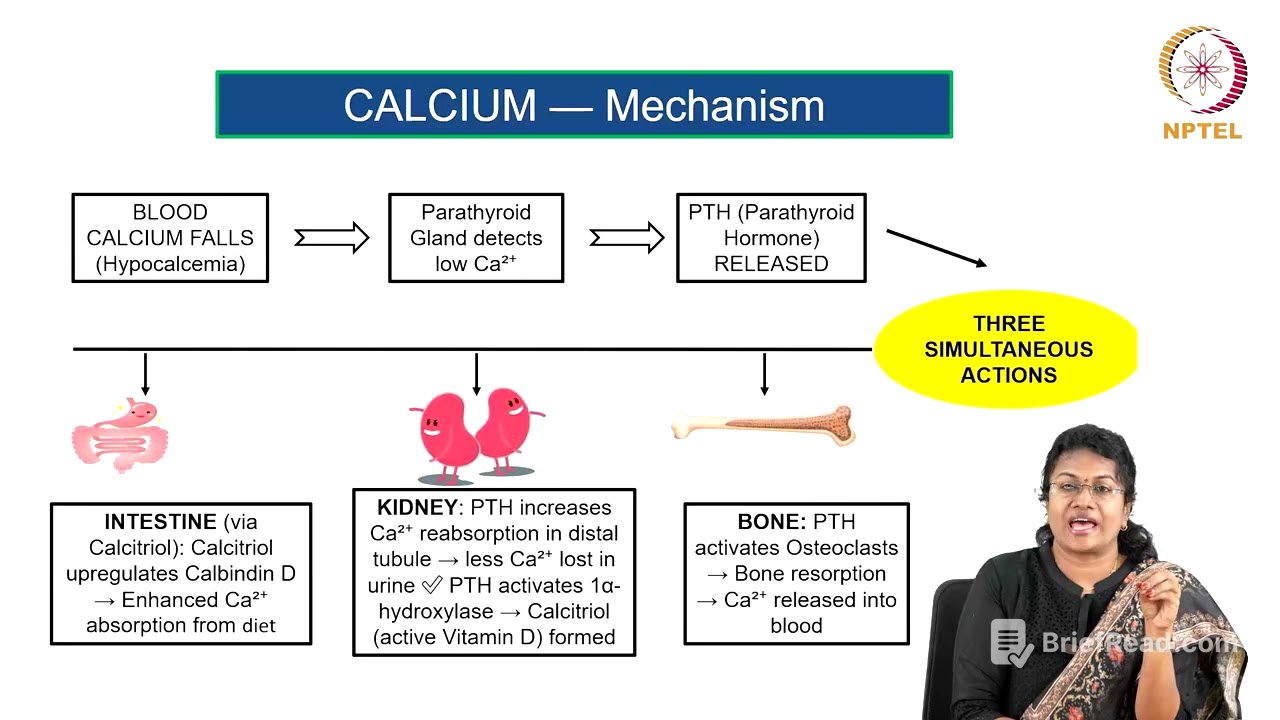
Calcium Mechanism and Hormonal Regulation [6:39]
Calcium levels are managed through mechanisms involving the bones, kidneys, and intestines. Low blood calcium stimulates the release of PTH, promoting bone resorption and increasing kidney calcium resorption. Active vitamin D enhances intestinal absorption of calcium, crucial in maintaining optimal blood levels. Conversely, high blood calcium levels prompt calcitonin release, reducing bone resorption.
Calcium Dietary Requirements and Bioavailability [9:14]
Recommended calcium intake varies by age and gender, with adults requiring 400 mg per day, while pregnant or lactating women require about 1,000 mg. Bioavailability indicates the efficiency of calcium absorption, which can be affected by dietary sources. Notably, certain cooking methods can enhance the availability of calcium in food.
Calcium Toxicity [11:44]
Hypercalcemia, or excessive calcium in the body, can cause symptoms like nausea, kidney stones, and cardiac issues. It can also inhibit the absorption of other essential minerals like iron and magnesium, leading to various health problems.
Food Sources of Calcium [13:17]
Calcium-rich foods include ragi, drumstick leaves, almonds, tofu, and milk. These sources vary in calcium content, with certain vegetarian options providing significant amounts. Cooking methods such as fermentation and soaking can improve calcium absorption from foods.
Introduction to Phosphorus [15:15]
Phosphorus is another key macro mineral vital for bone and teeth formation, energy metabolism as part of ATP, cell membrane structure, DNA and RNA synthesis, and enzyme activation. About 85% of phosphorus in adults is stored in bones and teeth.
Functions and Mechanisms of Phosphorus [15:30]
Phosphorus assists in bone mineralization, energy metabolism, and cellular signalling. The absorption process occurs in the small intestine, facilitated by dietary sources, particularly animal-based foods. The ideal calcium-to-phosphorus intake ratio is necessary to prevent metabolic imbalances.
Bioavailability of Phosphorus [19:54]
Phosphorus absorption is typically higher from animal sources compared to plants due to the presence of phytates in plants that inhibit absorption. Food processing methods like fermentation and soaking can enhance phosphorus bioavailability.
Phosphorus Toxicity [21:46]
Excess phosphorus, particularly in conditions like chronic kidney disease, can lead to health complications such as hyperphosphatemia, bone resorption issues, and vascular calcifications. Both phosphorus and calcium toxicity can cause significant health risks.
Food Sources of Phosphorus [22:57]
Excellent sources of phosphorus include dairy products, meat, fish, lentils, and whole grains, which contribute to the daily requirements for this essential mineral. Traditional cooking practices can enhance the bioavailability of phosphorus in food sources.