TLDR;
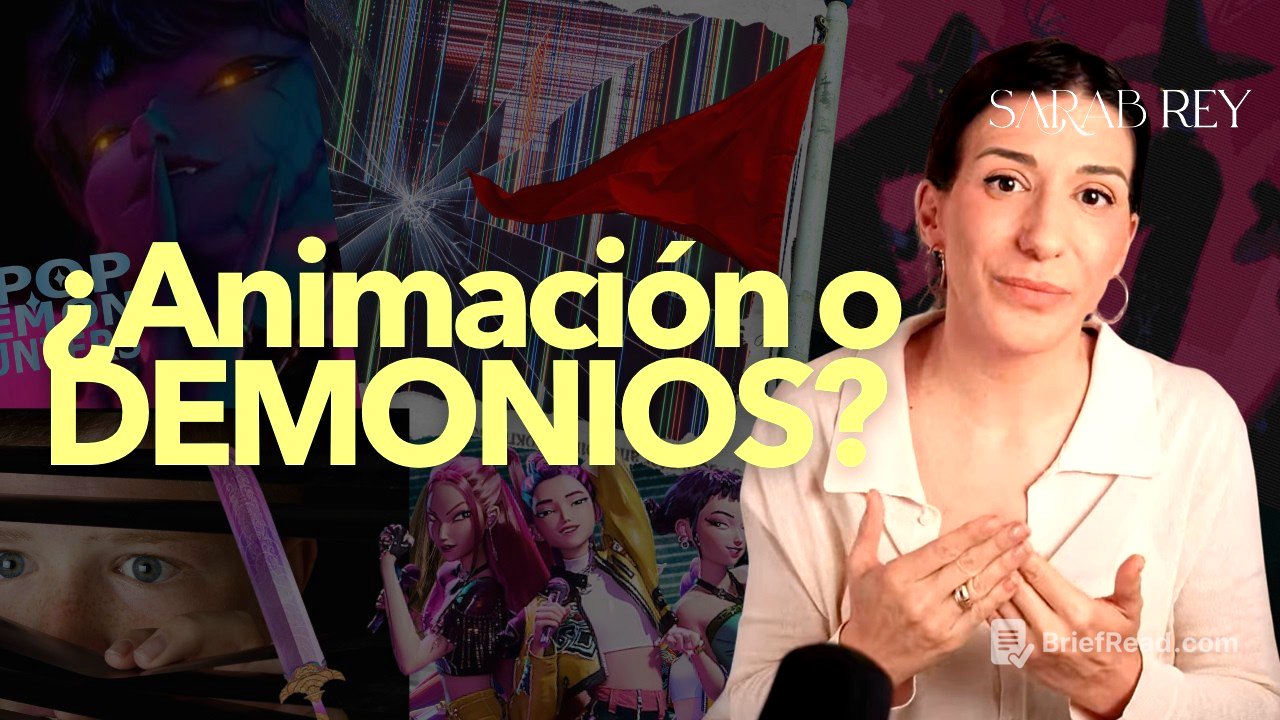
This YouTube video by Sarab Rey analyses the popular animated film "Kpop Demon Hunters" from anthropological and spiritual perspectives, highlighting potential risks to children's psychological, emotional, and spiritual well-being. It discusses the film's hypersexualisation, grooming aspects, and normalisation of negative behaviours, alongside its economic success and the psychological impact on young viewers. The video also touches on spiritual warfare and the importance of parental responsibility in safeguarding children from harmful content.
- The film "Kpop Demon Hunters," despite its popularity among young children, contains elements of hypersexualisation and grooming.
- The film normalises negative behaviours and potentially harmful spiritual messages.
- Parents should be aware of the content their children consume and its potential impact on their development.
Introducción [0:00]
Sarab Rey introduces the topic of the video, focusing on the popular film "Kpop Demon Hunters". She acknowledges that many viewers with children or nieces and nephews may be familiar with the film's soundtrack and characters. The video aims to analyse whether content marketed to children is genuinely suitable for them or if it contains potentially harmful elements.
La película más vista de Netflix [1:20]
The video highlights that "Kpop Demon Hunters" was the most-watched film on Netflix in 2025, with 27 million views. A significant 48% of the audience were children aged between 2 and 11 years old. This raises concerns about the content's suitability and potential negative impacts on young viewers' psychological, emotional, and spiritual development.
Datos económicos [5:25]
The film generated substantial financial gains, with 20.5 billion minutes viewed in 2025. Its domestic box office success and Netflix performance resulted in $40 million in net profit for Sony, including a $15 million bonus from Netflix for breaking records. While merchandising data is unavailable, it is expected to be significant.
Hipersexualización confesada [6:30]
The video reveals a statement from Maggie Kang, the co-director of the film, expressing the intention to "objectify" the male characters without reservation. This admission raises concerns about the hypersexualisation of content aimed at young children and the potential normalisation of objectification.
Esto es grooming [9:00]
The video asserts that introducing dynamics of physical intimacy to children who lack the hormonal and cognitive development to understand them constitutes grooming. It argues that exposing young children to sexualised content and normalising attraction between sexes is harmful and makes them vulnerable to abuse.
Los niños no son seres sexuales [12:14]
Sarab Rey emphasises that children are not inherently sexual beings and should not be exposed to content that normalises or encourages sexual attraction. She urges parents to be vigilant about the content their children consume, as it shapes their understanding of the world and influences their behaviour.
Teoría del aprendizaje social [15:36]
The video references Albert Bandura's Social Learning Theory from 1977, which demonstrates that children learn complex behaviours through observation and imitation. The theory suggests that the more aspirational a role model is, the more likely a child is to imitate their behaviour. Given the idolisation of the Demon Hunters, children are more inclined to internalise and replicate their actions.
Aprendizaje moral en pantalla [19:17]
The video explains that the human brain continues to develop until around age 25, during which time neuro-endocrine-immune structures are formed, influencing future capabilities, behaviour, decision-making, and identity. Children exposed to content that normalises negative behaviours may internalise these as acceptable, impacting their moral development. The official synopsis of Netflix describes the demon characters as "irresistible", which is concerning given the young audience.
Vínculos parasociales [25:19]
The video cites research from Horton and Wohl in 1956, which coined the term "Parasocial Relationship," demonstrating that viewers develop emotional bonds with media figures, processed by the brain as real interpersonal relationships. Springer Nature research from 2024 further shows that these relationships act as socialisation agents, teaching, persuading, altering attitudes and beliefs, and influencing identity and psychological well-being. Children form real interpersonal relationships with these characters, which can significantly impact their development.
La canción Your Idol [36:00]
The video analyses the lyrics of the song "Your Idol," which contains phrases in Latin such as "pray for me now" and references to being dissolved in ashes by a "damned lord" in "eternal flames." The lyrics also include lines like "You gave me your heart, now I'm here for your soul," which the speaker interprets as a demonic figure claiming a child's soul. The speaker expresses concern that children are repeatedly singing these lyrics, potentially normalising the idea of selling their souls.
Ritual chamánico documentado [41:58]
The speaker addresses a question about limiting secular music in the home, stating that it is simply not allowed. She shares an anecdote about a school trip in England where children were taught about wearing a burqa and praying to Allah, contrasting it with her own efforts to raise children who resist harmful trends and prioritise pleasing God. She emphasises the importance of teaching children to stand up for what is right, even in the face of social pressure.
Recomendaciones a una pregunta [46:00]
Responding to a question about praying for discernment, the speaker advises asking God for spiritual insight. However, she notes that receiving discernment requires acting on it, even when faced with fear or opposition. She also mentions that the music industry is generally satanic, with artists often selling their souls for fame and being blackmailed to maintain control. The solution is to avoid participating by not watching, listening, or attending concerts.
La cita de Zimbardo [49:34]
The speaker references Philip Zimbardo, known for the Stanford prison experiment, who studied evil and has a quote: "Evil triumphs when good people do nothing." She applies this to the situation, noting that bullying persists because other children, fearing rejection, remain passive. She argues that the same dynamic applies to the normalisation of harmful content, where children accept it because "everyone else likes it."
La próxima película de Minions [55:13]
The speaker mentions the upcoming Minions film, which reportedly depicts the Minions using a grimoire to perform a satanic ritual and summon demons. She questions whether parents will allow their children to identify with demon summoners and internalise the idea that invoking demons is a way to get what they want, despite the potential negative consequences. She contrasts this with the alternative of protecting children by refusing to expose them to such content.
Abrazar la sombra [58:21]
The speaker highlights another concerning aspect of "Demon Hunters": the protagonist embraces her dark side, normalising the acceptance of evil. She draws a parallel to Disney's "Frozen," where Elsa embraces her powers instead of controlling them. The speaker argues that evil should not be embraced but rather repented of and rejected.
El mal no se abraza [1:03:42]
The speaker asserts that evil should not be embraced but rather repented of and eradicated. She shares her personal testimony, explaining that before becoming a Christian, she engaged in harmful behaviours. She emphasises that the solution is not to embrace one's dark side but to renounce it and seek transformation through Christ.
El amor de Dios y la cruz [1:06:33]
The speaker addresses the question of why God allows evil to exist, explaining that if God were to eliminate evil, He would have to eliminate everyone, as everyone commits evil acts. Instead, God sent Christ as a sacrifice to bear the punishment for humanity's sins, offering forgiveness and restoration to those who repent and put their lives under Christ's authority.
Mi testimonio personal [1:10:28]
The speaker shares her personal journey of transformation, explaining that before dedicating her life to Christ, she inflicted harm on others. She describes how she asked God to eradicate the darkness within her, rejecting the notion of embracing her shadow. She emphasises the importance of dying to one's old self and being reborn with Christ as the ultimate authority.
Recomendaciones para niños [1:12:43]
The speaker recommends several alternatives for children's entertainment, including Superlibro, Teo, Mino, Psicomoro Kids, and VeggieTales. She advises parents to watch content with their children or, if that's not possible, to listen and ensure that children are not watching screens with internet access behind closed doors.
Preguntas finales [1:15:30]
The speaker addresses a question about dealing with someone who embraces their dark side and expects empathy. She advises setting boundaries and creating distance, as it is unsafe to be around someone who lacks conviction of sin. She explains that loving one's neighbour means honouring their life but not enabling them to continue sinning.
Oración de cierre [1:19:20]
The speaker concludes with a prayer, asking for the Holy Spirit to guide and protect, to bring conviction of sin, and to help viewers love what God loves and hate what God hates. She asks for forgiveness for any ways in which she may have fallen short and for the viewers' own shortcomings in protecting children. She prays for revelation and guidance in closing any doors that have been opened to harmful influences.