TLDR;
In this video, the potential of spider silk is explored, particularly its strength and versatility compared to steel and Kevlar. With unique tests, the video demonstrates how spider silk could allow swinging akin to Spider-Man and examines its nanostructure, challenges in farming spiders, and the engineering of synthetic spider silk.
- Spider silk is incredibly strong, possibly stronger than steel.
- Farming spiders is impractical due to their cannibalistic nature and low yield, leading to synthetic alternatives.
Could Spider Silk Let You Swing Like Spider-Man? [0:00]
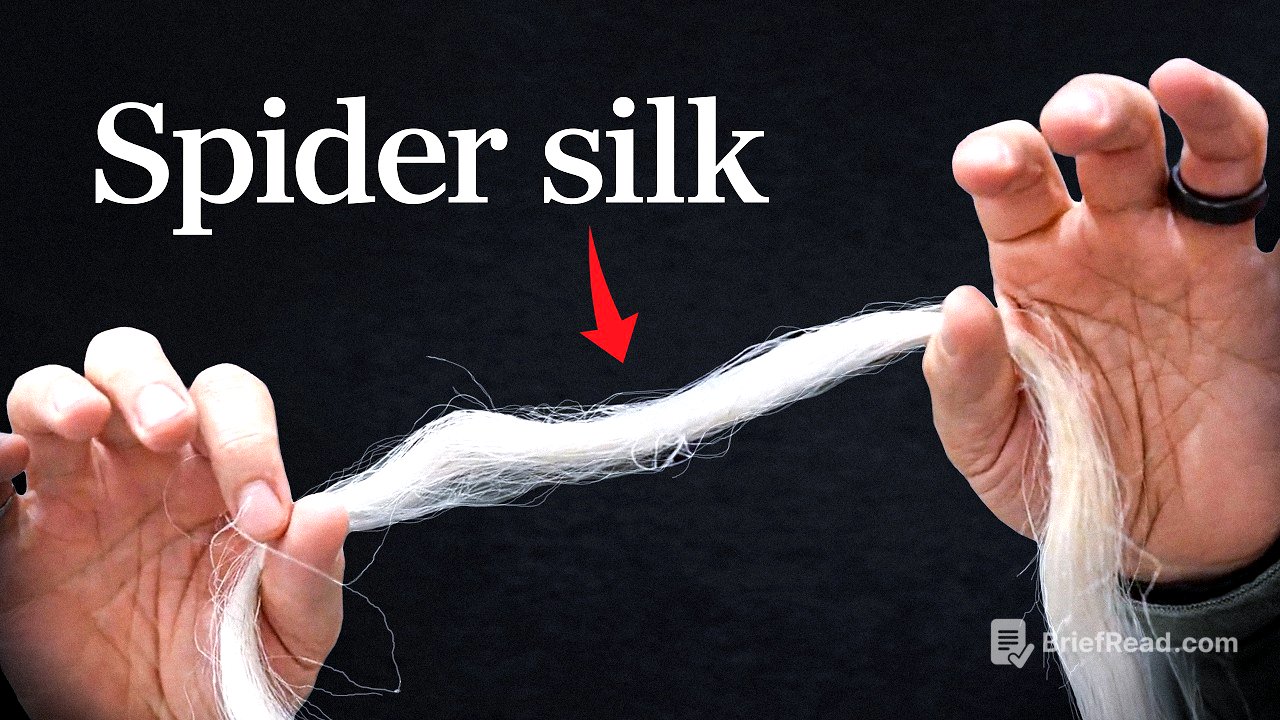
A new test of spider silk is conducted, where the largest amount of spider silk is prepared to see if it can support a human's weight, emulating Spider-Man's abilities. Real spider silk is noted to have remarkable properties, being reportedly stronger than steel and tougher than Kevlar. The video sets the stage for understanding how these characteristics are tested.
Is Spider Silk Really Stronger Than Steel? [0:44]
At the Blackledge Spider Lab, it is revealed that different types of silk make up a spiderweb, focusing on dragline silk, which is compared to steel in terms of strength. The laboratory discusses the challenges in obtaining sufficient silk samples and begins testing by pulling strands of dragline silk to measure its ultimate tensile strength, reaching impressive results and revealing comparative properties with steel.
Testing Spider Silk's Tensile Strength [2:29]
The tensile strength of dragline silk is tested, revealing that it can support a considerable amount of weight—up to 60,000 newtons if scaled appropriately. The video explains how tensile strength is calculated and highlights that while spider silk is strong, there are even stronger types of silk found in species like the Darwin's bark spider, which exceeds the tested samples.
The Strongest Silk on Earth [3:48]
The Darwin's bark spider's silk is highlighted for its unparalleled strength, achieving tensile strengths over 1,600 megapascals. Comparisons are made with ultra-high strength steels, discussing the concept of specific strength, which demonstrates that spider silk can outperform steel based on a weight-to-strength ratio. The applications and implications of using spider silk in various scenarios, where weight is critical, are discussed.
Spider Silk vs Kevlar vs Steel [5:34]
The differences between spider silk, Kevlar, and steel are analysed, particularly in terms of energy absorption and toughness. Spider silk is found to be superior in energy absorption due to its ability to stretch. The toughness measurements reveal spider silk to be significantly more capable than Kevlar, establishing it as a more effective material for applications requiring both strength and flexibility.
The Nanostructure Behind Spider Silk's Strength [7:37]
The inherent strength of spider silk results from the structure of its proteins, or spidroins, that are arranged in a complex fashion, forming both rigid nanocrystals and flexible amorphous regions. This unique structure allows spider silk to stretch while maintaining its strength, resulting in its exceptional toughness and energy absorption properties.
Why We Can't Farm Spiders [8:42]
Farming spiders for silk is impractical due to their cannibalistic tendencies and low cooperative yield when harvested. The historical context of silk production is provided, highlighting challenges faced by early silk workers and modern attempts to obtain spider silk in a feasible manner, alongside current market prices reflecting the scarcity of natural silk.
Engineering Fake Spider Silk [10:16]
Researchers have attempted to artificially replicate spider silk using genetically modified bacteria, yeast, and even goats to produce proteins similar to spider silk. However, these methods lead to different protein structures that do not effectively mimic the natural silk's properties, highlighting the complexities involved in recreating spider silk in an industrial context.
From the Silk Road to CRISPR [15:04]
The history of silk production traces back to its origins on the Silk Road, demonstrating how silk became a valuable commodity. Recent advancements in genetic engineering, such as introducing spider silk genes into silkworms through CRISPR technology, are discussed, aiming to harness spider silk's qualities while ensuring large-scale production.
Real-World Uses and the Ultimate Swing Test [21:31]
The video culminates in a real-world application of transgenic spider silk, where an individual attempts to swing using it in a controlled environment. Though the silk proves resilient enough to hold weight, concerns arise about its cutting nature when it digs into the person's skin. The potential future uses of spider silk are reiterated, from clothing to medical applications, highlighting the ongoing quest to unlock its capabilities.