TLDR;
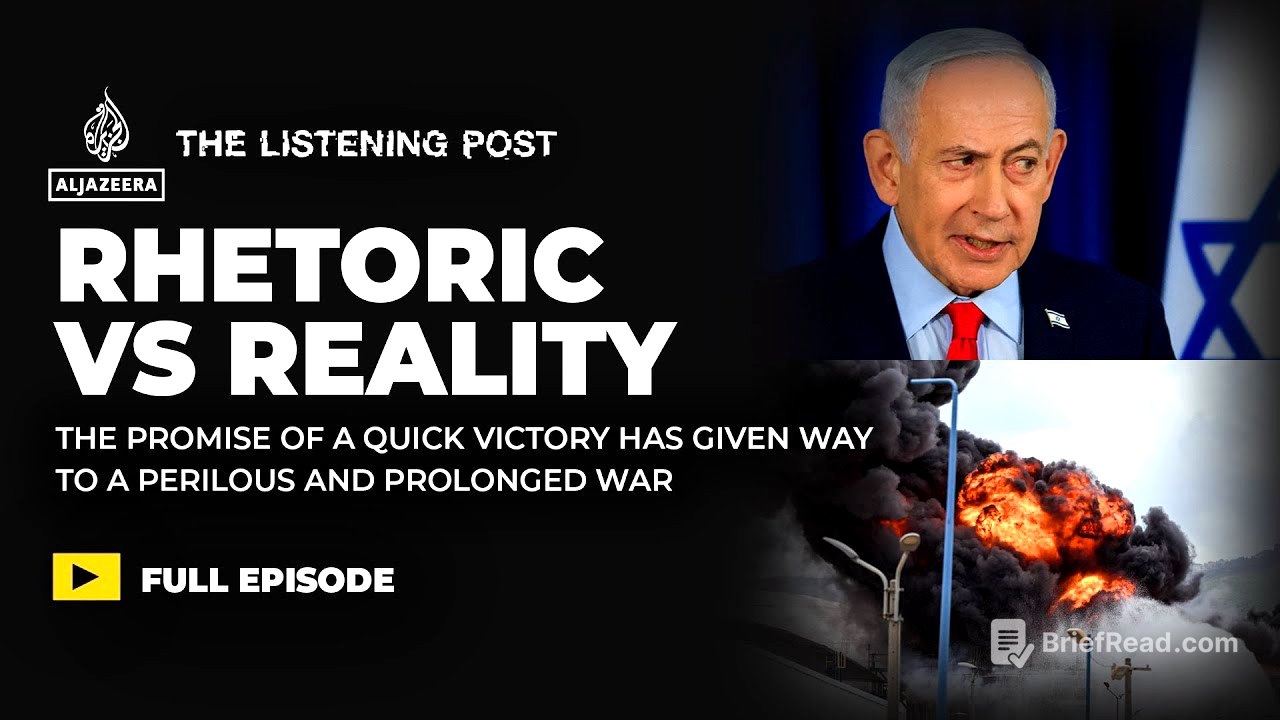
This episode examines the media landscape surrounding the US-Israeli war on Iran, highlighting censorship, propaganda, and the battle for public opinion. It explores how Israel controls information flow to its citizens, the use of social media to target Iranians, and Iran's counter-narratives, including internet blackouts and AI-driven content. The episode also touches on the suppression of dissent within Israel, the portrayal of settlers in the West Bank, and the Pentagon's restrictions on press access.
- Israel is censoring information and pushing propaganda to control the narrative around the war.
- Iran is using social media and AI to counter Western narratives and appeal to international audiences.
- Both sides are engaged in a battle for hearts and minds, both domestically and internationally.
Media Censorship and Control in Israel [0:00]
The Israeli government is implementing strict military censorship, limiting the information available to its citizens about the war with Iran. Journalists face unprecedented restrictions and are encouraged to focus on morale-boosting stories rather than objective reporting. This censorship extends to online sources, where it's becoming increasingly difficult to distinguish between fact and propaganda. The aim is to portray Israel as more capable of defending itself than it actually is and to downplay the extent of Iranian knowledge about Israeli infrastructure.
Suppression of Dissent and the New Capital Punishment Law [6:20]
The Israeli authorities are cracking down on anti-war protests and dissent, with protesters facing aggressive treatment. A new capital punishment law, applicable only to Palestinians convicted of terrorism, has been passed, sparking controversy. While some opposition to the law exists, it's primarily based on concerns about potential threats to future Israeli hostages rather than moral objections to executing Palestinian detainees. This law is popular among the Israeli public, highlighting a concerning trend.
Portrayal of Settler Violence in the West Bank [8:21]
Coverage of Israeli settler violence in the West Bank has diminished, and when reported, settlers are often portrayed as rogue operators, separate from the state and army. However, incidents like the confrontation between Israeli soldiers and a CNN news crew reveal a different reality. The soldiers openly expressed their belief that the West Bank is exclusively Jewish territory. While Israel attempts to show it's addressing Israeli perpetrators of terrorist attacks in the West Bank, it's seen as a way to appease the White House, while the system of settlement expansion and annexation continues.
Israel's Propaganda Campaign Targeting Iranians [11:29]
Israel is actively using social media platforms like "Israel in Persian" to target Iranians with propaganda. The content mocks Iranian leaders, attempts to portray Israel as a friend of Iranians, and casts doubt on the suffering of Iranian victims of the war. Tactics previously used against Palestinians, such as suggesting they stage their own suffering, are now being employed against Iranians. Additionally, Israel's foreign intelligence agency, MSAD, is using Farsi language accounts to openly recruit Iranians as spies.
Iran's Counter-Narrative and Online Strategies [13:23]
Iran is framing its case to international audiences, accusing Western media of distorting the facts of the war. Domestically, a sweeping internet blackout limits access to information. Iran is also employing sophisticated AI content to shape public opinion. Despite these efforts, the likelihood of Iran's message cutting through in the US is limited, although it may reinforce existing opposition to the war. Iran believes Israel led America into the war and aims to increase opposition within the US.
Internet Blackouts and Censorship in Iran [17:13]
The Iranian government has implemented internet blackouts, severely limiting communication with the outside world. While authorities argue this is to protect Iranians and their institutions from external penetration, it's also seen as a way to maintain control and suppress uprisings. The Iranian Revolutionary Guard Corps (IRGC) has threatened US tech companies, indicating their belief that these companies' AI elements are being used extensively in the war.
The "Epstein Regime" Label and its Effectiveness [21:35]
The label "Epstein regime," popularised by a late Ayatollah, has become embedded in Iranian messaging and resonates both domestically and abroad. This is because it taps into existing skepticism about new wars and contradictions in Trump's policies. While there's no concrete evidence, the "Epstein factor" has emerged as a potential explanation for Trump's actions, with some suggesting Israelis are using Epstein-related information to influence him.
Pentagon's Restrictions on Press Access [23:58]
The Pentagon has implemented policies restricting press access, putting journalists at risk of losing access if they pursue unapproved information. Despite a federal judge striking down initial measures as unconstitutional, the Pentagon has returned with new restrictions, limiting where reporters can go and requiring escorts. These actions are seen as an attempt to control how American reporters cover the war, raising concerns about freedom of the press.