TLDR;
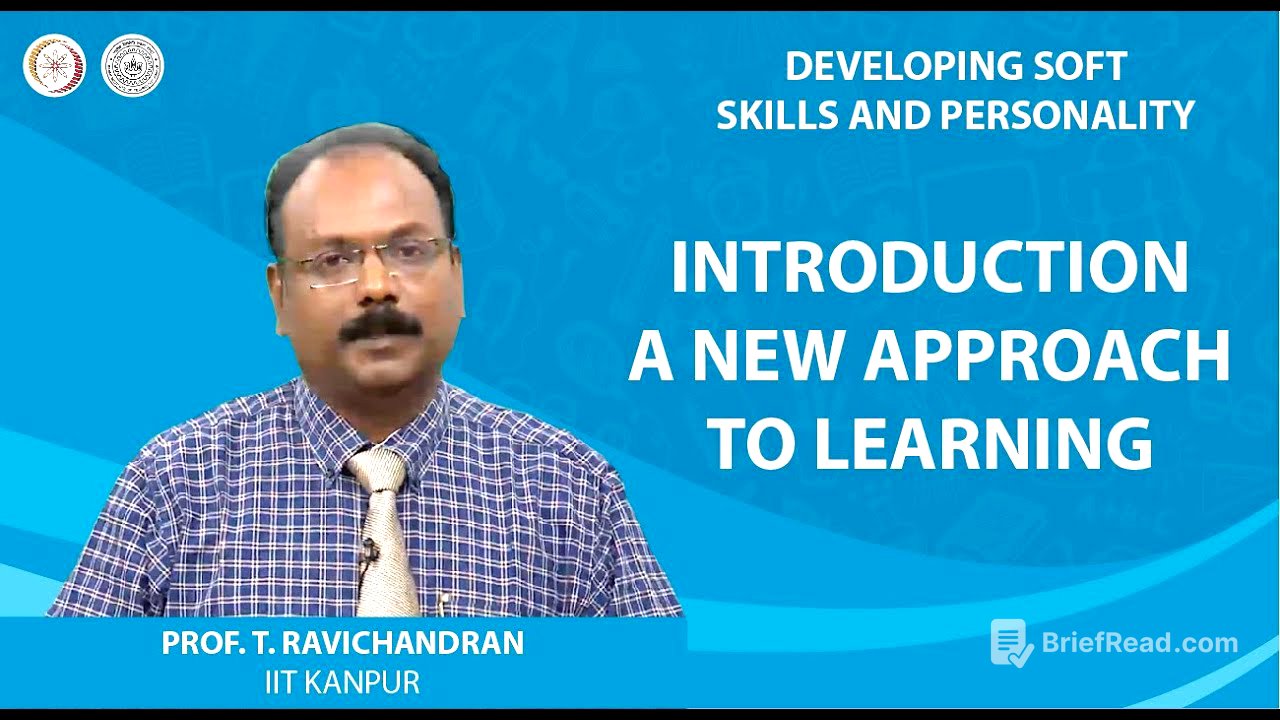
This video serves as an introduction to the NPTEL MOOC course on Developing Soft Skills and Personality. The aim of the course is to facilitate a meaningful understanding of learning, emphasizing its importance in resulting in behavioural changes rather than mere memorisation. Participants are encouraged to engage actively with the content and reflect on their learning journey while utilising the resources provided.
- Learning should lead to permanent changes in behaviour.
- Engagement with the environment aids in effective learning.
- Active participation and reflection are crucial for personal development.
Introduction to the Course [0:00]
The instructor welcomes participants to the course and outlines its purpose. Emphasis is placed on understanding what learning means, encouraging students to move beyond conventional definitions that involve cramming or superficial knowledge. The distinction between traditional learning methods and experiential learning is made clear, aiming to foster a more profound engagement with the material.
Concept of True Learning [1:10]
Effective learning is described as human interaction with the environment that results in permanent behavioural changes. The instructor argues that true learning goes beyond textbook study and signifies a deeper understanding of one’s surroundings. This includes learning from various sources: nature, relationships, and experiences outside the classroom setting.
Importance of Changed Behaviour [3:30]
The necessity for learning to manifest as a behavioural change is discussed. The instructor points out that learning should be reflected in one's actions and attitudes, highlighting that educated individuals should demonstrate empathy and understanding towards others in society. This establishes the framework for evaluating one's behavioural adaptations linked to what is learned.
The Role of the Course in Transforming Lives [7:20]
The potential impact of the course on participants’ lives is highlighted, suggesting that it can lead to transformative change. However, this transformation requires the learner’s willingness to engage actively and desire personal change. The metaphor of leading a horse to water is used to depict that instructors can only facilitate learning; participants must take initiative to let it happen.
Desiring Change [8:30]
For real change, learners must believe in their capacity to evolve. The instructor stresses that faith in the course and its content will help facilitate modifications in thinking and behaviour. The process is described as flowing from desire to belief, and ultimately leading to the establishment of positive habits.
Tips for Maximising Course Benefits [10:18]
The instructor offers practical tips for navigating the course, suggesting that participants find a routine for learning—whether structured or flexible—and ensuring a distraction-free environment while watching videos. The value of note-taking is underscored as a strategy for better retention.
Experiential Learning and Quizzes [17:35]
Participants are encouraged to take quizzes and engage with discussion forums, regardless of their motivation for obtaining a certificate. This engagement is seen as vital for assessing one’s understanding and progress. The necessity for experiential learning—where understanding is rooted in personal insight and reflection—is emphasised.
Reflecting on Progress [18:50]
Learners are advised to assess their personal developments continuously. Each week, they should note improvements in their behaviours as suggested by the course content, thereby ensuring ongoing personal growth and adherence to learnt concepts.
Approaches to Teaching Soft Skills [19:20]
The instructor contrasts traditional crash course methods with a holistic approach. This course focuses on intrinsic factors and overall personality development, encompassing various levels of intelligence beyond just cognitive ability, such as emotional and spiritual intelligence.
Course Overview and Structure [20:50]
A brief overview of the course structure is provided, detailing the progression from personal assessment to diverse aspects of communication and relationship skills. The course is designed to take participants on a journey towards comprehensive personal and professional development through a series of modules.
Conclusion and Encouragement for the Journey [22:30]
The instructor concludes by wishing all participants a fulfilling journey of self-discovery and encourages them to enjoy the process of personal development throughout the course. The ongoing nature of self-discovery is highlighted, framing it as a worthwhile personal adventure.