TLDR;
In this video, Dan Koe discusses the future of work and personal development in the context of artificial intelligence (AI). He identifies three types of people: purists, automatons, and a proposed third type, the multidimensional person, who embraces a balance between technology and personal growth. Koe encourages viewers to become "digital Renaissance men" by diversifying their skills and leveraging AI to create value in a rapidly changing landscape. Key concepts include breaking away from traditional career paths, embracing lifelong learning, and using AI as a tool for creativity and efficiency.
- Three types of people in the future: purists, automatons, and multidimensional individuals
- Emphasises the importance of balance between embracing AI and personal development
- Advocates for diversified skills and lifelong learning in the context of the digital age
Understanding the Types of People in the Future [0:00]
Dan Koe introduces the concept of future societal divisions, classifying individuals into three groups. The first group, purists, rejects AI and modern technology, opting for simple, screen-free lifestyles while paradoxically still relying on digital platforms. The second group consists of automatons or cyborgs, who delegate all decision-making to technology, sacrificing critical thinking in the process. Koe expresses discomfort with both extremes, advocating for a balanced approach instead.
The Framework of Reality: Four Quadrants [2:38]
Koe introduces a framework adapted from Ken Wilber's Integral theory, encompassing four quadrants: mind, body, spirit, and vocation. Each quadrant represents different facets of reality: personal mental and physical worlds on one side, and collective mental and physical worlds on the other. He highlights how purists ignore the external world while automatons neglect the internal aspect, resulting in an incomplete understanding of existence.
The Video Game Skill Tree Analogy [4:16]
Koe compares personal development to a skill tree in a video game, explaining that focusing solely on one area (e.g., financial success) while neglecting other aspects (e.g., health, spirituality) leads to imbalanced development. He argues that true success comes from improving all areas of life, emphasizing the need for a holistic approach to personal growth.
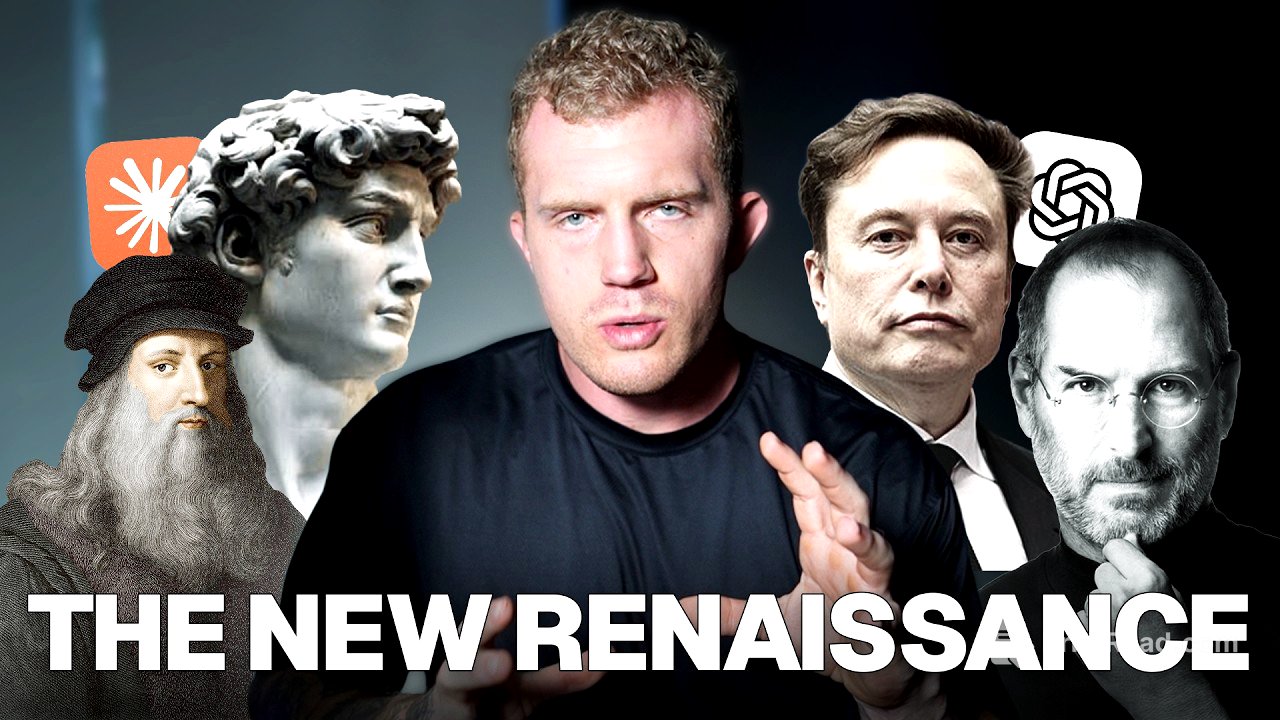
Becoming a New Renaissance Man [5:44]
Koe presents the idea of becoming a multi-dimensional individual or "digital Renaissance man" to thrive in the upcoming decade. He discusses how modern societal structures encourage narrow career paths, limiting individuals to single specialties instead of fostering broad skill sets and interests. By embracing multiple disciplines, individuals can find greater satisfaction and creativity in their lives, similar to the free thinkers of historical Renaissance periods.
The Role of AI in the Future [15:15]
He discusses how AI will redefine traditional notions of work, arguing that we should view AI as a tool for enhancing human creativity rather than a threat. Koe emphasises that individuals with open minds who are not strictly aligned with the extremes will find opportunities for innovation in this new landscape. He encourages viewers to use AI to streamline processes and improve productivity while maintaining a unique human perspective.
Creating a One Human Business [20:43]
Koe advocates for the concept of a "one human business," where individuals leverage technology, including AI, to create a personalised and efficient entrepreneurial experience. He believes that creators, who solve problems and provide value, will shape the future of work. He highlights the importance of starting small, utilising social media for visibility, and adapting to the evolving digital economy.
The Importance of Craft and Continuous Learning [28:34]
Lastly, Koe discusses the critical elements of becoming an effective creator. He emphasises the need to choose an irreplaceable craft that combines personal passion, unique skills, and market demand. He also encourages viewers to adopt a lifelong learning mindset, highlighting the value of self-education, mentorship, and practical application of knowledge gained from experiences.