
TLDR;
This video examines several controversies surrounding Huawei's entry into the electric vehicle market. It covers issues ranging from mechanical failures and safety concerns with their smart driving technology to questionable marketing tactics and public relations strategies. The video highlights incidents where Huawei vehicles failed safety tests, caused accidents due to flaws in their smart driving systems, and instances where the company allegedly suppressed negative reviews and manipulated public opinion.
- Huawei's Stelato S9 failed a moose test, raising concerns about its build quality.
- Huawei's smart driving technology has been implicated in several accidents, raising safety concerns.
- Huawei has been accused of silencing critics and manipulating public opinion through censorship and misleading marketing.
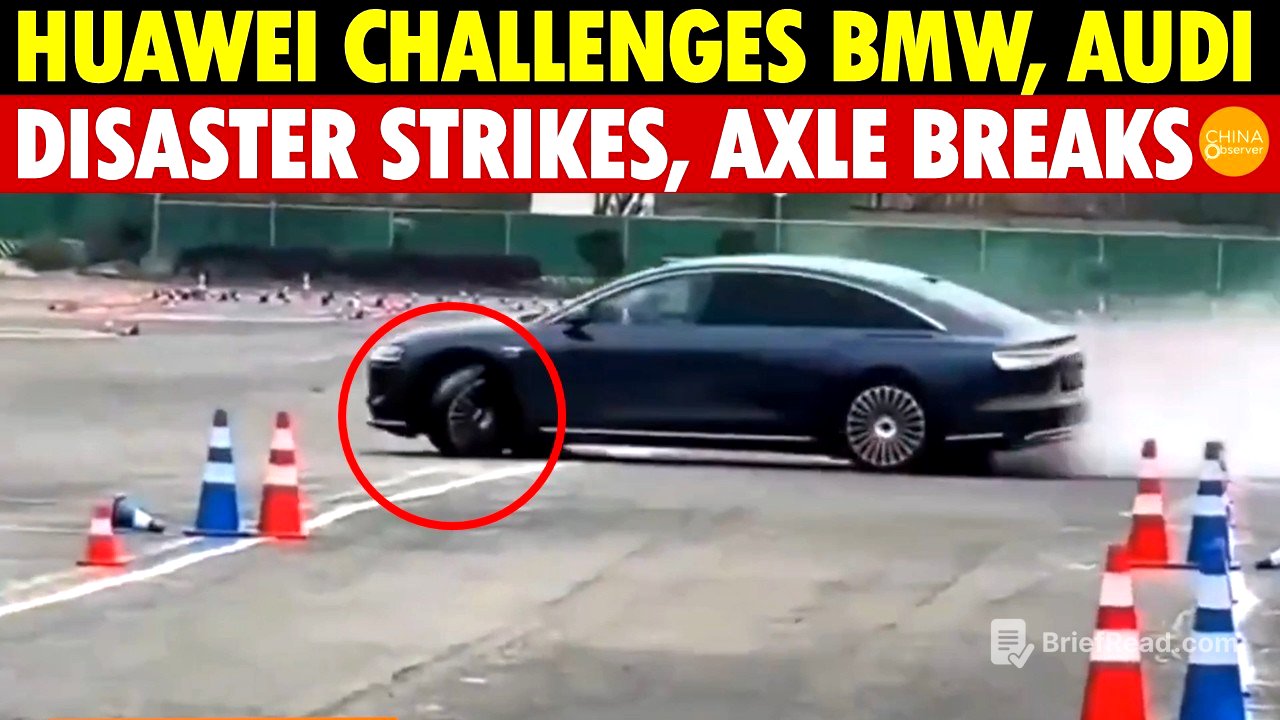
Stelato S9 Moose Test Failure [0:00]
The Huawei Stelato S9, a high-end vehicle, failed a moose test spectacularly. During the test, the rear of the car swung out, causing it to drift off the track, and the left front wheel appeared to twist, raising concerns about a broken axle. This contrasted sharply with the performance of competitors like the Audi A6L, Mercedes E-Class, and BMW 5 Series, which passed the test with ease. The incident sparked online criticism, with many questioning the car's build quality and expressing concern over the axle break.
Silencing of Auto Home [1:23]
Following the Stelato S9's failed moose test, Auto Home, the automotive platform that originally posted the video, had its accounts on major social media platforms restricted. This triggered speculation that Huawei had pressured the platform to silence negative reviews. The incident sparked public outrage, with many viewing it as a violation of media freedom and consumers' right to know. Content creators became wary of criticising Huawei, fearing legal repercussions.
Public Reaction and Online Commentary [2:54]
The online community reacted to the Auto Home silencing with jokes and subtle criticisms of Huawei. Some defended Huawei, suggesting the test was not a proper moose test or that Audi's marketing team was behind the incident. Auto Home issued a statement denying the test content was created by them but did not address the account restrictions. Many remained unconvinced, believing Huawei was targeting anyone who dared to test their cars.
Smart Driving Accidents and Safety Concerns [4:59]
Several real-life accidents involving Huawei's smart driving technology have raised serious safety concerns. One incident involved an AITO M8 in NCA Smart Driving Mode hitting a toddler who ran into the street. The system failed to detect the child or apply the brakes, and Huawei's customer service downplayed the incident and denied responsibility. Other accidents include collisions with sanitation workers and elderly pedestrians, highlighting major flaws in the technology.
Censorship and Misleading Marketing [7:48]
Huawei has been accused of censoring negative reviews and engaging in misleading marketing tactics. One automotive blogger shared a video showing a Huawei car's smart driving system crashing into a guardrail, but the video was blocked. The blogger then replaced "NCA" with "Tesla's FSD" and the video was approved. A widely circulated video showed a car navigating a foggy mountain road, which Huawei falsely claimed was due to their smart driving technology. These actions have damaged the brand's credibility.
Exaggerated Claims and Confusing Brand Affiliations [11:30]
Huawei's executive director, Yuchong Dong, is known for making exaggerated claims about Huawei cars, such as their ability to detect and suppress viruses. He also boasted that the Huawei Maestro X800 had a claims volume surpassing Porsche, Maybach, and Mercedes S-Class combined, which drew skepticism. Huawei's complex partnership structure and confusing brand affiliations have also been criticised, making it difficult for owners to seek compensation for vehicle issues.
Conclusion: Failures in Technology, Marketing, and Accountability [15:32]
The video concludes that Huawei's entry into the electric vehicle market has been marred by failures in technology, safety, marketing, and accountability. From mechanical failures and smart driving accidents to censorship and misleading marketing, these incidents reflect a collapse of the company's values. While Huawei promotes itself as a leader in technology, its actions suggest a focus on suppressing criticism and avoiding responsibility.





![Learn Python - Full Fundamental Course for Beginners | Python Tutorial for Beginners [2019]](https://wm-img.halpindev.com/p-briefread_c-10_b-10/urlb/aHR0cDovL2ltZy55b3V0dWJlLmNvbS92aS92X1M2NGtsZHJ5Yy9ocWRlZmF1bHQuanBn.jpg)