TLDR;
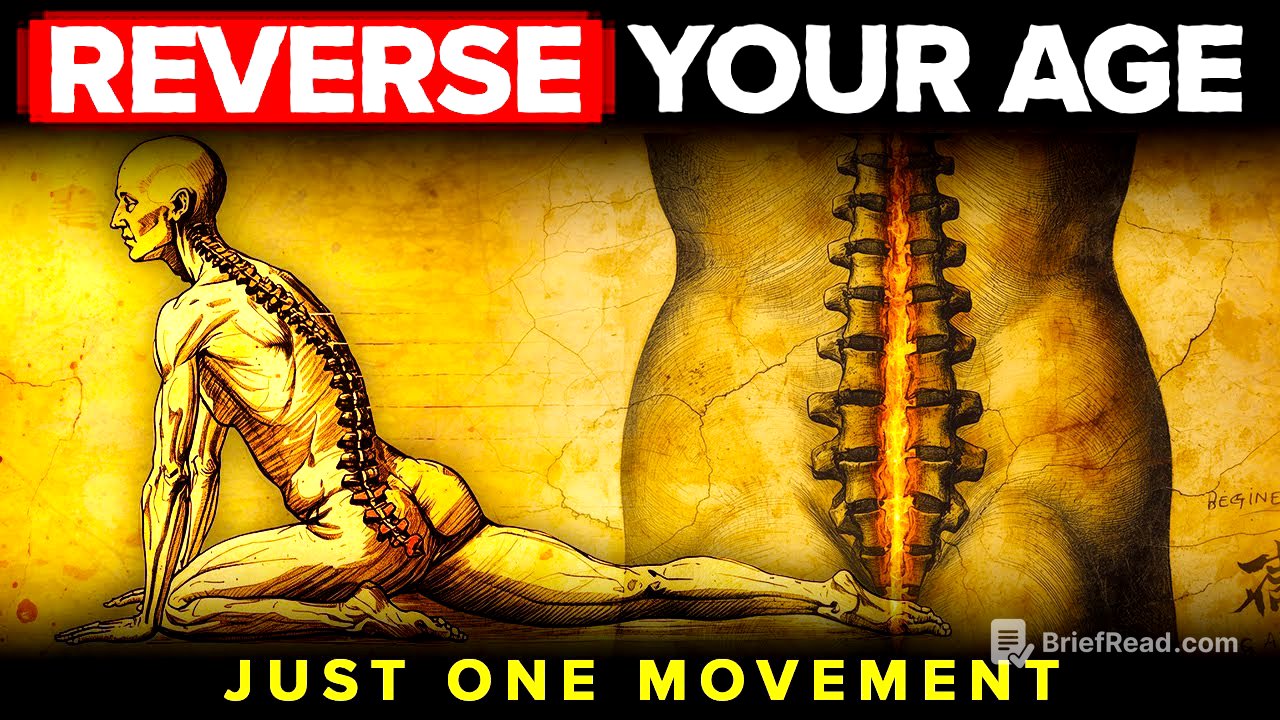
This video explains how spinal flexibility is crucial for youthfulness and overall health. It details how the movement of cerebrospinal fluid, vital for brain health and waste removal, is directly linked to spinal mobility. The video introduces the "spinal wave" exercise, a simple, three-minute routine designed to improve spinal flexibility, stimulate cerebrospinal fluid flow, and reverse the aging process.
- Spinal stiffness accelerates aging by hindering the flow of cerebrospinal fluid, which is essential for brain health.
- The "spinal wave" exercise can unlock the body's potential to reverse biological stiffness.
- Regular practice of this movement promotes a state of rest and repair in the body, combating the effects of stress and aging.
Introduction: The Spine and Aging [0:04]
The conventional advice of walking 10,000 steps a day is insufficient for maintaining youthfulness because aging begins in the spine, not the legs or heart. The condition of your spine, whether fluid or rigid, determines your biological age, irrespective of your chronological age. A flexible spine signifies youth, while a stiff spine indicates aging. The video aims to reveal an ancient movement that can unlock the "gate of life and death" by influencing whether you age forward or backward.
The Role of Cerebrospinal Fluid (CSF) [1:16]
The brain floats in cerebrospinal fluid (CSF), which cleanses the brain by flushing out toxins accumulated from thought and stress. This fluid's movement is dependent on the spine's mobility. A stiff spine restricts CSF flow, leading to stagnation and accelerated aging, causing brain fog, fatigue, sagging skin, and cognitive decline. Modern neuroscience supports ancient knowledge that the brain's waste-clearing system activates only when CSF is moving, which is controlled by spinal movement.
Spinal Mobility and the Autonomic Nervous System [3:08]
Spinal flexibility is directly related to youthfulness, as the spine is the channel for vital life force. Spinal mobility regulates the autonomic nervous system, influencing whether the body is in a state of stress or repair. A mobile spine activates the parasympathetic nervous system, promoting healing, while a stiff spine keeps the body in fight-or-flight mode, accelerating aging and cognitive decline. Monks who live long lives maintain supple bodies through specific, rhythmic spinal movements.
The Spinal Wave Exercise [4:16]
The "spinal wave" exercise, also known as the caterpillar or serpent's breath, is a powerful movement for reversing biological stiffness and stimulating the flow of CSF. It can be performed standing, sitting, or lying down, focusing on flow rather than strength. The exercise involves three steps: grounding oneself, gently tilting the pelvis forward, and then allowing this tilt to ripple up the spine, vertebrae by vertebrae, before reversing the movement.
Experiencing the Benefits and Embracing Fluidity [7:00]
Practising the spinal wave for three minutes daily can lead to noticeable sensations like warmth and tingling in the spine, indicating the movement of CSF and activation of the brain's waste-clearing system. This practice is a daily reset that can improve posture, deepen breath, and clear the mind. The video encourages viewers to embrace fluidity and declare "I am fluid" as a commitment to reversing stiffness and reclaiming vitality.