TLDR;
In this video, Joshua Weissman visits Italy to learn the authentic process of making Parmigiano Reggiano cheese, which is known for its strict production standards and distinctive flavour. With the help of a master cheesemaker, Weissman experiences the entire journey from cow to cheese wheel. He highlights the importance of just three key ingredients: whole milk, salt, and rennet, and discusses the delicate balance between good and bad bacteria during the fermentation process. The video culminates in the tasting of exceptionally rare cheeses, showcasing the influence of time and craftsmanship on flavour.
- Authentic Parmigiano Reggiano is made in specific regions of Italy under stringent laws.
- The cheese production process includes milking, curdling milk, and an extensive aging process.
- The video features the tasting of a 20-year-old Parmigiano, illustrating the complexity of flavours developed over time.
Chapter 1: The Beginning of the Journey [0:00]
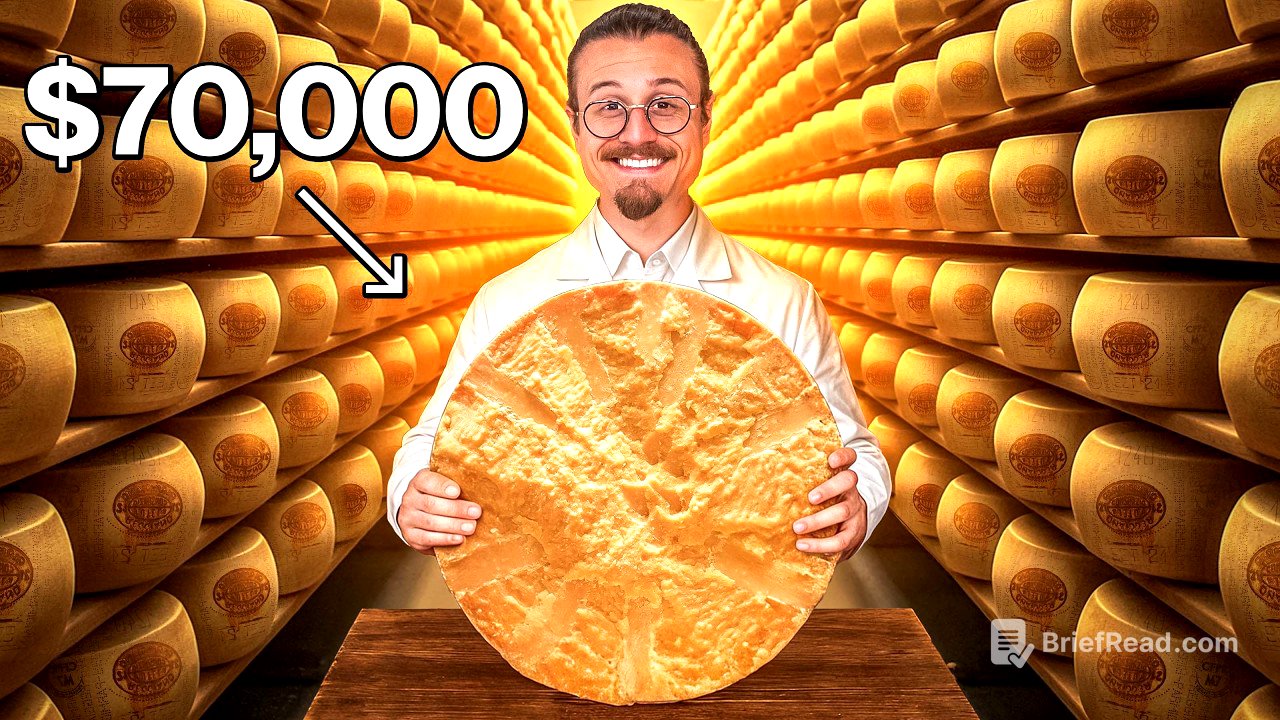
Joshua Weissman begins his journey in a restaurant, where he learns that the parmesan he often consumes is not the authentic Parmigiano Reggiano. He explains that Parmigiano Reggiano, made in certain regions of Italy, has to be produced in a specific manner, which sets it apart from regular parmesan. Driven by his curiosity, Weissman travels to the Italian countryside to work with a renowned cheesemaker, hoping to create his own cheese wheel and taste a rare, expensive cheese worth $70,000. He embarks on this adventure from a cow farm at 4:00 AM, accompanied by culinary adventurer Mr Z, who assists in translation and guidance.
Chapter 2: Milking the Cows [0:43]
In an early morning setting, Weissman witnesses the process of milking cows. He learns about the importance of cleanliness and hygiene in cheese production, as they begin by disinfecting the cows. The milking process proves to be more challenging than expected. They extract 1,800 litres of milk from 120 cows, which is crucial for their cheese-making process. Weissman also meets a cat on the farm, adding a light-hearted moment to the challenging work ahead.
Chapter 3: The Ingredients of Cheese Making [2:37]
Weissman outlines that only three ingredients are needed to make Parmigiano Reggiano: whole milk, salt, and rennet. He stresses the importance of good bacteria in the fermentation process, which contributes to the cheese's flavour and consistency. Weissman describes the daily struggle of good versus bad bacteria in the cheese-making room, noting that each step must be performed meticulously to create a successful cheese wheel.
Chapter 4: The Cheese Making Begins [3:20]
Inside the dairy, Weissman is amazed by the layers of cream that form on the milk and realizes the intricate nature of the cheese-making process. He meets Paulo, the head cheesemaker, and begins his first task of extracting cream from the milk. Weissman learns about the importance of timing and precision to maximise the milk's potential. The milk is carefully handled, with the small-scale, traditional methods on display, showcasing the craftsmanship involved in the process.
Chapter 5: The Coagulation Process [5:59]
After extracting the cream, the next phase involves mixing the skimmed milk, adding whey and rennet, and heating the mixture to create curds. Weissman learns firsthand the skill required to feel the consistency of the curds as the cheesemaker dips his hand into the boiling milk. The crucial separation process, known as coagulation, is highlighted, where Weissman tries breaking the curds, discovering its complexity. The mixture is heated further, and the curd settles at the bottom of the vat.
Chapter 6: Lifting the Cheese [8:06]
After allowing the curds to set, Weissman participates in lifting the massive cheese blocks, which proves to be physically demanding. As they shape the cheese, Weissman realizes the importance of the copper vats in forming the cheese’s shape. He learns that the remaining whey can be reused the next day, emphasising the sustainable practices at play in the cheesemaking process.
Chapter 7: From Day Zero and Branding [9:33]
The video enters Day Zero of the cheese wheels, marking the beginning of the aging process. Weissman explains that the aging officially starts only after 20 days. The wheels are flipped and branded with the characteristic inscription, establishing their authenticity. The cheesemakers take great care to ensure each wheel is adequately dried and prepared for aging, with each wheel receiving its own ID card to track its origins and production details.
Chapter 8: The Brining Process [10:40]
Weissman discusses the brining phase, where the wheels undergo a saltwater bath for 17 days. He describes the dual purpose of the brine: seasoning the cheese while also creating a crust for future aging. The cheese wheels are then sent to a steam room for added drying. Weissman is amazed by the complex scents that waft through the facility, illustrating the diverse aging processes occurring simultaneously.
Chapter 9: The House of the Gods [11:20]
Finally, Weissman arrives at a beautifully captivating aging facility. He experiences the intense aromas of various cheeses, including tones reminiscent of toffee and brown butter. The video showcases a special darker wall containing the rarest Parmigiano, emphasising its prestige and story. Weissman expresses gratitude for understanding the elaborate journey from cow to cheese, hinting at a tasting opportunity soon to come.
Chapter 10: The Tasting Challenge [12:15]
Before tasting the rare cheese, Mr Z sets Weissman a challenge. Weissman samples a 26-month aged Parmigiano, noting its rich buttery flavour. He then learns he must pass a test to try an exclusive 20-year-old cheese. Weissman undertakes the challenge of cutting open a 60-month aged wheel, finding it more difficult than anticipated, yet ultimately succeeding and reveling in the complex flavours of the aged cheese.
Chapter 11: The Rare Cheese Experience [15:19]
Weissman is presented with a 20-year-old Parmigiano Reggiano worth $70,000, recognized not just for its price but for its history and craftsmanship. He experiences the unique aromas and textures, finding the flavour explosive and distinct. This cheese signifies the expertise and love involved in its production, affirming that time undeniably enhances the quality and complexity of cheese.
Chapter 12: The Reflection on the Journey [16:46]
The video closes with Weissman reflecting on the demanding journey of cheese making, from early mornings to the intricate tasks involved. He emphasizes the significance of time in developing flavours, correlating the entire process to the high standards of Parmigiano Reggiano. Weissman is excited to see the cheeses he helped produce develop over the next year, closing with thanks for the experience.